Ragdoll cats are known for their soft, semi-long coats and relaxed personalities, but their gentle nature doesn’t mean they’re completely low-maintenance. While Ragdolls are easier to groom than many long-haired breeds, they still require consistent care to stay healthy, comfortable, and looking their best.
This guide covers the grooming and overall care needs of Ragdoll cats, including coat maintenance, bathing, nail care, health routines, and daily habits every owner should know.
Ragdoll Coat Type and What It Means for Grooming
Ragdolls have a semi-long, silky coat that lacks a dense undercoat. This single-coat structure is one of the reasons they shed less and mat less than many other long-haired cats.
Key coat characteristics:
- Soft, plush texture
- Minimal undercoat
- Lower tendency to tangle
- Seasonal shedding rather than constant heavy shedding
While their coat is forgiving, neglect can still lead to knots, especially around friction areas.
How Often Should You Brush a Ragdoll Cat?

Regular brushing is the most important grooming task for Ragdoll cats.
Recommended brushing routine:
- 2–3 times per week for most adults
- Daily brushing during seasonal shedding
- Short, gentle sessions rather than long grooming marathons
Focus on areas prone to matting:
- Under the arms
- Behind the ears
- Around the neck and chest
- Along the belly
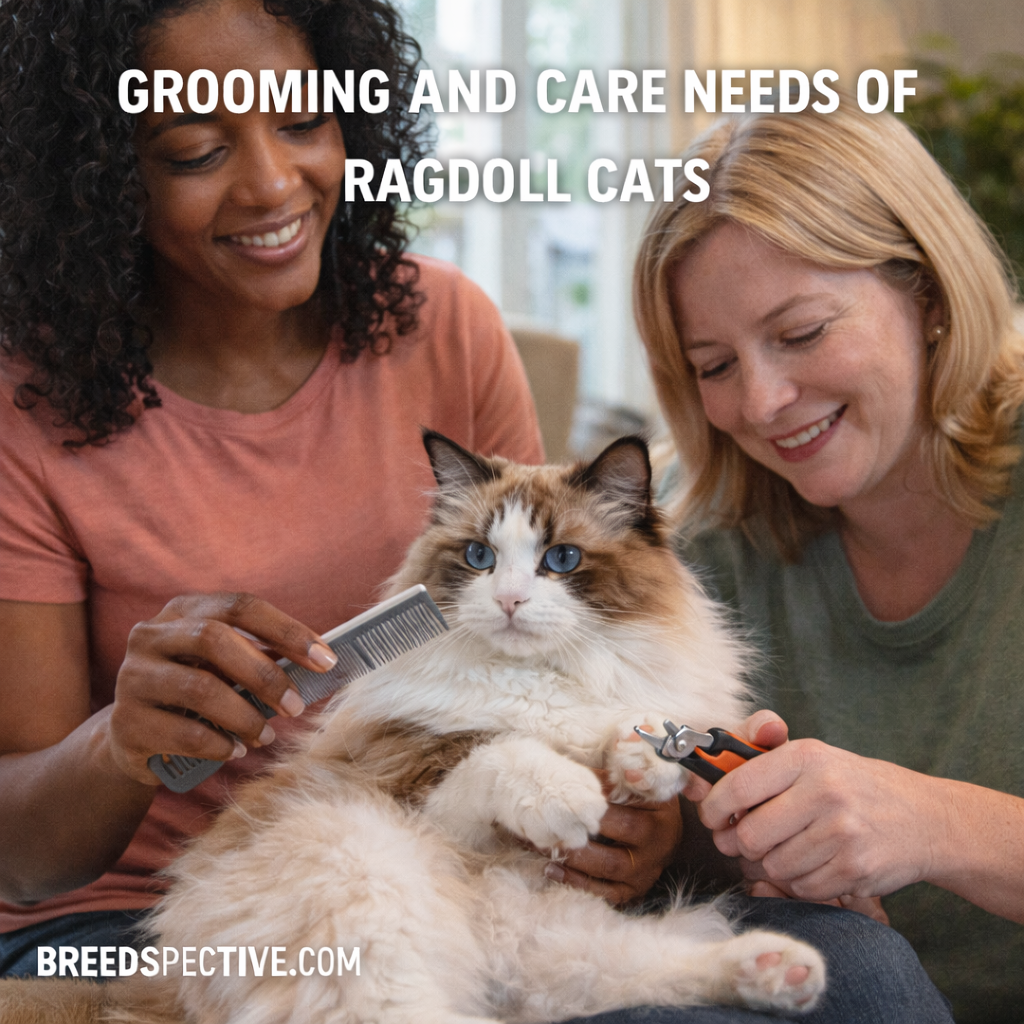
Using a wide-tooth comb followed by a soft slicker brush works well for most Ragdolls.
Shedding Expectations
Ragdolls are moderate shedders, with noticeable increases in spring and fall.
What to expect:
- Light daily shedding year-round
- Heavier seasonal coat changes
- Less shedding than many long-haired breeds
Consistent brushing helps control loose hair and reduces hairballs.
Bathing Ragdoll Cats
Most Ragdolls do not need frequent baths, but occasional bathing can be beneficial.
Bathing guidelines:
- Every few months or as needed
- Use cat-specific, gentle shampoos
- Always dry thoroughly to prevent chilling
Ragdolls tend to tolerate baths better than many cats due to their calm temperament, but bathing should never be excessive.
Nail Trimming and Paw Care
Nail care is essential, especially for indoor Ragdoll cats.
Nail trimming tips:
- Trim every 2–4 weeks
- Use cat-safe nail clippers
- Avoid cutting into the quick
Providing scratching posts helps naturally maintain nails and prevents furniture damage.
Ear, Eye, and Dental Care
Routine checks help prevent common health issues.
Ear care:
- Check weekly for redness, odor, or debris
- Clean gently with a vet-approved solution if needed
Eye care:
- Wipe away tear buildup with a soft, damp cloth
- Watch for excessive discharge or irritation
Dental care:
- Brush teeth several times per week if possible
- Use cat-safe toothpaste only
- Dental treats or water additives can help supplement brushing
Dental health is often overlooked but plays a major role in long-term wellbeing.
Hairball Prevention
Although Ragdolls shed less than many long-haired breeds, hairballs can still occur.
Prevention strategies:
- Regular brushing
- Adequate hydration
- High-quality diet with fiber support
- Occasional hairball-control treats
Most hairball issues improve significantly with consistent grooming.
Diet and Its Role in Coat Health
A Ragdoll’s coat condition reflects its nutrition.
Diet considerations:
- High-quality protein sources
- Omega-3 and omega-6 fatty acids
- Adequate hydration from wet food or water fountains
A healthy diet supports shine, reduces shedding, and improves skin health.
Litter and Hygiene Habits
Ragdolls are generally clean cats but benefit from good hygiene routines.
Helpful practices:
- Keep litter boxes clean to prevent coat contamination
- Trim fur around the hindquarters if needed
- Monitor for litter clumping in fur
Their laid-back nature means they may tolerate mild discomfort without complaint, so owners should stay proactive.
Indoor Care and Safety
Ragdolls are best suited for indoor living.
Indoor care tips:
- Provide soft resting spots
- Maintain consistent routines
- Offer gentle daily play and interaction
- Ensure windows and balconies are secure
Their trusting nature makes them more vulnerable outdoors.
How Grooming Strengthens the Bond
Grooming isn’t just maintenance—it’s bonding.
Benefits include:
- Reduced stress for the cat
- Early detection of health issues
- Stronger owner–cat relationship
- Easier handling over time
Most Ragdolls come to enjoy grooming sessions when introduced positively.
Final Thoughts
Ragdoll cats are relatively low-maintenance compared to other long-haired breeds, but they still require consistent grooming and care. Regular brushing, basic hygiene routines, and a balanced diet go a long way in keeping them healthy and comfortable.
With gentle handling and steady care, grooming becomes a relaxing ritual rather than a chore—one that supports both your Ragdoll’s wellbeing and your bond together.