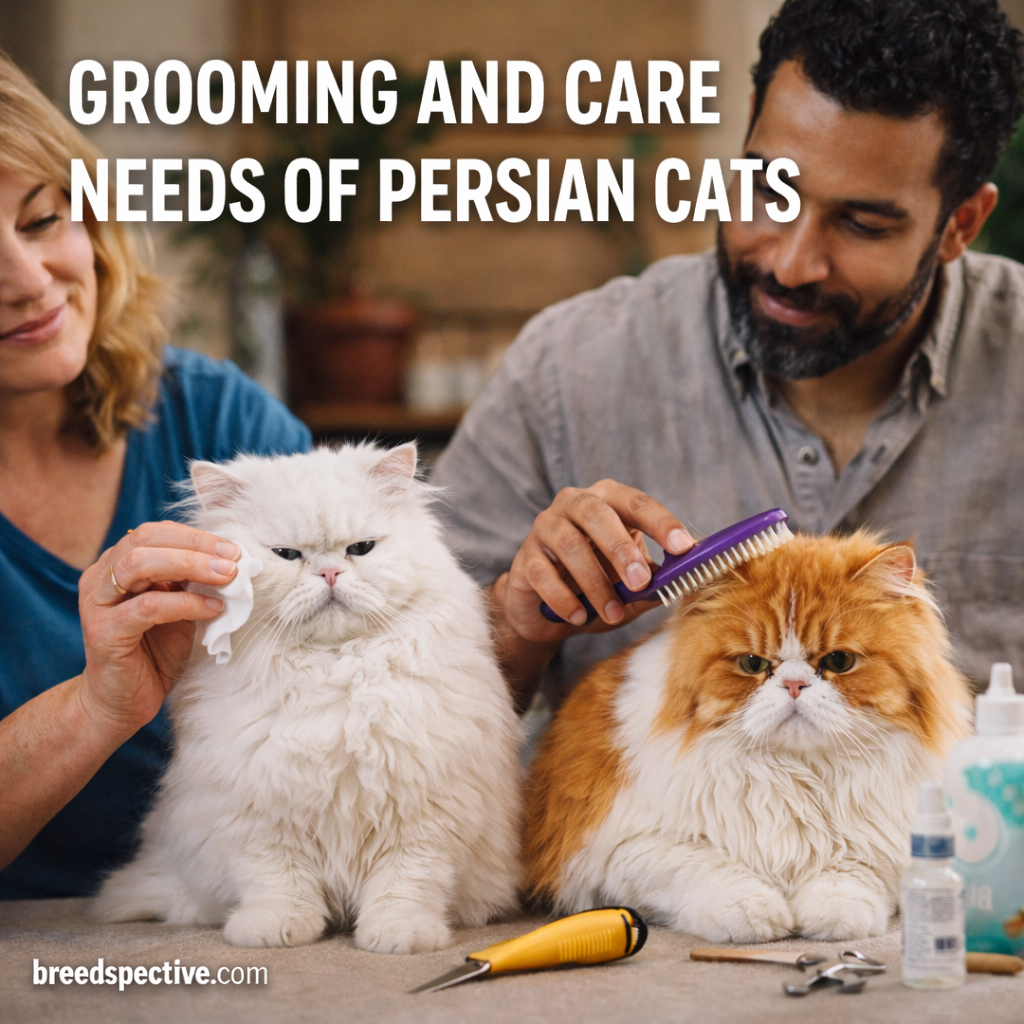
Persian cats are admired for their luxurious coats and calm personalities, but their beauty comes with higher grooming and care requirements than most other breeds. Proper grooming isn’t just about appearance—it’s essential for comfort, hygiene, and long-term health.
This guide explains the grooming and daily care needs of Persian cats, what owners should expect, and how to build a routine that keeps them healthy and stress-free.
Understanding the Persian Cat Coat
Persian cats have long, dense, double-layer coats that are prone to tangling and matting. Unlike short-haired breeds, their fur does not naturally stay neat without regular maintenance.
Key coat characteristics:
- Long, fine hair with a thick undercoat
- High risk of knots and mats
- Fur that easily traps dirt and debris
- Shedding throughout the year
Because of this coat type, Persians require consistent grooming from kittenhood onward.
Daily Brushing Requirements
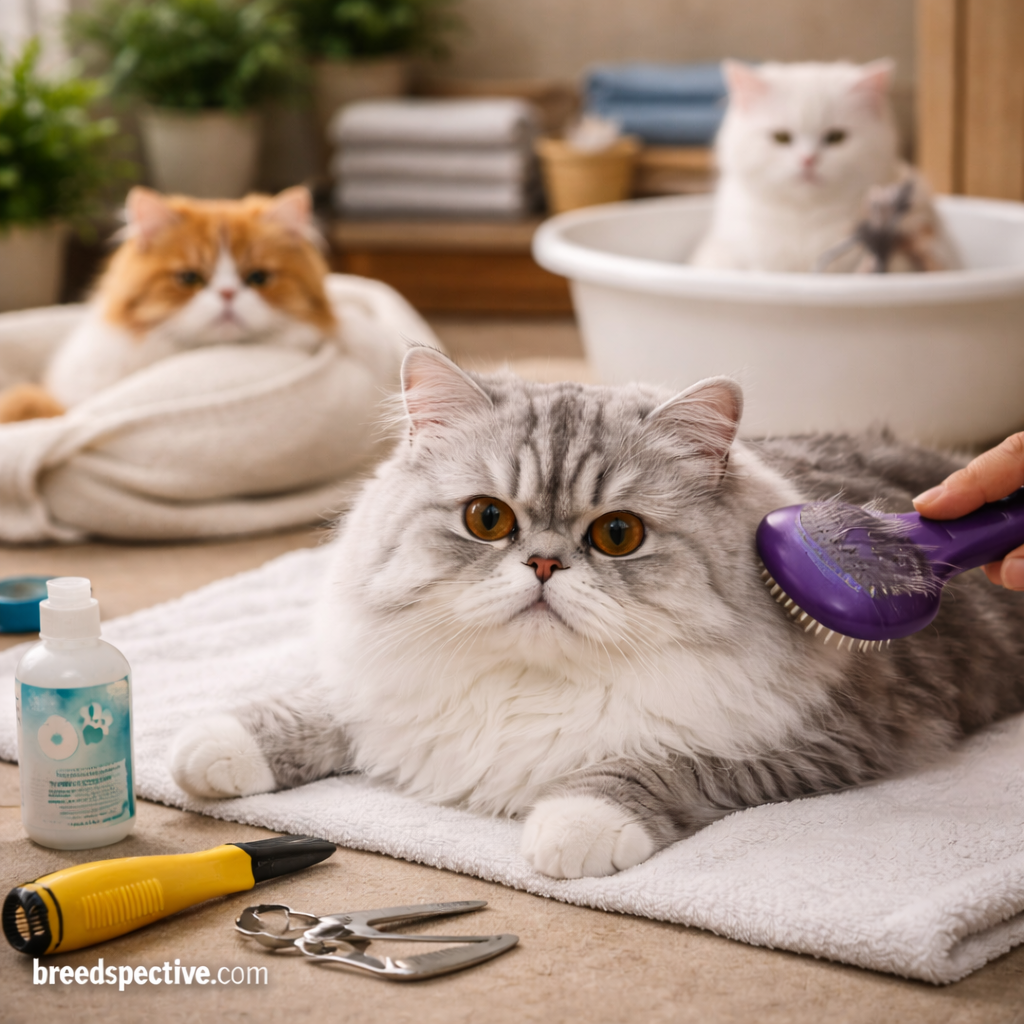
Daily brushing is the most important part of Persian cat care. Skipping sessions can quickly lead to painful mats that are difficult to remove.
Benefits of daily brushing:
- Prevents tangles and matting
- Reduces shedding around the home
- Distributes natural oils through the coat
- Minimizes hairballs
- Allows early detection of skin issues
Recommended brushing tools:
- Wide-tooth metal comb for detangling
- Fine-tooth comb for finishing
- Soft slicker brush for surface grooming
Brushing sessions should be gentle and calm, especially around sensitive areas like the belly, armpits, and behind the ears.
Bathing and Coat Cleaning
Unlike many cats, Persian cats benefit from regular bathing due to their long coats and tendency to collect oils and debris.
Bathing guidelines:
- Every 3–6 weeks, depending on coat condition
- Use a cat-specific, gentle shampoo
- Rinse thoroughly to avoid residue
- Dry completely using towels and a low-heat dryer
Bathing helps:
- Keep the coat bright and clean
- Reduce matting caused by oil buildup
- Minimize odors
- Support overall skin health
Introducing bathing early helps Persians become more tolerant of the process.
Eye Cleaning and Tear Stain Care
Persian cats are prone to excessive tearing, especially flat-faced (peke-face) types. Without daily cleaning, tear stains and crust buildup can cause irritation or infection.
Daily eye care includes:
- Wiping eyes with a soft, damp cloth
- Using vet-approved eye wipes if needed
- Checking for redness, discharge, or swelling
Consistent eye care helps prevent:
- Tear staining
- Skin irritation
- Eye infections
- Discomfort and squinting
Ear Cleaning and Maintenance
Persian cats can accumulate ear wax more easily due to their facial structure and dense fur.
Ear care tips:
- Check ears weekly
- Clean gently with a vet-approved ear solution
- Never insert cotton swabs deep into the ear canal
Signs ears need attention:
- Strong odor
- Redness or swelling
- Frequent head shaking
- Excessive scratching
Nail Trimming and Paw Care
Regular nail trimming keeps Persian cats comfortable and prevents snagging on carpets or furniture.
Nail care basics:
- Trim every 2–3 weeks
- Use cat-specific nail clippers
- Trim only the sharp tip, avoiding the quick
Also check paws for:
- Fur buildup between toes
- Debris or litter clumps
- Dry or cracked pads
Dental Care and Oral Hygiene
Dental health is often overlooked but plays a major role in a Persian cat’s overall wellbeing.
Dental care recommendations:
- Brush teeth several times per week
- Use cat-safe toothpaste
- Provide dental treats or toys if approved by your vet
Good dental hygiene helps prevent:
- Bad breath
- Gum disease
- Tooth loss
- Painful infections
Hairball Prevention
Because Persians groom themselves and have long fur, hairballs are a common issue.
Ways to reduce hairballs:
- Daily brushing
- Hairball-control diets
- Vet-approved hairball supplements
- Adequate hydration
Persistent hairballs or vomiting should be evaluated by a veterinarian.
Diet and Nutrition for Coat Health
A Persian cat’s coat quality is strongly influenced by diet.
Nutritional priorities:
- High-quality protein
- Omega-3 and Omega-6 fatty acids
- Adequate hydration
- Balanced vitamins and minerals
A proper diet supports:
- Softer, shinier fur
- Healthier skin
- Reduced shedding
- Overall vitality
Creating a Low-Stress Grooming Routine
Persian cats are sensitive and respond best to calm, predictable routines.
Tips for stress-free grooming:
- Groom at the same time each day
- Keep sessions short and positive
- Use gentle handling
- Reward with treats or affection
Consistency builds trust and makes grooming a bonding experience rather than a struggle.
Final Thoughts
Persian cats require more grooming and care than most breeds, but the effort is well worth it. With daily brushing, regular cleaning, and attentive care, Persians remain comfortable, healthy, and beautiful companions.
Owners who commit to their grooming needs are rewarded with a calm, affectionate cat whose elegance truly stands the test of time.