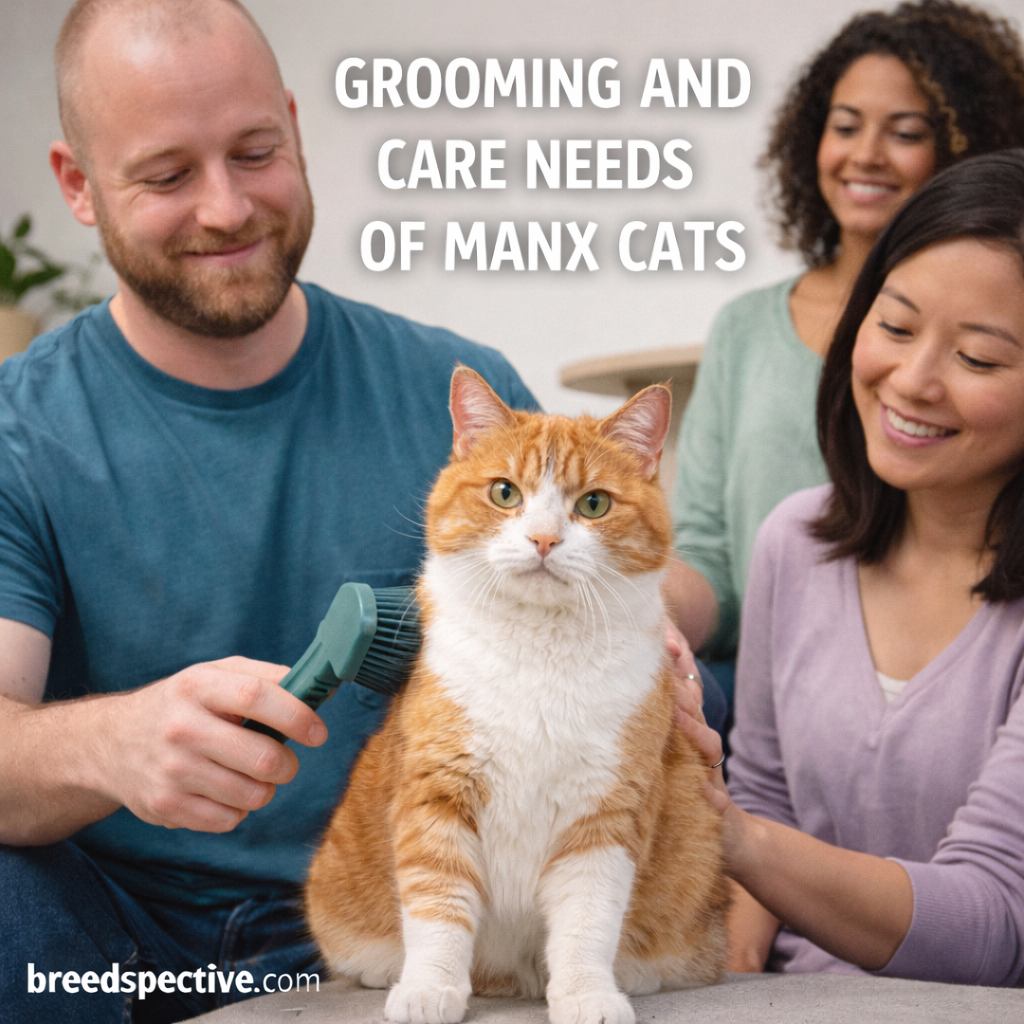
Manx cats are known for their distinctive tailless appearance, strong build, and affectionate personalities. While they are generally considered low-maintenance compared to some long-haired breeds, Manx cats still have specific grooming and care needs that owners should understand. Proper care supports their coat health, mobility, and overall well-being throughout every life stage.
Coat Types and Grooming Requirements
Manx cats come in both short-haired and long-haired varieties, and grooming needs vary slightly depending on coat length.
Common coat types include:
- Short, dense double coats
- Semi-long coats with soft underfur
- Thick, plush textures that shed seasonally
Short-haired Manx cats typically need minimal grooming, while longer-haired individuals benefit from more frequent brushing.
Brushing Frequency and Techniques
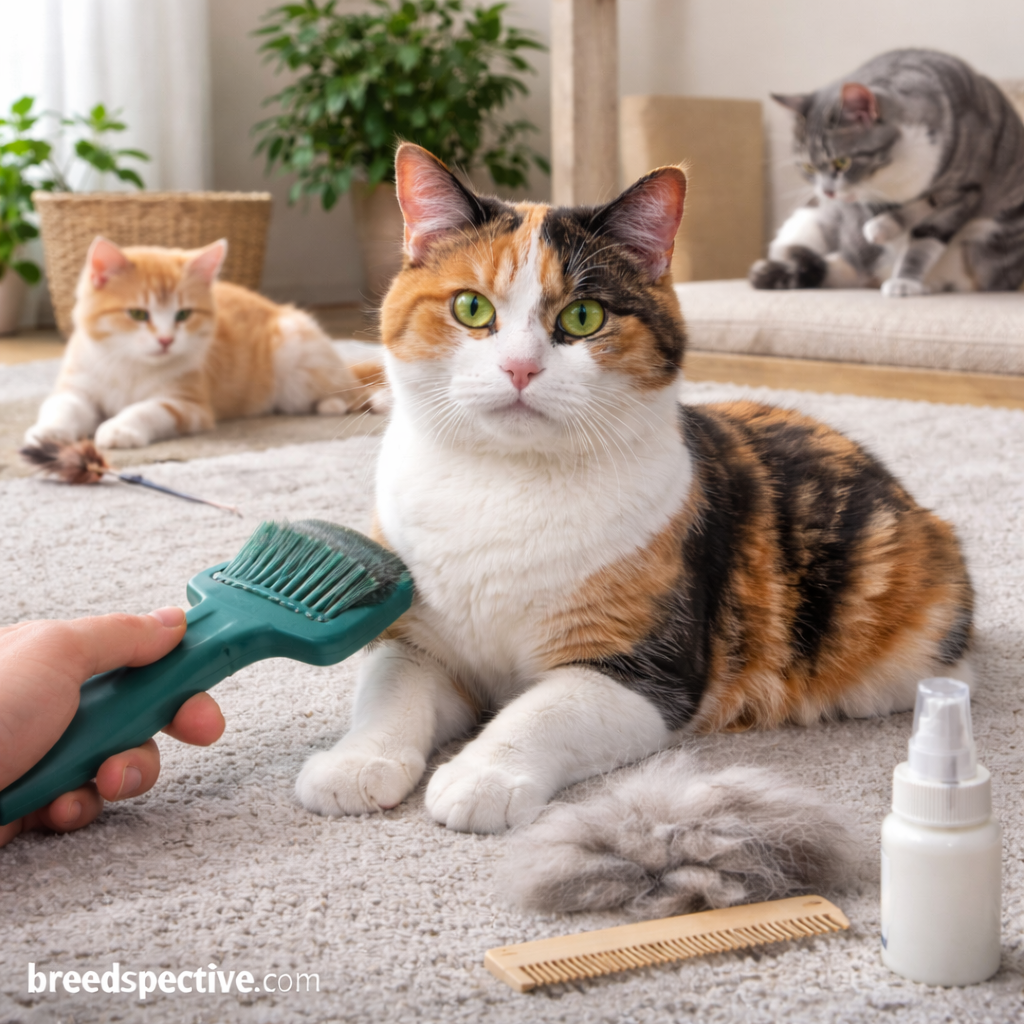
Regular brushing helps reduce shedding, prevent matting, and distribute natural oils throughout the coat.
Recommended brushing guidelines:
- Short-haired Manx: 1–2 times per week
- Long-haired Manx: 2–3 times per week
- Daily brushing during seasonal shedding periods
Use a soft slicker brush or fine-tooth comb to avoid irritating the skin. Always brush gently, especially around the spine and hindquarters.
Bathing Needs
Manx cats generally do not require frequent baths. Their coats are naturally clean and well-maintained through self-grooming.
Bathing is typically only necessary when:
- The cat gets into something sticky or dirty
- There is excessive oil buildup
- A veterinarian recommends medicated bathing
When bathing is needed, use a cat-safe shampoo and ensure the cat is thoroughly dried afterward.
Nail Trimming and Paw Care
Routine nail care is an important part of Manx grooming, particularly for indoor cats.
Nail care tips:
- Trim nails every 2–4 weeks
- Use cat-specific nail clippers
- Avoid cutting into the quick
- Provide scratching posts to help maintain nail health
Check paw pads regularly for dryness, cracks, or debris, especially if the cat spends time outdoors.
Ear Cleaning and Eye Care
Manx cats do not have breed-specific ear or eye issues, but regular checks are still important.
Basic care includes:
- Inspecting ears weekly for redness or buildup
- Cleaning gently with a vet-approved ear solution if needed
- Wiping away eye discharge with a soft, damp cloth
Never insert objects into the ear canal, as this can cause injury.
Dental Care and Oral Health
Dental hygiene is often overlooked but plays a major role in a Manx cat’s long-term health.
Oral care recommendations:
- Brush teeth several times per week if possible
- Use cat-safe toothpaste only
- Offer dental treats or toys
- Schedule routine veterinary dental checks
Good dental care helps prevent gum disease, tooth loss, and systemic health issues.
Diet and Weight Management
Manx cats have a sturdy build and strong hind legs, making weight management especially important.
Healthy diet practices include:
- Feeding a balanced, high-quality cat food
- Monitoring portion sizes
- Avoiding excessive treats
- Adjusting calories based on age and activity level
Maintaining a healthy weight helps reduce stress on the spine and joints.
Exercise and Environmental Enrichment
Manx cats are intelligent and moderately active. Proper enrichment supports both physical and mental health.
Recommended activities:
- Interactive play sessions
- Puzzle toys and climbing structures
- Rotating toys to prevent boredom
- Safe outdoor enclosures or supervised exploration
Daily play helps maintain muscle tone and prevents behavioral issues related to inactivity.
Litter Box and Hygiene Considerations
Clean litter habits are essential for comfort and hygiene.
Best practices include:
- Scooping daily
- Full litter changes weekly
- Using low-dust, unscented litter
- Providing easy access for older cats
Manx cats are typically very clean and may avoid dirty litter boxes.
Monitoring Spinal and Mobility Health
Because the Manx breed is associated with a natural spinal mutation, owners should remain attentive to mobility and posture.
Care considerations include:
- Watching for changes in gait or movement
- Providing ramps or steps for elevated surfaces
- Scheduling regular veterinary checkups
- Addressing any signs of discomfort early
Early intervention helps maintain quality of life.
Conclusion
Manx cats are relatively easy to groom and care for, but their unique build and coat require thoughtful attention. With regular brushing, basic hygiene, proper nutrition, and consistent veterinary care, Manx cats can remain healthy, comfortable, and active companions for many years. A well-maintained grooming routine not only supports physical health but also strengthens the bond between cat and owner.