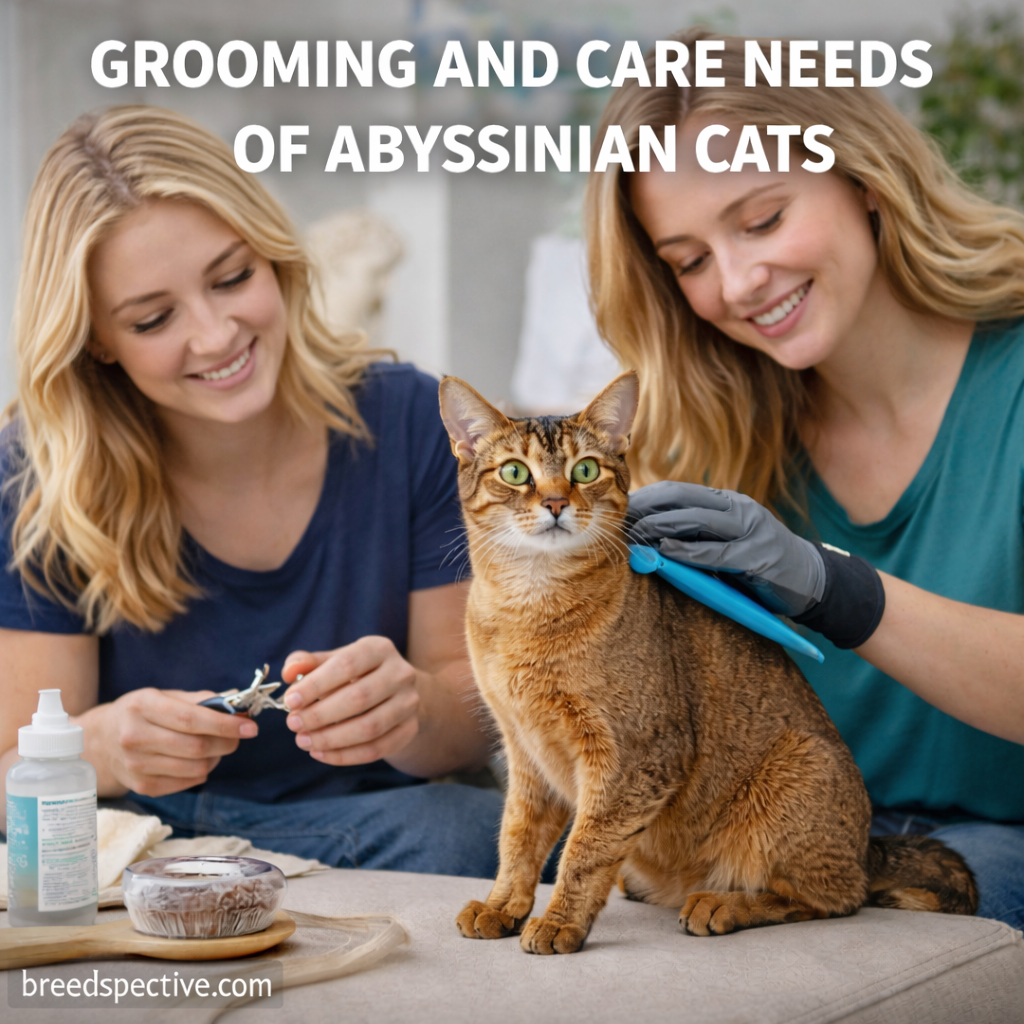

The Cornish Rex is a low-shedding, short-coated cat with a very different grooming profile than most breeds. Its soft, curly coat and slim body make it easy to care for in some ways, but the breed also has unique needs that owners should understand. Proper grooming and daily care help keep Cornish Rex cats healthy, comfortable, and thriving indoors.
Understanding the Cornish Rex Coat
The Cornish Rex has a distinctive coat made almost entirely of soft undercoat, with no coarse guard hairs. This gives the coat its signature waves and velvety texture.
Key coat characteristics include:
- Extremely short, curly fur
- Minimal shedding compared to most breeds
- Soft, fine texture that lies close to the body
- Sensitive skin beneath the coat
Because the coat offers less protection, Cornish Rex cats are more sensitive to temperature and skin irritation.
Brushing and Coat Maintenance
Unlike long-haired breeds, Cornish Rex cats do not require frequent brushing. In fact, over-brushing can damage their delicate curls.
Best brushing practices:
- Brush only when needed
- Use a very soft brush or grooming mitt
- Gently smooth the coat rather than pulling through it
- Focus on removing loose hair and debris
Many owners find that light hand-petting is enough to keep the coat looking neat.
Bathing Requirements
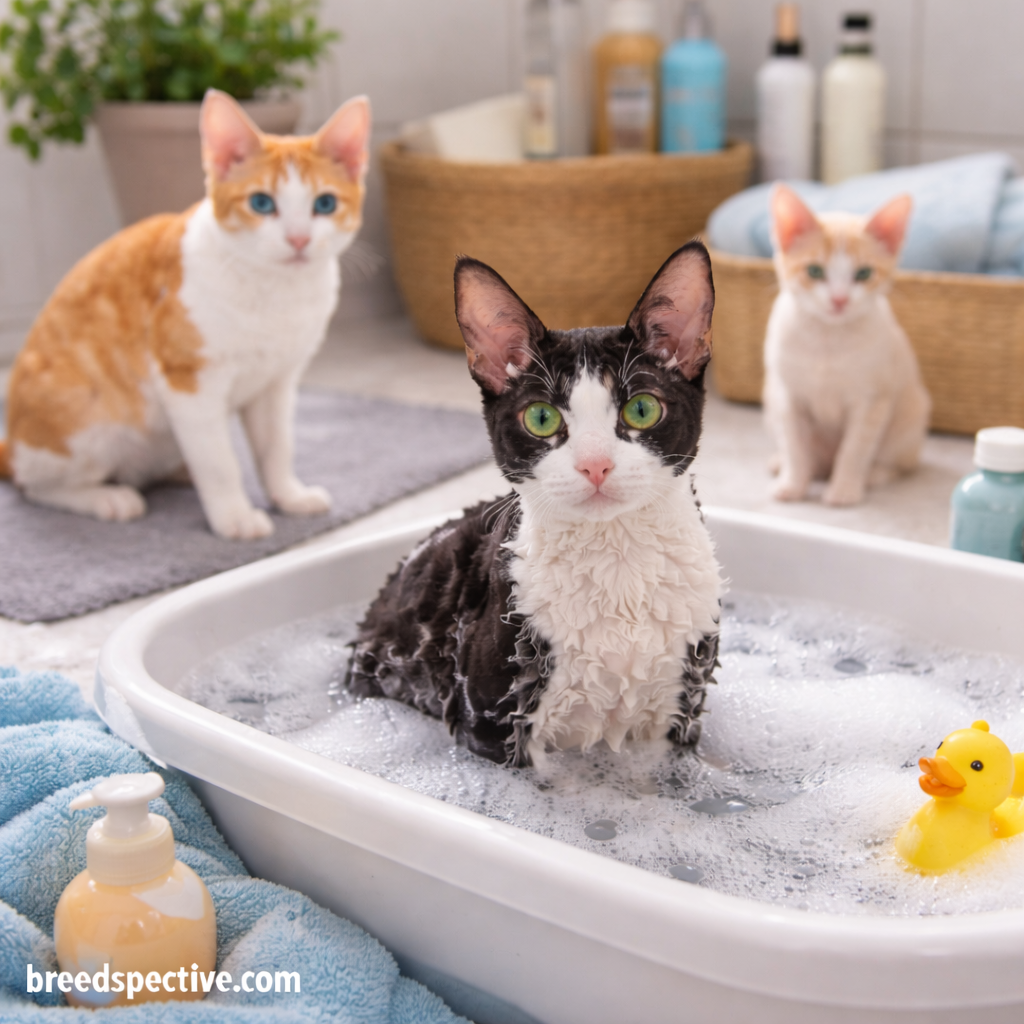
Cornish Rex cats may need occasional baths due to natural oil buildup on their skin. Because they lack guard hairs, oils are not distributed as evenly as in other breeds.
Bathing guidelines include:
- Bathe every few weeks or as needed
- Use a mild, cat-safe shampoo
- Rinse thoroughly to avoid residue
- Dry gently and keep warm afterward
Some Cornish Rex cats tolerate bathing well, especially when introduced early.
Skin Care and Sensitivity
The breed’s thin coat means the skin is more exposed than in other cats. This makes skin care an important part of overall grooming.
Skin care considerations:
- Monitor for redness or irritation
- Avoid harsh grooming products
- Keep living areas clean
- Limit exposure to extreme temperatures
Providing soft bedding and warm resting areas helps protect sensitive skin.
Ear Cleaning Needs
Cornish Rex cats often have larger ears that can accumulate wax more quickly than average.
Ear care tips:
- Check ears weekly
- Clean gently with a vet-approved solution
- Avoid cotton swabs deep in the ear
- Watch for signs of infection or discomfort
Regular ear maintenance helps prevent buildup and infections.
Nail Trimming and Paw Care
Routine nail care is essential for Cornish Rex cats, especially indoor pets.
Nail care guidelines:
- Trim nails every 2–3 weeks
- Use proper cat nail clippers
- Avoid cutting too close to the quick
- Provide scratching posts for maintenance
Regular trimming protects both the cat and household surfaces.
Dental Care and Oral Hygiene
Dental health is an often-overlooked aspect of grooming and care. Cornish Rex cats benefit from regular oral maintenance.
Dental care options include:
- Cat-safe toothbrush and toothpaste
- Dental treats or toys
- Routine veterinary dental checks
Good oral hygiene supports long-term health and comfort.
Temperature and Comfort Considerations
Because of their fine coat and low body fat, Cornish Rex cats are sensitive to cold.
Comfort needs include:
- Warm indoor environments
- Cozy beds and blankets
- Limited exposure to drafts
- Sunlit resting areas
They often seek warmth by curling up with people or under covers.
Diet and Weight Monitoring
Cornish Rex cats are active and energetic, which means they require balanced nutrition to maintain muscle and body condition.
Care tips include:
- High-quality protein-rich diet
- Portion control to avoid weight loss or gain
- Fresh water available at all times
Their fast metabolism means they may eat more frequently than other breeds.
Routine Veterinary Care
Regular veterinary visits are essential for maintaining overall health.
Recommended care includes:
- Annual wellness exams
- Vaccinations as advised
- Parasite prevention
- Monitoring skin and ear health
Preventive care ensures grooming and health needs are addressed early.
Creating an Ideal Care Routine
The Cornish Rex thrives with a consistent, gentle care routine tailored to its unique traits.
A balanced care routine includes:
- Minimal but mindful grooming
- Regular ear and nail maintenance
- Warm, comfortable living spaces
- Proper nutrition and veterinary care
Consistency helps prevent issues and strengthens the bond between cat and owner.
Final Thoughts on Grooming and Care Needs
Caring for a Cornish Rex is less about intensive grooming and more about thoughtful attention to comfort, skin health, and routine maintenance. Their unique coat simplifies some tasks while requiring extra awareness in others.
With the right approach, Cornish Rex cats remain healthy, clean, and content companions that reward attentive owners with affection and personality.