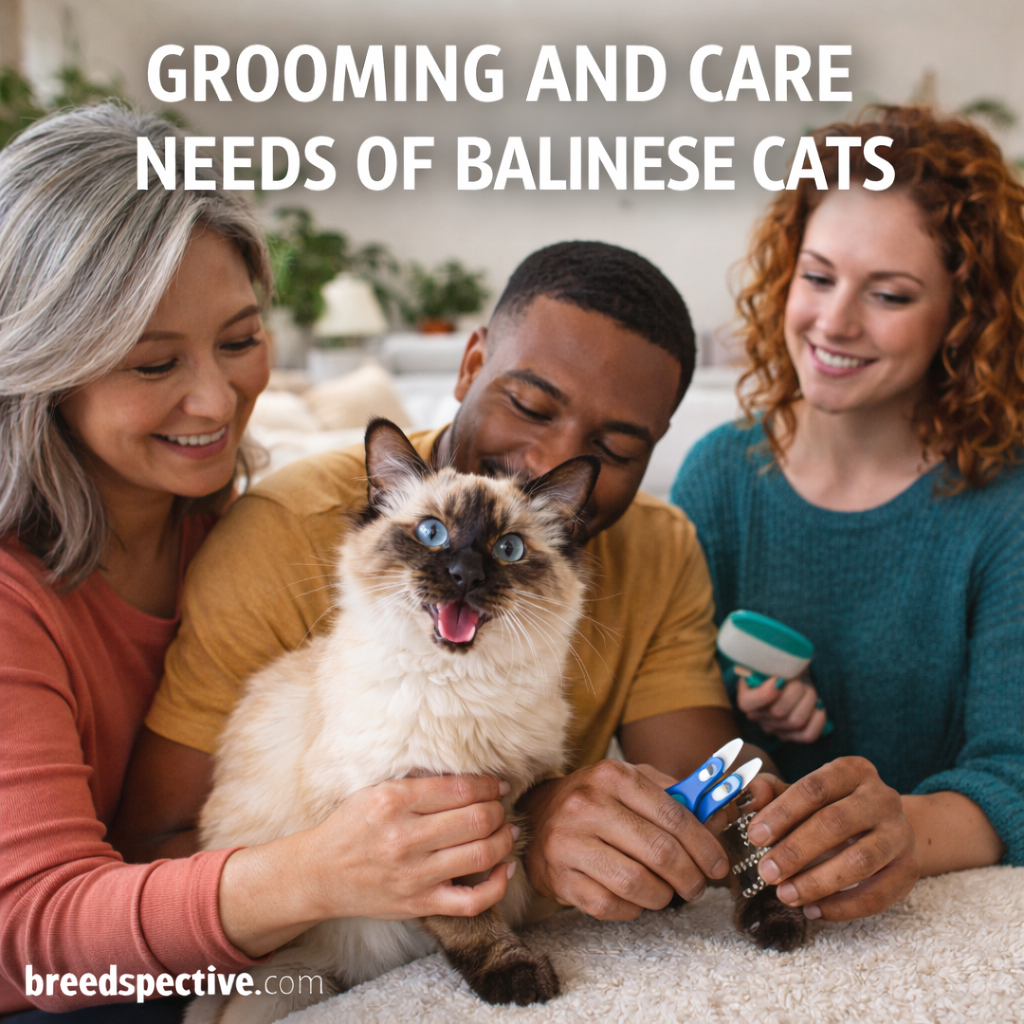
Balinese cats are known for their silky coats, elegant build, and highly social personalities. Despite their long hair, Balinese cats are considered relatively low-maintenance compared to many other long-haired breeds. Understanding their grooming and care needs helps keep them healthy, comfortable, and looking their best throughout every life stage.
Coat Type and Shedding Patterns
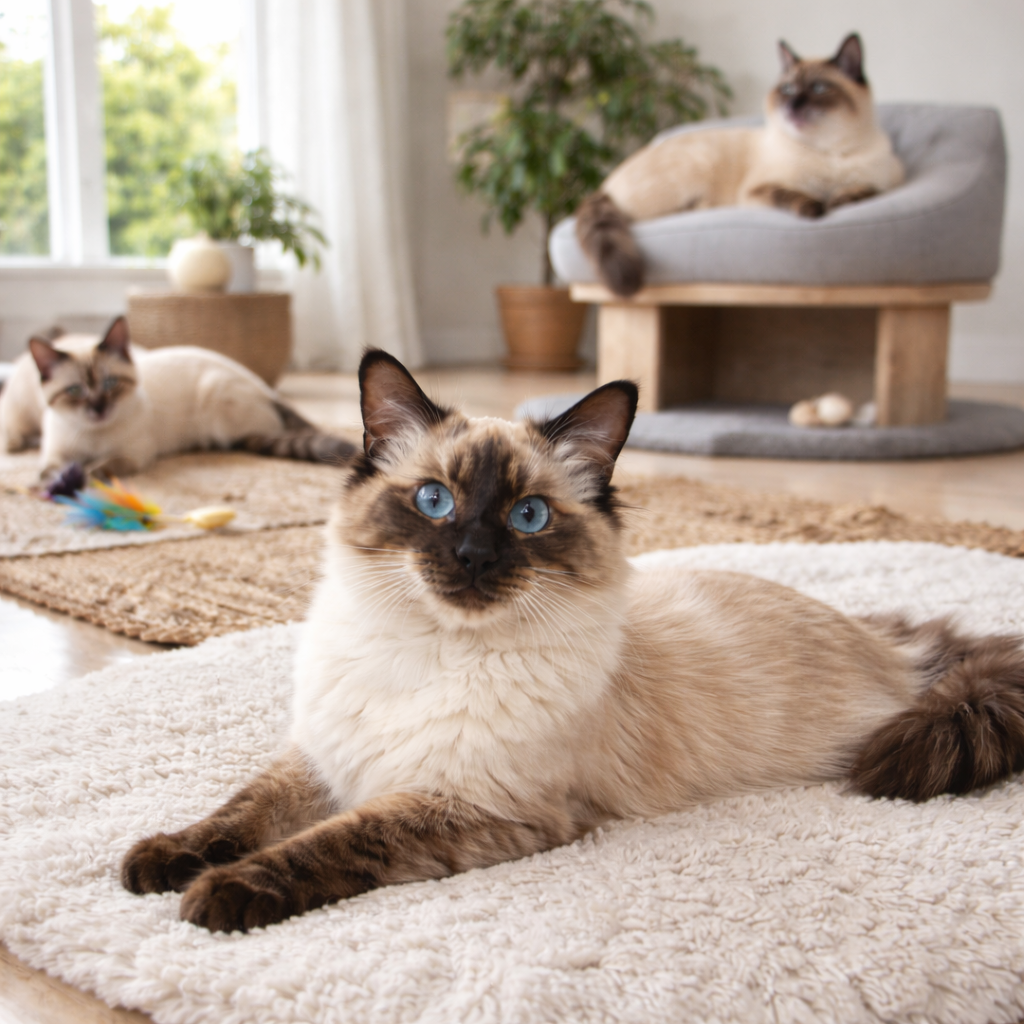
The Balinese has a fine, single-layer coat rather than a thick double coat. This unique coat structure significantly reduces matting and excessive shedding.
Key coat characteristics include:
- Medium-length, silky fur
- No dense undercoat
- Minimal mat formation
- Moderate, seasonal shedding
Because of this coat type, Balinese cats require less grooming than many people expect.
Brushing Frequency and Techniques
Regular brushing helps remove loose hair, reduce shedding, and maintain coat shine.
Recommended brushing routine:
- 1–2 times per week for most Balinese cats
- Increase brushing during seasonal shedding
- Use a soft slicker brush or stainless steel comb
- Brush gently to avoid skin irritation
Brushing sessions also serve as bonding time, which Balinese cats usually enjoy.
Bathing Needs
Balinese cats rarely need baths. Their coats naturally repel dirt and stay clean with routine grooming.
Bathing may be necessary if:
- The cat becomes unusually dirty
- There is exposure to sticky substances
- A veterinarian recommends medicated bathing
When bathing is needed, use a gentle, cat-safe shampoo and ensure thorough drying afterward.
Nail Trimming and Paw Care
Routine nail care is important, especially for indoor Balinese cats.
Nail care tips include:
- Trim nails every 2–4 weeks
- Use cat-specific nail clippers
- Avoid cutting into the quick
- Provide scratching posts to maintain nail health
Check paw pads periodically for dryness or debris.
Ear and Eye Care
Balinese cats do not have extreme ear or eye issues, but regular checks help prevent infections.
Basic care includes:
- Weekly ear inspections for redness or wax buildup
- Gentle cleaning with vet-approved solutions if needed
- Wiping minor eye discharge with a soft, damp cloth
Never insert objects into the ear canal.
Dental Care and Oral Health
Dental health plays a major role in a Balinese cat’s overall well-being.
Recommended dental care:
- Brush teeth several times per week if possible
- Use toothpaste formulated for cats
- Provide dental treats or toys
- Schedule regular veterinary dental exams
Good oral hygiene helps prevent gum disease and tooth loss.
Nutrition and Weight Management
Balinese cats are active and athletic, making proper nutrition essential.
Healthy feeding practices include:
- High-quality, balanced cat food
- Portion control to prevent overeating
- Limiting treats
- Adjusting calories based on age and activity level
Maintaining a healthy weight supports joint health and energy levels.
Exercise and Mental Stimulation
Balinese cats are intelligent and energetic. Physical activity and mental enrichment are essential parts of daily care.
Recommended enrichment activities:
- Interactive play sessions
- Puzzle feeders and toys
- Cat trees and climbing shelves
- Rotating toys to prevent boredom
Mental stimulation helps prevent stress-related behaviors.
Litter Box and Hygiene Habits
Balinese cats are typically clean and particular about their environment.
Best practices include:
- Daily scooping
- Weekly full litter changes
- Unscented, low-dust litter
- Easily accessible litter boxes
Clean litter boxes encourage consistent and healthy habits.
Monitoring Overall Health
Regular observation helps catch potential health issues early.
Watch for:
- Changes in coat condition
- Reduced grooming behavior
- Changes in appetite or energy
- Signs of discomfort or stress
Routine veterinary checkups are an essential part of long-term care.
Conclusion
Balinese cats are surprisingly easy to groom and care for, thanks to their fine, single-layer coats and clean habits. With regular brushing, basic hygiene, proper nutrition, and consistent mental stimulation, Balinese cats can remain healthy, active, and beautiful companions. A thoughtful care routine not only supports physical health but also strengthens the strong bond this breed forms with its owners.