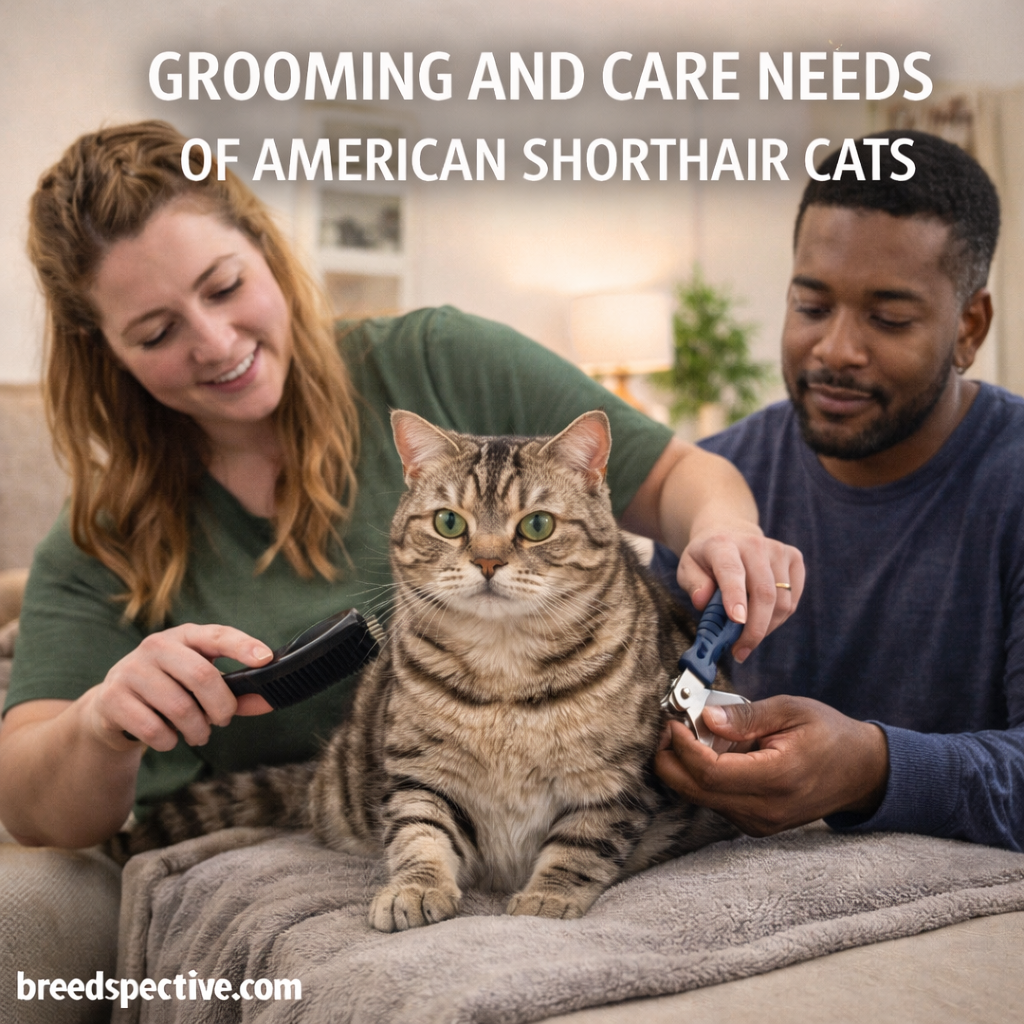
American Shorthair cats are known for their hardy health, easygoing temperament, and low-maintenance coats. Originally bred as working cats, they retain a natural resilience that makes their grooming and care needs simpler than many other breeds. However, consistent basic care is still essential to keep them comfortable, healthy, and looking their best.
This guide covers everything owners need to know about grooming and caring for American Shorthair cats, from coat maintenance to hygiene and overall wellness.
Understanding the American Shorthair Coat
The American Shorthair has a dense, short coat designed for protection and durability rather than luxury.
Key coat characteristics include:
- Short, thick fur with a slightly coarse texture
- Dense underlayer that provides insulation
- Seasonal shedding, especially in spring and fall
- Naturally dirt-resistant coat
Because of this structure, their coat requires minimal grooming compared to long-haired breeds.
How Often to Groom an American Shorthair
American Shorthairs are considered low-maintenance when it comes to grooming.
Recommended grooming frequency:
- Once per week during most of the year
- Two to three times per week during heavy shedding seasons
- Short, gentle sessions rather than long grooming routines
Regular brushing helps remove loose hair, reduce shedding, and distribute natural skin oils.
Best Grooming Tools for American Shorthairs
Using the right tools keeps grooming efficient and stress-free.
Recommended tools include:
- Soft bristle brush
- Rubber grooming brush or grooming mitt
- Fine-tooth comb for occasional use
- De-shedding tool used sparingly during seasonal sheds
Avoid sharp or aggressive tools that may irritate the skin.
Managing Seasonal Shedding
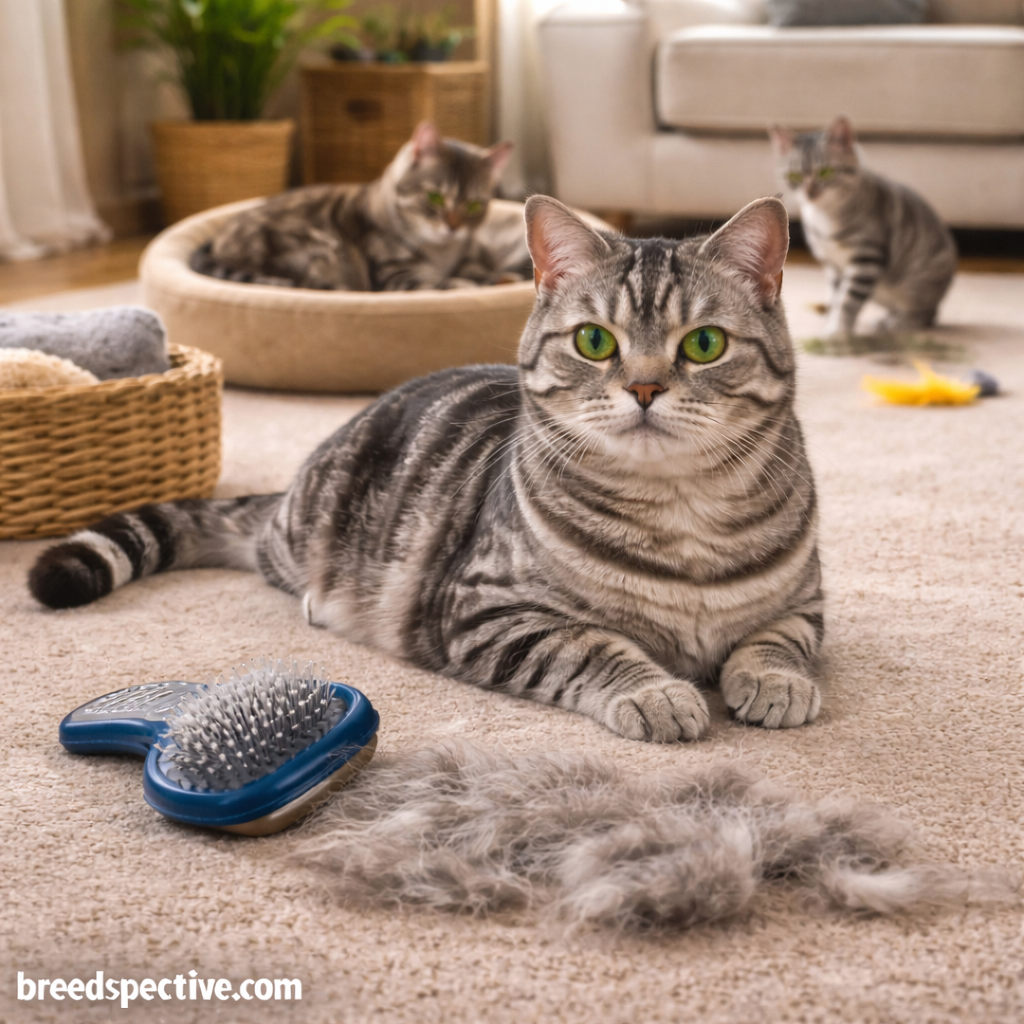
American Shorthairs shed moderately year-round, with heavier shedding during seasonal transitions.
Tips for controlling shedding:
- Increase brushing during spring and fall
- Brush in the direction of hair growth
- Groom in a calm environment
- Provide a balanced diet to support coat health
Consistent grooming significantly reduces loose hair in the home.
Bathing Needs and Skin Care
American Shorthair cats rarely need baths.
Bathing guidelines:
- Only bathe when the cat is visibly dirty or greasy
- Use a mild, cat-specific shampoo
- Rinse thoroughly to avoid residue
- Dry the cat completely in a warm environment
Over-bathing can dry out the skin and strip natural oils.
Nail Trimming and Paw Care
Routine nail care is an important part of overall grooming.
Nail care tips:
- Trim nails every two to three weeks
- Use cat-specific nail clippers
- Avoid cutting into the quick
- Provide scratching posts to naturally maintain nails
Check paws regularly for debris, cracked pads, or irritation.
Ear Cleaning and Eye Care
American Shorthairs typically have low ear and eye maintenance needs, but regular checks are still important.
Ear care:
- Check ears weekly for redness or buildup
- Clean gently with a vet-approved solution if needed
Eye care:
- Wipe away discharge with a soft, damp cloth
- Persistent tearing or redness should be evaluated by a veterinarian
Dental Care and Oral Health
Dental health is often overlooked but critical for long-term wellness.
Dental care recommendations:
- Brush teeth several times per week if tolerated
- Use only cat-safe toothpaste
- Provide dental treats or toys designed to reduce plaque
Regular dental care helps prevent gum disease and tooth loss.
Diet and Nutrition for Coat and Skin Health
A healthy coat begins with proper nutrition.
Key dietary components include:
- High-quality animal protein
- Omega-3 and omega-6 fatty acids
- Balanced vitamins and minerals
- Adequate hydration
Poor coat condition or excessive shedding may signal nutritional deficiencies.
Weight Management and Physical Care
American Shorthairs are prone to weight gain if overfed or under-exercised.
Weight management tips:
- Monitor portion sizes
- Encourage daily play and movement
- Use interactive toys to promote activity
- Maintain regular feeding schedules
Healthy weight supports joint health, grooming ability, and overall well-being.
Indoor vs Outdoor Care Considerations
Care needs vary slightly depending on lifestyle.
Indoor cats:
- Require regular brushing to manage shedding
- Lower exposure to parasites and debris
Outdoor or indoor-outdoor cats:
- May need more frequent coat checks
- Higher risk of parasites and injuries
- Require regular veterinary care and inspections
Regardless of lifestyle, grooming consistency remains important.
Creating a Stress-Free Grooming Routine
American Shorthairs are generally tolerant and calm during grooming.
Tips for positive grooming sessions:
- Start grooming early in life
- Keep sessions short and gentle
- Groom during relaxed moments
- Use calm handling and reassuring tones
- Reward cooperation with praise
Positive routines help maintain trust and cooperation.
Signs Grooming or Care Needs Attention
Watch for signs that grooming or care may be lacking:
- Excessive shedding or dandruff
- Greasy or dull coat
- Overgrown nails
- Red or irritated ears
- Bad breath or drooling
Early attention prevents more serious health issues.
Final Thoughts
Grooming and caring for an American Shorthair cat is straightforward and manageable for most owners. With weekly brushing, routine hygiene checks, proper nutrition, and regular veterinary care, these cats remain healthy, comfortable, and low-maintenance companions.
Their natural resilience and balanced temperament make grooming a simple part of daily life rather than a demanding task.