
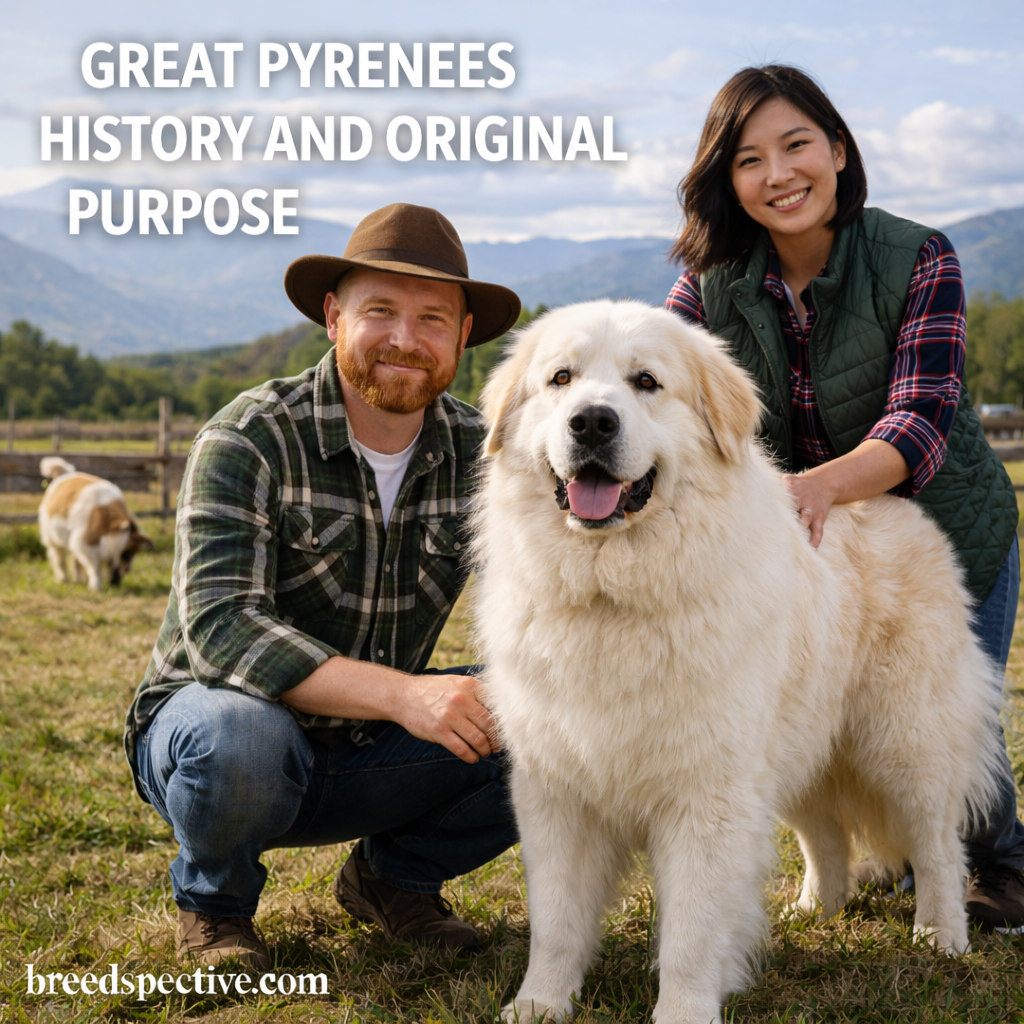
Great Pyrenees History Overview
The Great Pyrenees is an ancient working breed developed for one primary role: protecting livestock in harsh mountain environments. Unlike herding dogs that move animals under human direction, the Great Pyrenees was bred to work independently, making decisions without supervision and defending flocks against predators.
This long history of autonomous guardian work explains the breed’s calm confidence, strong instincts, and deeply ingrained sense of responsibility.
Origins in the Pyrenees Mountains
The Great Pyrenees originated in the Pyrenees Mountains, a rugged mountain range separating modern-day France and Spain. For thousands of years, shepherds in this region relied on large guardian dogs to protect sheep and goats from predators such as wolves and bears.
Environmental factors that shaped the breed included:
- Steep, rocky terrain
- Cold temperatures and heavy snowfall
- Isolated grazing areas
- Constant threat from large predators
Dogs that survived and succeeded in this environment needed strength, endurance, intelligence, and unwavering courage.
Ancient Ancestry and Early Development
Archaeological evidence suggests that Great Pyrenees–type dogs existed as early as 3000 BCE. These early guardian dogs likely descended from large white mountain dogs brought to Europe by migrating peoples from Asia.
Over centuries, selective breeding emphasized:
- Large size for predator deterrence
- Thick white coats for camouflage among sheep
- Strong territorial instincts
- Independent problem-solving ability
Natural selection favored dogs that could work alone and respond decisively to threats.
Original Purpose as Livestock Guardians
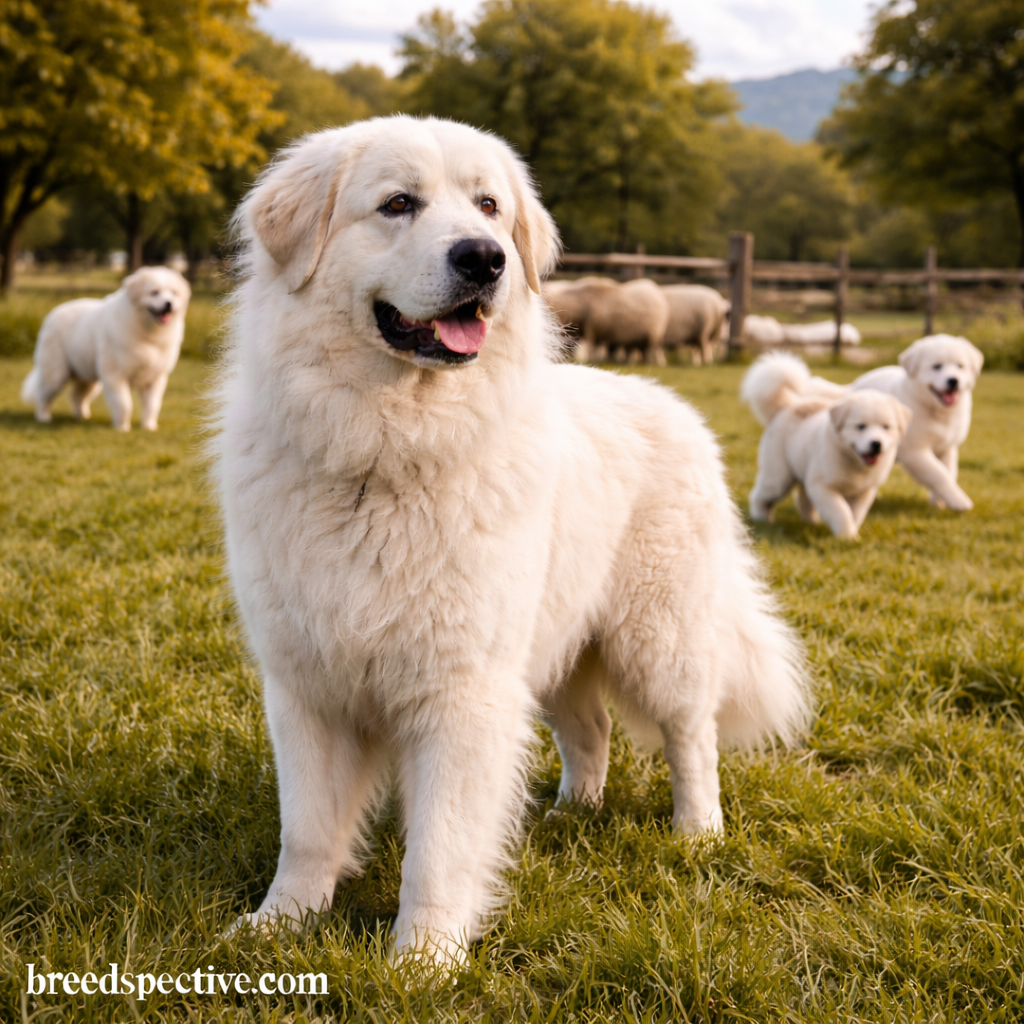
The Great Pyrenees was bred specifically to guard livestock rather than herd it. Their job was to live among the flock and deter predators through presence, vigilance, and action when necessary.
Primary guardian responsibilities included:
- Patrolling grazing areas
- Detecting predators at great distances
- Standing ground against wolves and bears
- Remaining calm and alert for long periods
Rather than chasing threats, Great Pyrenees relied on intimidation, vocal warnings, and physical presence.
Nighttime Guarding and Alert Behavior
Much of the Great Pyrenees’ work occurred at night, when predators were most active. This nocturnal guarding role shaped many of the breed’s modern behaviors.
Key nighttime traits included:
- Heightened alertness after dark
- Deep, resonant barking to warn predators
- Independent decision-making without human cues
These instincts remain strong in modern Great Pyrenees and are often misunderstood by inexperienced owners.
Relationship With Shepherds and Flocks
Unlike companion dogs, Great Pyrenees formed bonds not only with humans but also with the animals they protected. They lived full-time among livestock, developing a strong sense of group identity.
This relationship reinforced traits such as:
- Loyalty to their “flock”
- Calm behavior around vulnerable animals
- Protective instincts without aggression
- Emotional steadiness
The breed learned to distinguish between normal movement and genuine threats.
Spread Into Royal and Estate Life
By the 17th century, the Great Pyrenees gained recognition beyond rural shepherding communities. The breed became popular among French nobility, eventually earning the title “Royal Dog of France.”
This transition led to:
- Increased visibility across Europe
- Preservation of size and appearance
- Continued emphasis on calm temperament
Despite this shift, working guardian traits remained central to the breed.
Decline and Preservation Efforts
As large predators declined and farming practices changed, the need for livestock guardians decreased in many regions. By the early 20th century, the Great Pyrenees population had declined significantly.
Preservation efforts included:
- Dedicated breeding programs in France
- Reintroduction to livestock guarding roles
- Expansion into North America
These efforts helped stabilize the breed and maintain its working identity.
Introduction to North America
The Great Pyrenees was introduced to North America in the 19th and early 20th centuries. Farmers and ranchers quickly recognized its value as a livestock guardian.
In North America, the breed became known for:
- Protecting sheep, goats, and poultry
- Thriving in rural and agricultural environments
- Remaining effective against predators
This resurgence reinforced the breed’s original purpose.
How History Shapes the Modern Great Pyrenees
The Great Pyrenees’ historical role explains many modern traits:
- Independence from unsupervised work
- Calm demeanor from long periods of watchfulness
- Nighttime barking rooted in predator deterrence
- Strong territorial awareness
These traits are not behavioral flaws but inherited survival instincts.
Great Pyrenees in Modern Roles
Today, the Great Pyrenees continues to serve as both a working guardian and a companion dog.
Modern roles include:
- Livestock guardian
- Rural family protector
- Property sentinel
- Calm household companion
Even when kept as pets, their guardian instincts remain active.
Final Thoughts on Great Pyrenees History and Purpose
The Great Pyrenees is a breed defined by independence, protection, and quiet strength. Bred to guard flocks in some of the most demanding environments in the world, it developed traits that prioritize vigilance, patience, and loyalty.
Understanding the Great Pyrenees’ original purpose provides essential insight into its temperament today, helping owners appreciate the breed not just for its beauty, but for the centuries of responsibility it carries.