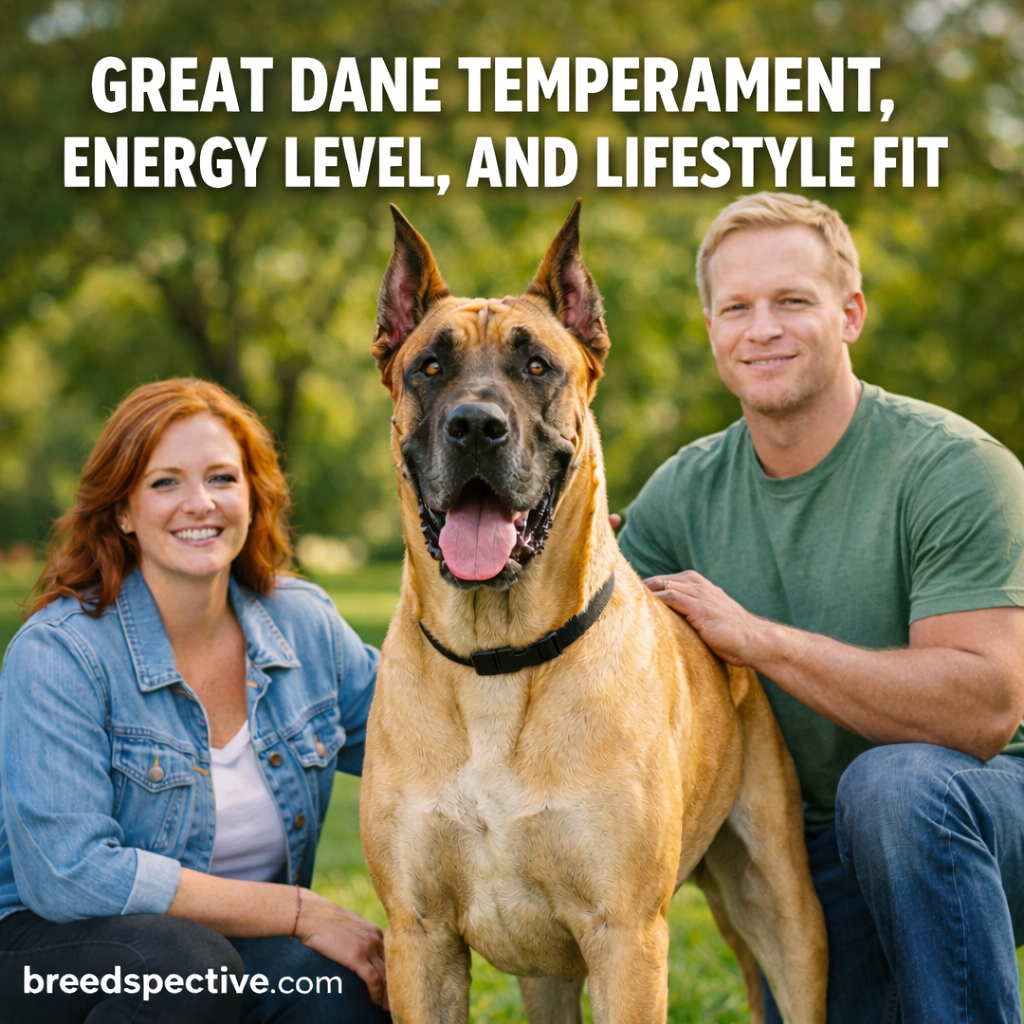
Great Danes are often called “gentle giants,” and that reputation is well earned. Despite their massive size, this breed is known for its calm temperament, affectionate nature, and surprisingly adaptable lifestyle needs. However, owning a Great Dane comes with unique considerations, especially when it comes to space, daily activity, and long-term commitment.
This guide explores the Great Dane’s temperament, energy level, and overall lifestyle fit so you can decide whether this impressive breed aligns with your home and routine.
Great Dane Temperament Overview
Great Danes are widely admired for their balanced, friendly personalities. They tend to form strong bonds with their families and thrive on companionship.
Common temperament traits include:
- Gentle and affectionate with family members
- Patient and tolerant, especially with respectful children
- Loyal and people-oriented
- Calm and relaxed indoors
- Sensitive to their owner’s emotions
Despite their intimidating appearance, Great Danes are rarely aggressive when properly socialized. Early exposure to people, environments, and other animals helps ensure they grow into confident, well-mannered adults.
Energy Level and Daily Activity Needs
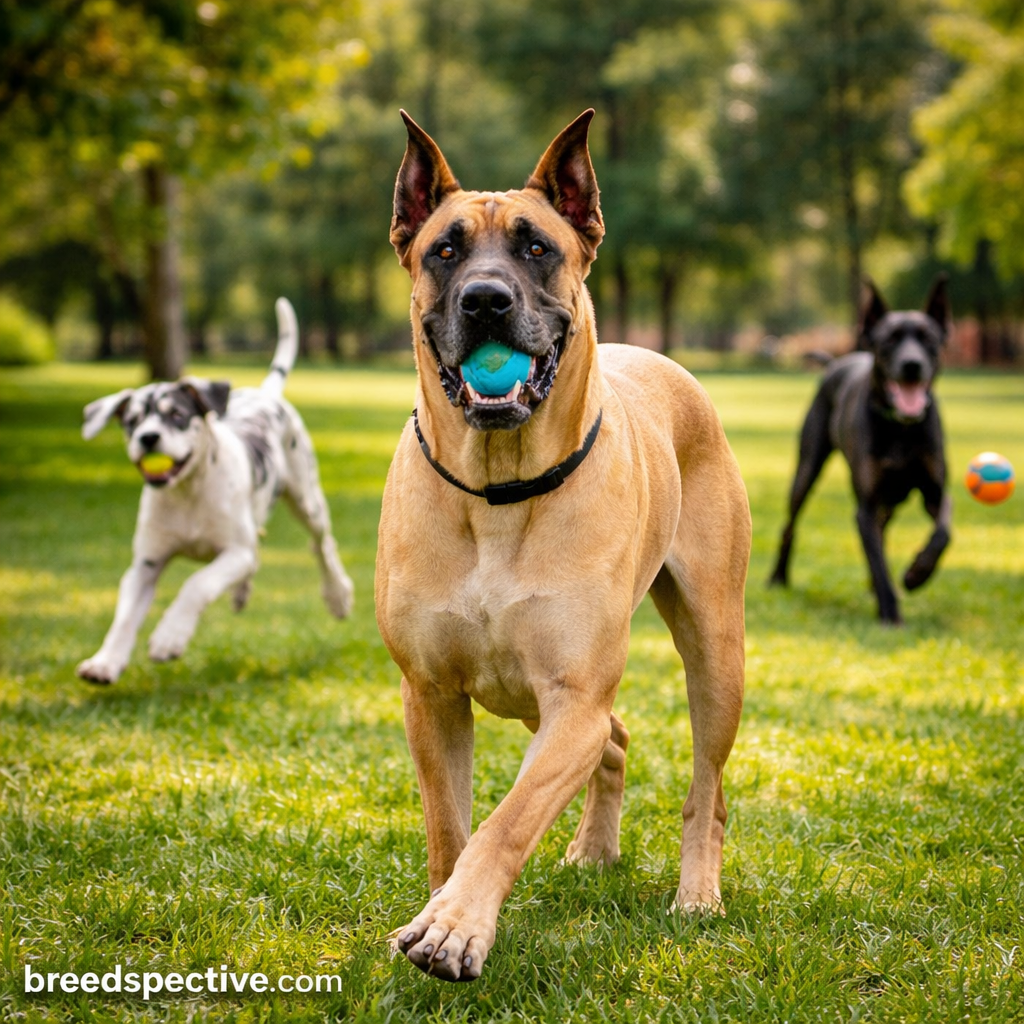
Great Danes are not high-energy dogs, but they still require consistent daily movement to stay healthy and mentally balanced.
Typical energy characteristics:
- Moderate energy overall
- Short bursts of play followed by long rest periods
- Enjoy leisurely walks rather than intense exercise
- Prone to laziness if under-stimulated
Daily needs usually include:
- 30–60 minutes of light to moderate exercise
- One or two relaxed walks per day
- Gentle play sessions indoors or in a fenced area
Because Great Danes are a giant breed, excessive running or jumping—especially during puppyhood—can stress their joints. Controlled, low-impact activity is ideal.
Indoor Behavior and Home Life
Indoors, Great Danes are typically calm, affectionate, and content to lounge near their people. They often see themselves as lap dogs, despite their size.
What to expect at home:
- Loves lounging on couches and soft surfaces
- Prefers being close to family members
- Low tendency toward destructive behavior when exercised properly
- Can be unaware of their size in tight spaces
Although they do not need a mansion, Great Danes do best in homes with enough space to move comfortably without constant obstacles.
Great Danes With Children and Other Pets
When raised and socialized properly, Great Danes are usually excellent with children and can coexist peacefully with other pets.
Key considerations:
- Gentle and patient with kids
- Best suited for homes with older children due to size
- Generally friendly with other dogs
- Early socialization helps reduce clumsiness-related accidents
Supervision is always recommended around small children, not due to aggression, but because a large dog can unintentionally knock someone over.
Ideal Living Environment
Great Danes are more adaptable than many people expect, but their size still influences their ideal lifestyle.
Best living situations include:
- Homes with moderate indoor space
- Owners who are home often or work remotely
- Families seeking a calm, affectionate companion
- Households prepared for higher food and veterinary costs
Apartment living is possible if:
- Daily exercise needs are met
- Stairs are manageable
- The building allows giant breeds
Is a Great Dane Right for You?
A Great Dane may be a perfect fit if you:
- Want a calm, loyal companion
- Enjoy a relaxed lifestyle
- Have room for a very large dog
- Are prepared for higher long-term care costs
- Value companionship over constant activity
They may not be ideal if you:
- Prefer highly energetic dogs
- Travel frequently and leave dogs alone often
- Have limited space with narrow layouts
- Are unprepared for giant-breed responsibilities
Final Thoughts
Great Danes offer a unique blend of size, sweetness, and serenity. Their calm temperament and moderate energy level make them wonderful companions for the right household. While their physical presence is enormous, their emotional needs are simple—love, consistency, and time with their people.
For owners who can meet those needs, the Great Dane is a deeply rewarding and affectionate breed that truly lives up to its “gentle giant” reputation.