
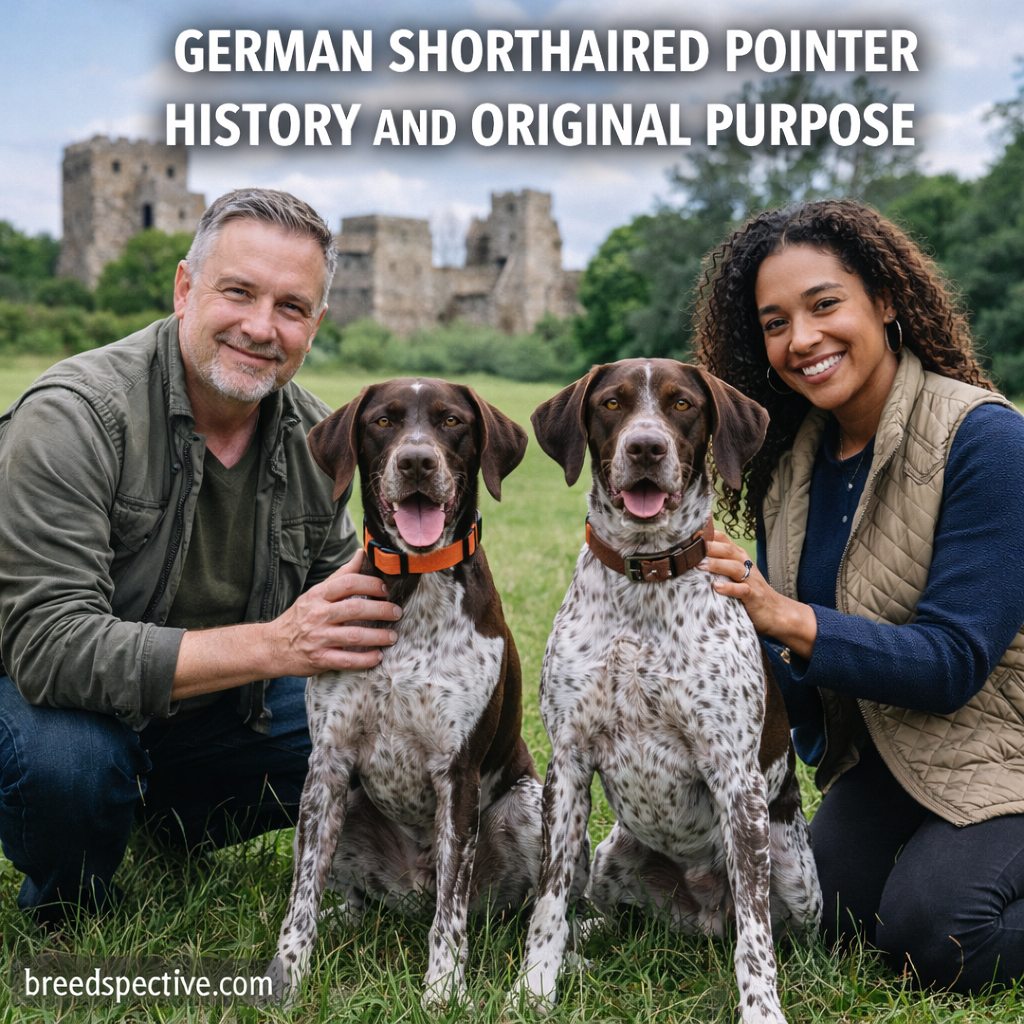
The German Shorthaired Pointer (GSP) is a versatile, athletic dog best known today for its energy, intelligence, and hunting ability. However, the breed’s origins go far beyond modern companionship. The German Shorthaired Pointer was deliberately developed to be an all-purpose working dog, capable of performing a wide range of tasks both in the field and alongside its owner.
This article explores the history and original purpose of the German Shorthaired Pointer, tracing how careful breeding shaped one of the most adaptable sporting dogs in the world.
Early Hunting Dogs in Germany
Before the German Shorthaired Pointer existed as a defined breed, hunters in Germany relied on a variety of specialized dogs.
These early dogs were typically bred for single purposes, such as:
- Tracking wounded game
- Pointing birds
- Retrieving waterfowl
- Guarding property
While effective, these dogs lacked versatility. Hunters often needed multiple dogs to perform different tasks, which was inefficient and costly.
The Goal: A Versatile All-Purpose Hunting Dog
By the late 18th and early 19th centuries, German hunters sought a new type of dog—one that could hunt, point, retrieve, and track all in a single animal.
Breeders aimed to create a dog that could:
- Work both on land and in water
- Track wounded game using scent
- Point birds with intensity and precision
- Retrieve game gently
- Remain loyal and trainable in the home
This goal would eventually lead to the development of the German Shorthaired Pointer.
Foundation Breeds Used in Development
The German Shorthaired Pointer did not come from a single ancestor but was created through intentional crossbreeding.
Key influences included:
- German bird dogs used for tracking and pointing
- Spanish Pointer types that contributed strong scenting ability
- English Pointers that added speed, elegance, and athleticism
This careful blending produced a dog that combined endurance, intelligence, and versatility.
Emergence of the German Shorthaired Pointer
By the mid-1800s, the new type of versatile hunting dog became more consistent in appearance and ability.
Distinctive traits began to emerge:
- Strong pointing instinct
- Excellent nose and tracking ability
- High stamina and speed
- Cooperative working style with handlers
As these traits stabilized, the breed became known as the German Shorthaired Pointer.
Establishment of Breed Standards
Formal recognition of the German Shorthaired Pointer occurred toward the end of the 19th century.
Breed standards focused on:
- Functional hunting ability over appearance
- Balanced temperament suitable for working closely with humans
- Physical traits that supported endurance and agility
- Intelligence and trainability
Unlike some breeds developed for appearance, the GSP’s standard emphasized performance first.
Original Working Roles of the GSP

Historically, German Shorthaired Pointers were expected to perform a wide range of duties.
Their original roles included:
- Pointing upland birds
- Retrieving game on land and in water
- Tracking wounded animals
- Assisting hunters in varied terrain
This versatility made them especially valuable to European hunters who needed reliable, adaptable dogs.
The GSP as a Hunter’s Companion
Beyond field work, German Shorthaired Pointers were also valued for their close bond with their handlers.
They were bred to be:
- Attentive and cooperative
- Responsive to commands
- Loyal and people-oriented
- Calm and manageable outside of work
This balance between work drive and companionship helped the breed integrate smoothly into family life.
Introduction to Other Countries
German Shorthaired Pointers were introduced to other parts of Europe and later to North America in the early 20th century.
As the breed spread:
- Hunters appreciated its adaptability to different game and environments
- Field trials showcased its speed and precision
- Breeders worked to preserve working ability
The breed quickly gained popularity among sportsmen.
Transition Into Modern Roles
While hunting remains a primary role for many German Shorthaired Pointers, the breed has adapted to modern lifestyles.
Today, GSPs are commonly found as:
- Hunting and field trial dogs
- Search-and-rescue dogs
- Detection dogs
- Active family companions
- Competitive sport dogs in agility and obedience
Their historical versatility continues to define their modern success.
How History Shaped the GSP Temperament
The German Shorthaired Pointer’s temperament is a direct result of its working origins.
Key traits shaped by history include:
- High energy and endurance
- Strong desire to work with humans
- Intelligence and problem-solving ability
- Need for purpose and activity
Understanding the breed’s past helps explain why GSPs thrive best in active, structured homes.
Common Myths About GSP Origins
Some misconceptions persist about the breed.
Clarifying the facts:
- The GSP is not a modern designer breed
- It was not bred solely for appearance
- Its temperament reflects working purpose, not hyperactivity
The breed’s behavior makes sense when viewed through its historical role.
Final Thoughts on German Shorthaired Pointer History and Purpose
The German Shorthaired Pointer was never intended to be just a pet. It was carefully developed as a highly versatile working dog, capable of excelling in demanding environments while remaining loyal and cooperative at home.
From its origins in German hunting culture to its modern role as an active companion, the GSP’s history explains its intelligence, drive, and need for engagement. For owners who understand and respect this heritage, the German Shorthaired Pointer remains one of the most rewarding and capable breeds in the world.