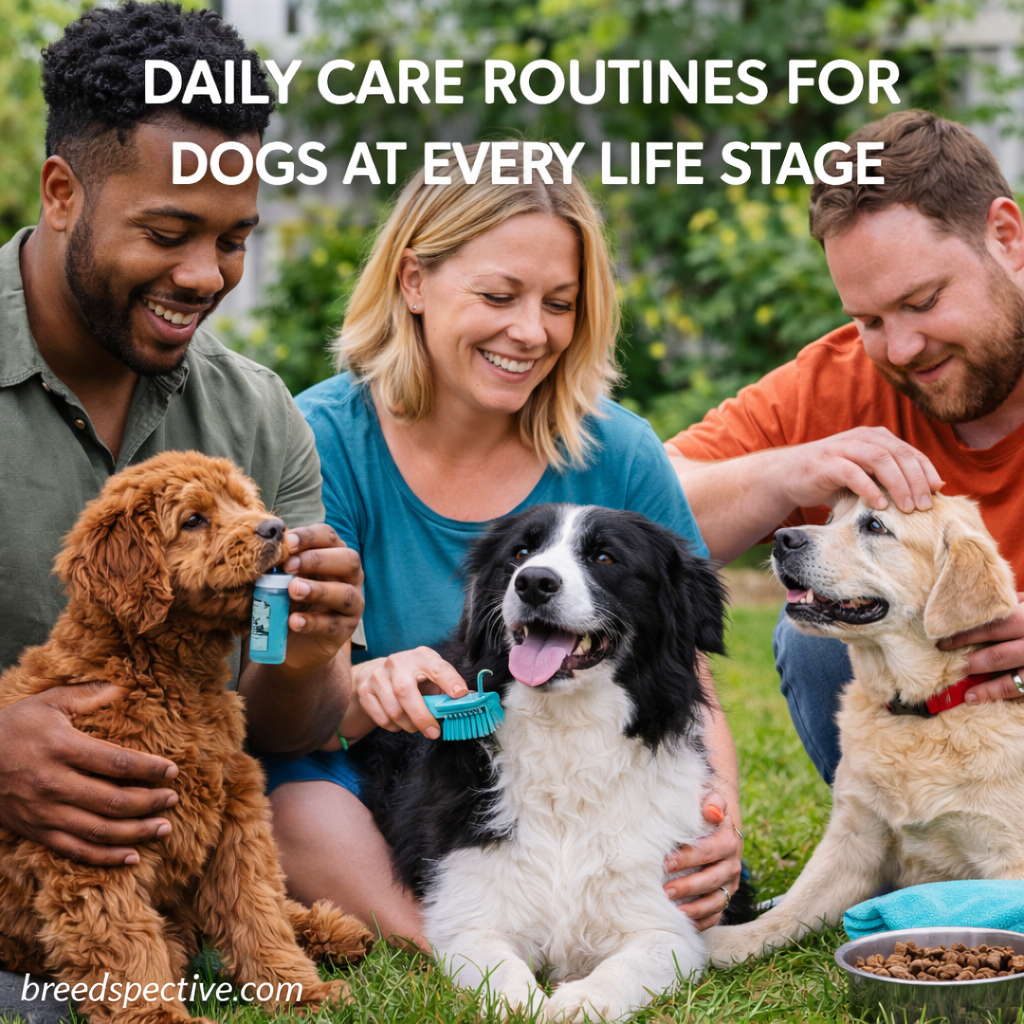
Dogs require consistent daily care to stay healthy, comfortable, and emotionally balanced. While the basics of care remain similar throughout a dog’s life, routines should evolve as dogs grow from puppies into adults and eventually seniors.
Understanding how daily care needs change at each life stage helps owners provide the right level of attention, exercise, nutrition, and mental stimulation for long-term well-being.
Why Daily Routines Matter for Dogs
Dogs thrive on structure. Predictable routines help reduce stress, support physical health, and strengthen the bond between dogs and their owners.
Benefits of consistent daily care include:
- Better behavior and emotional stability
- Improved digestion and energy levels
- Reduced anxiety and confusion
- Stronger trust and communication
- Early detection of health issues
A well-planned routine supports both physical and mental health at every age.
Core Daily Care Essentials for All Dogs
Regardless of age, all dogs need a foundation of daily care.
Universal daily care elements:
- Fresh food and clean water
- Bathroom breaks
- Physical activity
- Mental stimulation
- Social interaction
- Basic grooming checks
How these needs are met will vary depending on the dog’s life stage.
Daily Care for Puppies
Puppyhood is a critical developmental period that sets the foundation for lifelong habits and health.
Key daily puppy care needs include:
- Frequent meals tailored to growth
- Regular potty breaks
- Short, frequent play sessions
- Gentle socialization experiences
- Basic training practice
- Rest periods and naps
Puppies have limited attention spans and energy bursts, so routines should be flexible yet consistent.
Feeding and Nutrition for Puppies
Puppies require more frequent meals to support rapid growth.
Daily feeding considerations:
- 3–4 meals per day
- Puppy-specific food formulas
- Consistent feeding times
- Monitoring appetite and stool quality
Avoid overfeeding, as rapid weight gain can affect joint development.
Exercise and Play for Puppies
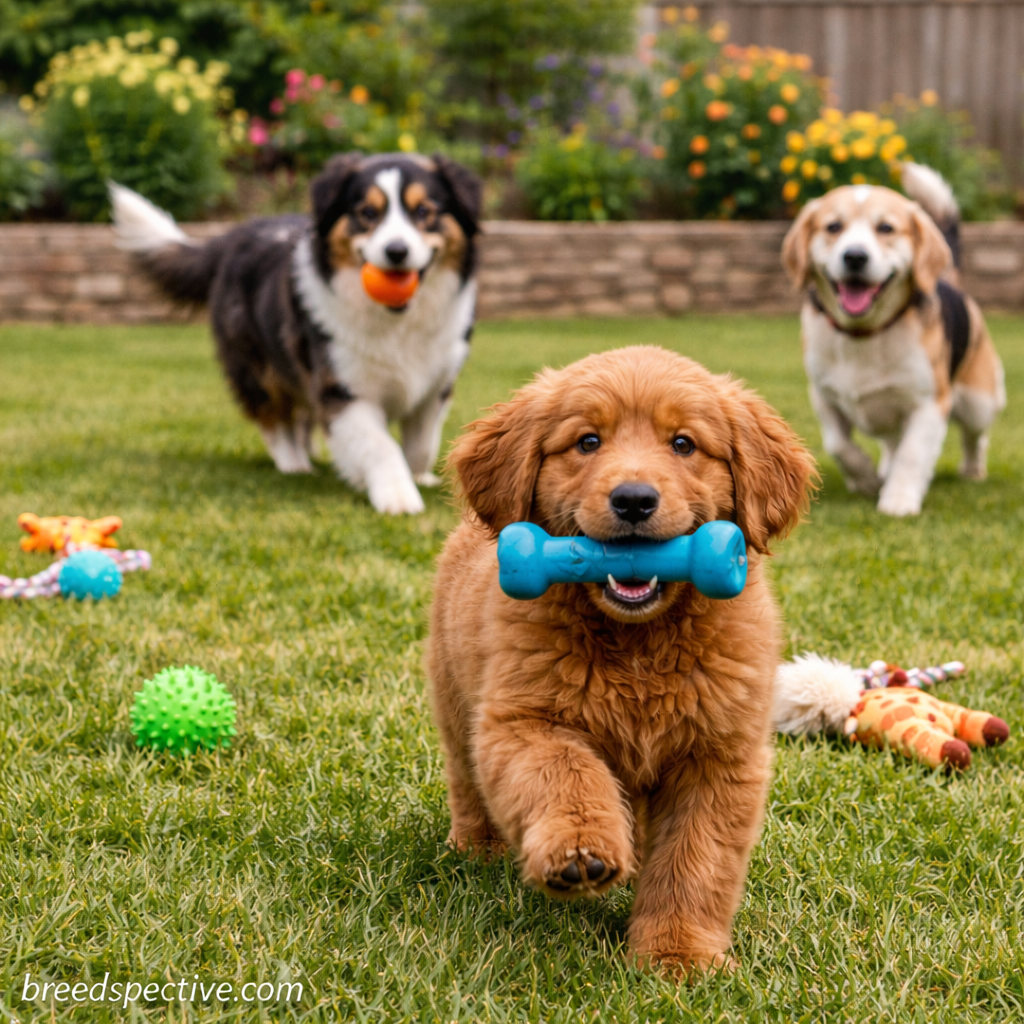
Exercise for puppies should be controlled to protect growing joints.
Recommended daily activity:
- Short play sessions spread throughout the day
- Gentle walks appropriate for age
- Interactive toys for mental stimulation
- Avoid forced running or jumping
Mental enrichment is just as important as physical play.
Daily Care for Adult Dogs
Adult dogs benefit from structured routines that balance activity, rest, and engagement.
Adult daily care typically includes:
- One or two meals per day
- Regular exercise sessions
- Ongoing training or enrichment
- Social interaction
- Routine grooming checks
Consistency during adulthood helps prevent behavior problems and weight gain.
Feeding and Nutrition for Adult Dogs
Adult dogs require balanced nutrition to maintain energy and overall health.
Daily nutrition considerations:
- Portion control based on size and activity level
- High-quality protein sources
- Limited treats
- Adequate hydration
Monitoring weight regularly helps prevent obesity-related health issues.
Exercise Needs for Adult Dogs
Exercise requirements vary by breed, size, and personality.
Daily exercise options:
- Walks or jogs
- Playtime in a yard or park
- Interactive games like fetch
- Training exercises that engage the mind
Adequate exercise reduces boredom and destructive behaviors.
Mental Stimulation for Adult Dogs
Mental enrichment is essential for preventing frustration and anxiety.
Daily mental stimulation ideas:
- Puzzle feeders
- Training refreshers
- Scent games
- Rotating toys
A mentally engaged dog is often calmer and more content.
Daily Care for Senior Dogs
As dogs age, daily routines should be adjusted to accommodate changing physical and cognitive needs.
Senior dog daily care focuses on:
- Comfort and mobility support
- Gentle exercise
- Dietary adjustments
- Closer health monitoring
- Increased rest periods
Older dogs may still enjoy routines, but at a slower pace.
Feeding and Nutrition for Senior Dogs
Senior dogs often need modified diets.
Daily senior nutrition considerations:
- Senior-specific food formulas
- Easier-to-digest ingredients
- Monitoring appetite changes
- Maintaining healthy weight
Consult a veterinarian for age-appropriate dietary adjustments.
Exercise and Mobility for Senior Dogs
Exercise remains important, but intensity should be reduced.
Recommended daily activity:
- Short, gentle walks
- Low-impact play
- Light stretching
- Mental enrichment over physical exertion
Watch for signs of discomfort and adjust activity accordingly.
Grooming and Hygiene at Every Life Stage
Daily grooming checks help maintain comfort and catch issues early.
Daily grooming tasks may include:
- Brushing (especially for long-haired dogs)
- Checking eyes, ears, and paws
- Monitoring skin and coat condition
- Cleaning food and water bowls
Regular grooming builds trust and familiarity with handling.
Bathroom Routines and House Habits
Consistent bathroom routines support digestive health and house training.
Daily bathroom care includes:
- Scheduled potty breaks
- Observing changes in elimination
- Maintaining clean outdoor areas
- Adjusting frequency for age
Senior dogs may need more frequent breaks.
Emotional Care and Bonding
Emotional well-being is a vital part of daily care.
Ways to support emotional health:
- Spending quality time together
- Maintaining predictable routines
- Offering affection and reassurance
- Avoiding prolonged isolation
Strong emotional bonds improve overall behavior and resilience.
Adapting Routines During Life Transitions
Life changes can disrupt routines, requiring temporary adjustments.
Common transitions include:
- Moving homes
- Adding new pets
- Changes in work schedules
- Aging-related health changes
Gradual adjustments help dogs adapt with minimal stress.
Final Thoughts
Daily care routines are the foundation of a dog’s health and happiness at every life stage. While puppies, adults, and seniors have different needs, consistency, attention, and flexibility remain key.
By adapting routines as dogs age, owners can support long, comfortable, and fulfilling lives built on trust, structure, and care.