

The Cornish Rex is one of the most unique cat breeds in the world, instantly recognizable for its soft, curly coat and elegant build. While its appearance often steals the spotlight, the breed’s history is just as fascinating. From a single genetic mutation to worldwide recognition, the Cornish Rex has a story shaped by chance, careful breeding, and a love for distinctive cats.
The Accidental Beginning of the Cornish Rex
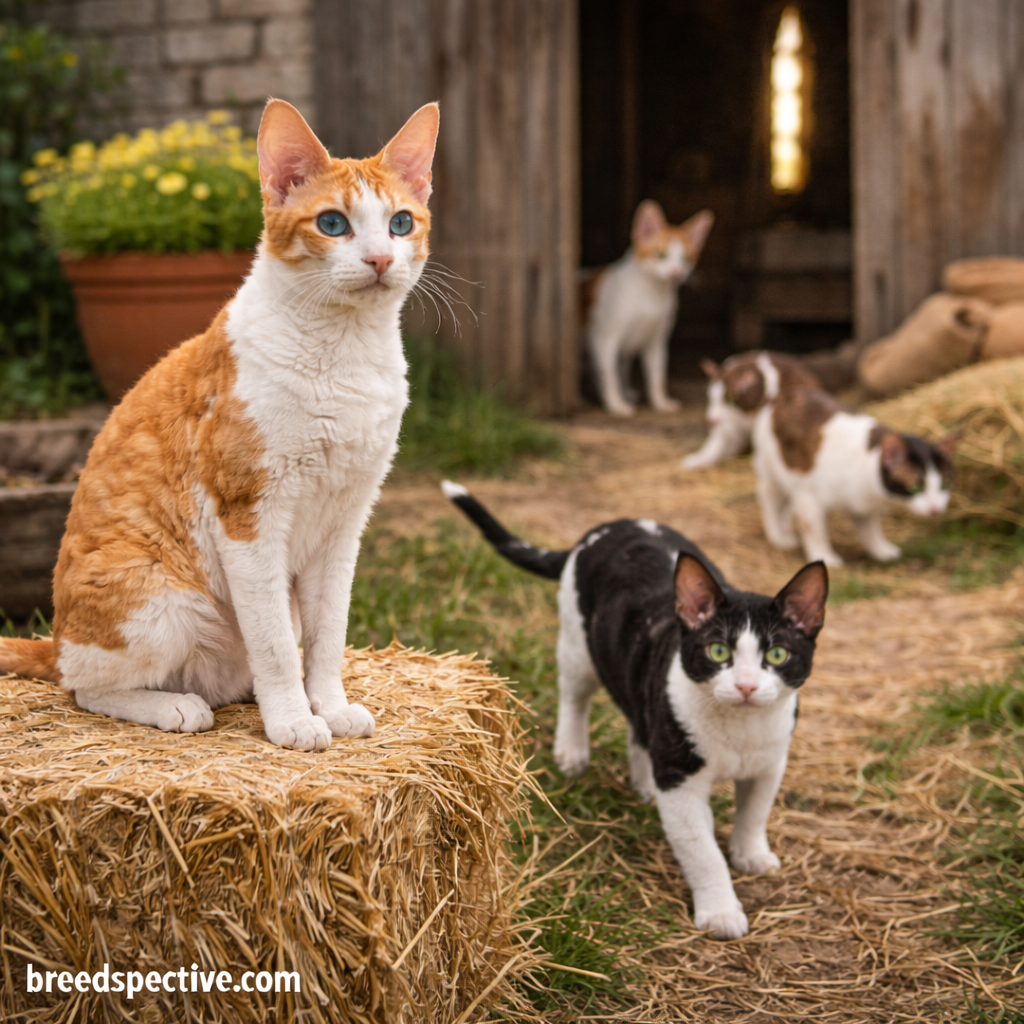
The Cornish Rex breed began by accident in the 1950s in Cornwall, England. A litter of barn cats produced a kitten with an unusually curly coat unlike anything seen before.
Key details of the breed’s origin include:
- A naturally occurring genetic mutation
- Curly coat caused by a recessive gene
- A kitten that stood out dramatically from its littermates
This unique kitten became the foundation of the Cornish Rex breed.
Early Development and Selective Breeding
Recognizing the rarity of the mutation, breeders began carefully planned breeding programs to preserve and develop the trait. The early years required thoughtful pairings to stabilize the coat while maintaining healthy body structure.
Early breeding goals included:
- Preserving the curly coat pattern
- Strengthening overall health
- Maintaining a slender, athletic build
- Enhancing friendly, people-oriented temperament
Selective breeding played a critical role in transforming a single mutation into a consistent breed.
Expansion Beyond England
Interest in the Cornish Rex quickly spread beyond the United Kingdom. Breeders in other countries became intrigued by the breed’s unusual appearance and engaging personality.
Important milestones included:
- Introduction to the United States
- Development of international breeding programs
- Growing recognition among cat fanciers
As the breed expanded globally, standards were refined to ensure consistency across regions.
Genetic Significance of the Curly Coat
The Cornish Rex’s coat is genetically distinct from other curly-coated cat breeds. Unlike some breeds with coarse or wiry curls, the Cornish Rex has soft, close-lying waves.
Genetic characteristics include:
- Lack of guard hairs
- Coat made primarily of undercoat
- Lightweight and silky texture
- Unique curl pattern across the body
This genetic makeup contributes to the breed’s warm, soft feel and sleek appearance.
Recognition by Cat Associations
As the breed gained popularity, official cat organizations began recognizing the Cornish Rex. Breed standards were developed to define ideal traits, including coat texture, body type, and head shape.
Recognition milestones included:
- Acceptance by major cat registries
- Establishment of breed standards
- Growth in show participation
Official recognition helped solidify the Cornish Rex as a distinct and respected breed.
Evolution of the Breed’s Appearance
Over time, selective breeding refined the Cornish Rex’s signature look. While the curly coat remained the defining feature, other traits became standardized.
Refined physical traits include:
- Large, expressive ears
- Slender, arched body
- Fine bone structure
- Wedge-shaped head
Despite refinement, breeders worked to avoid exaggeration and prioritize health.
Temperament Shaped by History
The Cornish Rex’s affectionate and social personality is partly a result of its breeding history. Early breeders favored cats that were friendly, curious, and comfortable around people.
Temperament traits influenced by breeding include:
- High sociability
- Playful, kitten-like behavior
- Strong bonds with humans
- Adaptability to indoor living
These traits helped the breed transition smoothly into companion homes.
Comparison to Other Rex Breeds
Although often grouped with other “Rex” cats, the Cornish Rex is genetically distinct from similar breeds. The curly coat genes differ, and each Rex breed developed independently.
Key distinctions include:
- Unique genetic mutation
- Finer coat texture
- More athletic body shape
This distinction is important for understanding the breed’s uniqueness and care needs.
Modern Cornish Rex Cats
Today, the Cornish Rex is a beloved breed worldwide. It appears in households, cat shows, and breeding programs that emphasize both beauty and temperament.
Modern breed characteristics include:
- Consistent curly coat
- High energy and intelligence
- Strong human interaction
- Indoor-focused lifestyle
Responsible breeders continue to prioritize health, temperament, and genetic diversity.
Why Cornish Rex History Matters
Understanding the Cornish Rex’s history provides insight into its appearance, behavior, and care requirements. The breed’s origins explain its sociability, energy level, and physical traits.
Key takeaways for owners include:
- Appreciation for the breed’s genetic uniqueness
- Understanding coat care needs
- Recognition of its social nature
Breed history offers valuable context for responsible ownership.
Final Thoughts on Cornish Rex Origins
The Cornish Rex is a remarkable example of how a single genetic mutation can lead to an entirely new breed. From a quiet farm in Cornwall to international recognition, its journey is one of curiosity, dedication, and admiration for uniqueness.
For cat lovers seeking a breed with both a fascinating past and an engaging personality, the Cornish Rex stands out as truly one of a kind.