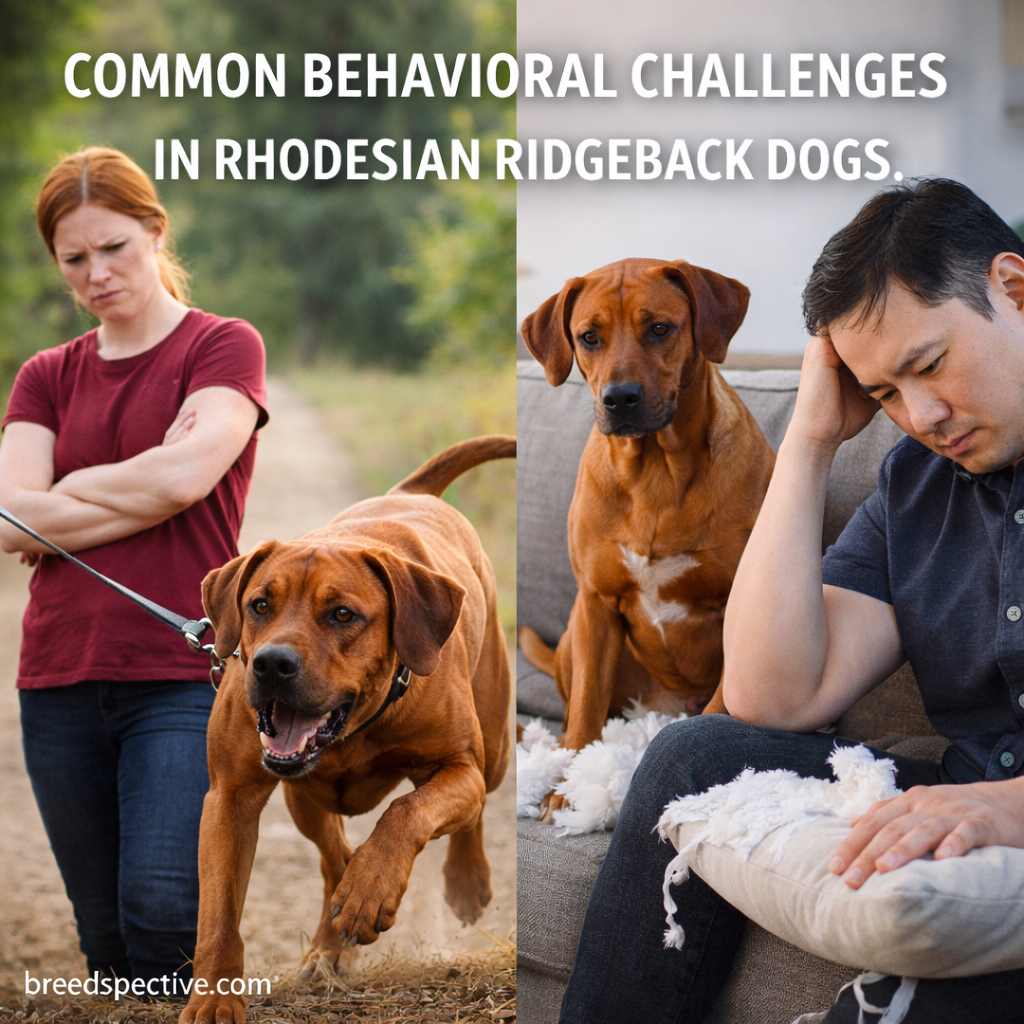
The Rhodesian Ridgeback is a confident, intelligent, and independent breed with deep working-dog roots. While calm and composed in many situations, the Rhodesian Ridgeback can develop behavioral challenges if its physical, mental, and emotional needs are not properly met.
Most behavioral issues in Rhodesian Ridgebacks are not signs of aggression or poor temperament, but rather a mismatch between the dog’s instincts and its living environment. Understanding these challenges helps owners prevent problems before they escalate.
Why Rhodesian Ridgebacks Are Prone to Certain Behavioral Issues
Rhodesian Ridgebacks were bred to think independently, endure harsh conditions, and make decisions without constant guidance. These traits are strengths, but they can also create challenges in modern households.
Key traits influencing behavior include:
- Strong independence
- High intelligence
- Natural guarding instincts
- Moderate to high energy levels
- Aloofness with strangers
Without structure, stimulation, and leadership, these traits can lead to unwanted behaviors.
Stubbornness and Selective Listening
One of the most commonly reported issues with Rhodesian Ridgebacks is selective obedience.
What It Looks Like
- Ignoring commands they already know
- Responding only when motivated
- Walking away during training sessions
Why It Happens
Ridgebacks are not naturally eager-to-please. They assess whether a command is worth responding to rather than acting automatically.
How to Manage It
- Use positive reinforcement with high-value rewards
- Keep training sessions short and purposeful
- Avoid repetitive drilling
- Be consistent with rules and expectations
Leash Pulling and Walk-Related Issues
Due to their size and strength, leash behavior is a critical training area.
Common Problems
- Pulling strongly on leash
- Lunging toward scents or animals
- Difficulty maintaining focus outdoors
Root Causes
- Strong prey drive
- High environmental awareness
- Insufficient leash training
Improvement Strategies
- Teach loose-leash walking early
- Reward calm walking behavior
- Avoid allowing pulling to lead to forward movement
- Use structured training walks rather than casual strolls
Boredom-Related Destructive Behavior

Rhodesian Ridgebacks are calm indoors only when their needs are met.
Signs of Boredom
- Chewing furniture or household items
- Digging
- Restlessness indoors
- Ignoring boundaries
Why It Occurs
A lack of physical exercise or mental engagement often leads to frustration-driven behaviors.
Prevention Tips
- Provide daily structured exercise
- Include mental stimulation through training or puzzle toys
- Maintain a predictable routine
- Avoid long periods of inactivity
Guarding and Territorial Behavior
Ridgebacks are naturally protective, which can turn into problematic guarding if not managed.
Common Guarding Behaviors
- Alert barking at visitors
- Blocking doorways
- Watchful or stiff posture around strangers
When It Becomes an Issue
Guarding becomes problematic when the dog cannot relax or escalates defensive behaviors unnecessarily.
How to Address It
- Early socialization with people and environments
- Calm, confident leadership
- Reward relaxed behavior around guests
- Avoid encouraging excessive alertness
Prey Drive and Chasing Instincts
As a breed developed for hunting, Rhodesian Ridgebacks retain a strong prey drive.
Typical Triggers
- Small animals
- Fast-moving objects
- Wildlife scents
Risks
- Unreliable recall off-leash
- Sudden lunging
- Difficulty coexisting with small pets
Management Techniques
- Keep dogs leashed in unfenced areas
- Practice recall training consistently
- Use secure fencing
- Provide controlled outlets like scent games
Aloofness Mistaken for Behavioral Problems
Ridgebacks are often misunderstood due to their reserved nature.
Common Misinterpretations
- Assuming lack of affection means poor bonding
- Viewing independence as disobedience
- Expecting constant engagement
Reality
Aloofness is a breed trait, not a behavioral flaw. Many Ridgebacks form deep bonds but express affection subtly.
Separation-Related Issues
While not as prone to separation anxiety as some breeds, Ridgebacks can still struggle when left alone too long.
Possible Signs
- Pacing
- Vocalizing
- Mild destruction
Prevention
- Gradually build independence
- Avoid dramatic departures
- Ensure exercise before alone time
- Provide safe enrichment activities
The Role of Training and Socialization
Early training and socialization play a critical role in preventing most behavioral issues.
Key focus areas include:
- Obedience training
- Exposure to people and environments
- Calm behavior reinforcement
- Confidence-building experiences
Consistent, respectful training methods produce the best results with this breed.
Final Thoughts
Most behavioral challenges in Rhodesian Ridgeback dogs stem from unmet needs rather than poor temperament. Their independence, strength, and intelligence require owners who understand the breed’s history and instincts.
With proper exercise, structure, mental stimulation, and consistent training, Rhodesian Ridgebacks become calm, confident, and deeply loyal companions. Recognizing and addressing potential behavioral challenges early ensures a balanced and rewarding relationship.