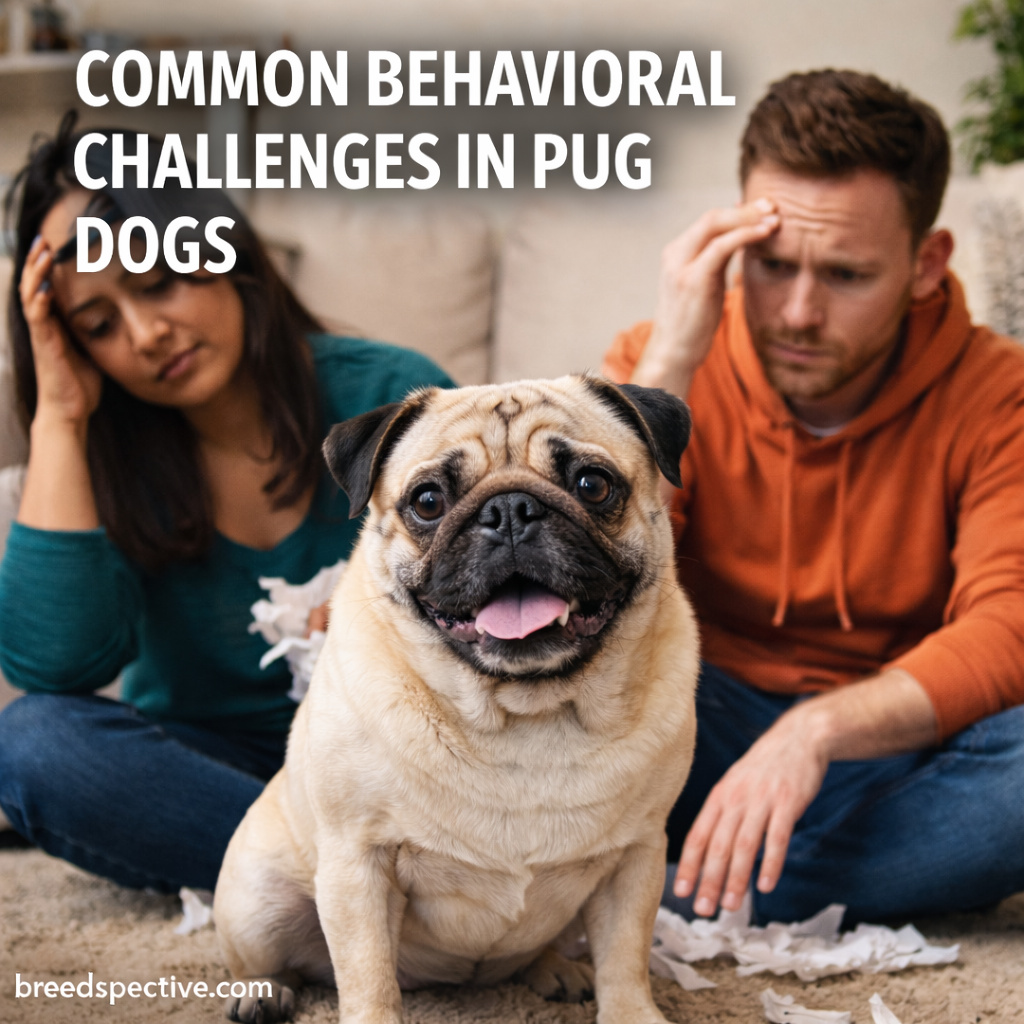
Pugs are affectionate, humorous, and deeply people-oriented dogs, but their strong emotional attachment and unique physical traits can lead to specific behavioral challenges. Most behavior issues in Pugs are not rooted in aggression or dominance—instead, they stem from sensitivity, boredom, over-attachment, or misunderstanding the breed’s needs.
This guide explores the most common behavioral challenges in Pug dogs, why they occur, and how owners can manage them effectively.
Separation Anxiety
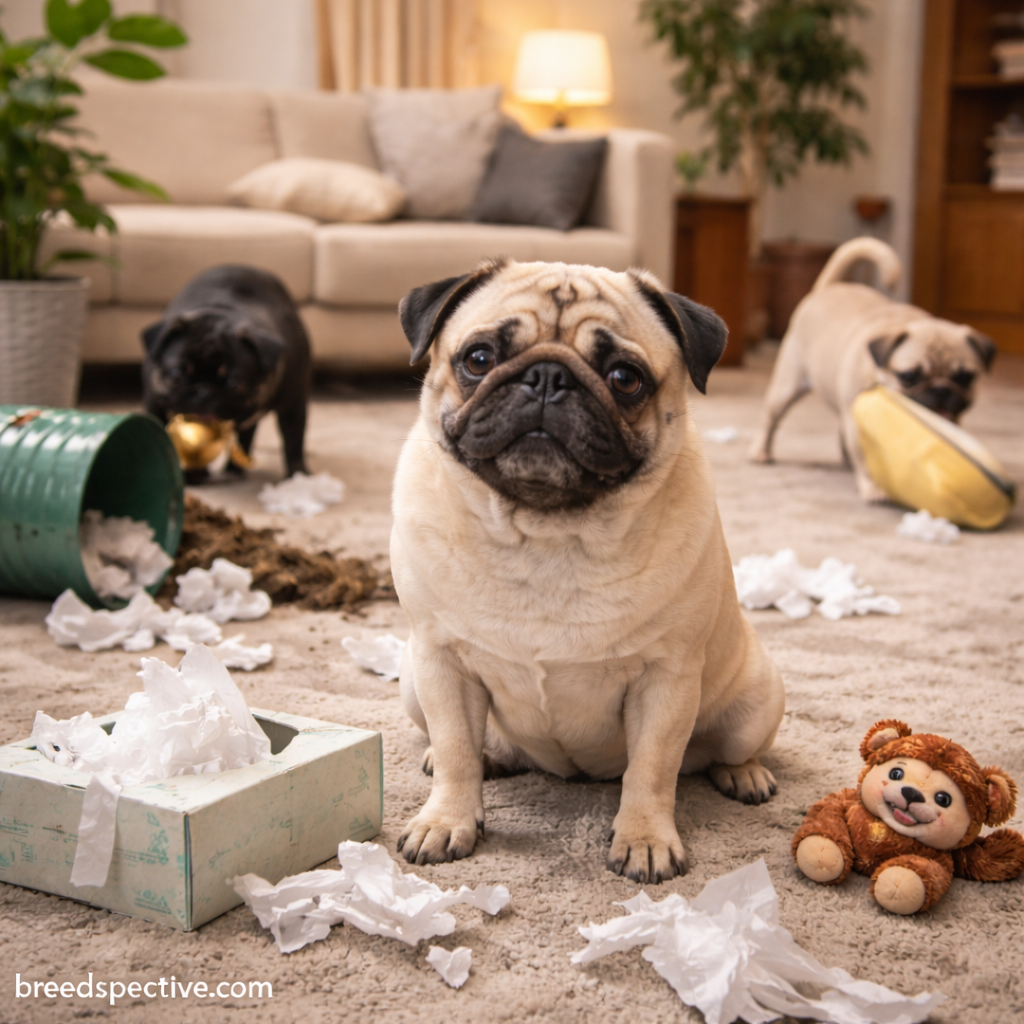
Separation anxiety is one of the most common behavioral challenges seen in Pugs.
Why It Happens
Pugs were bred for centuries to stay close to humans, often spending their entire day with their owners. This makes them especially sensitive to being left alone.
Common causes include:
- Sudden changes in routine
- Long hours alone
- Over-dependence on constant attention
Signs of Separation Anxiety
- Whining or barking when alone
- Destructive chewing
- Pacing or restlessness
- Accidents despite being house-trained
How to Manage It
- Gradually increase alone time
- Create predictable daily routines
- Provide interactive toys when leaving
- Keep departures and arrivals low-key
Teaching independence early helps reduce long-term anxiety.
Stubbornness During Training
Pugs are intelligent, but they are also known for selective listening.
Why Pugs Can Be Stubborn
Unlike working breeds, Pugs were not bred to follow commands or perform tasks. Their motivation is emotional and reward-based.
Common training challenges include:
- Ignoring commands when distracted
- Slow response times
- Testing boundaries
Training Tips That Work
- Use positive reinforcement only
- Keep sessions short and engaging
- Use food rewards carefully
- Stay patient and consistent
Harsh corrections often backfire with this breed.
House Training Difficulties
House training can take longer with Pugs than with some other breeds.
Why House Training Is Challenging
- Small bladder size
- Preference for comfort and routine
- Sensitivity to cold, rain, or heat
Common Problems
- Indoor accidents
- Inconsistent bathroom habits
- Regression after progress
How to Improve Success
- Maintain a strict potty schedule
- Praise immediately after success
- Avoid punishment for accidents
- Consider indoor potty options if needed
Consistency matters more than speed.
Attention-Seeking Behavior
Pugs crave interaction and may act out when they feel ignored.
Common Attention-Seeking Behaviors
- Pawing or nudging owners
- Vocalizing for attention
- Interrupting activities
- Following owners excessively
Why It Happens
- Strong emotional attachment
- Lack of mental stimulation
- Inconsistent boundaries
Managing Attention-Seeking
- Set predictable interaction times
- Ignore unwanted behaviors
- Reward calm, independent behavior
- Teach settling commands
Balancing affection with structure is key.
Excessive Barking
While not the noisiest breed, Pugs can develop problem barking habits.
Common Barking Triggers
- Boredom
- Attention-seeking
- Anxiety
- Environmental noises
When Barking Becomes an Issue
- Barking when left alone
- Reacting to every sound
- Demand barking
How to Reduce Barking
- Increase mental stimulation
- Address underlying anxiety
- Avoid reinforcing barking with attention
- Reward quiet behavior
Early intervention prevents long-term habits.
Food Obsession and Begging
Pugs are famously food-motivated, which can lead to behavioral and health issues.
Common Food-Related Behaviors
- Begging during meals
- Stealing food
- Ignoring commands without treats
Why It Happens
- Strong food drive
- Reinforced begging behavior
- Inconsistent feeding routines
How to Manage It
- Establish strict feeding schedules
- Avoid table feeding
- Use food rewards strategically
- Teach impulse control
Managing food behavior also helps prevent obesity.
Sensitivity to Harsh Correction
Pugs are emotionally sensitive dogs.
Effects of Harsh Training
- Withdrawal
- Fear-based behaviors
- Loss of trust
- Increased anxiety
Better Training Approach
- Calm tone of voice
- Gentle correction
- Clear expectations
- Positive reinforcement
A supportive environment produces better behavior.
Socialization Challenges
Poor early socialization can lead to behavioral issues.
Signs of Poor Socialization
- Fearfulness around strangers
- Nervousness with other dogs
- Avoidance behaviors
Improving Social Confidence
- Gradual exposure to new environments
- Positive introductions to people and pets
- Controlled, low-stress social situations
Early socialization builds confidence and resilience.
Preventing Behavioral Issues in Pugs
Many common problems can be avoided with proactive care.
Prevention Tips
- Start training early
- Maintain routines
- Encourage independence
- Provide daily mental stimulation
- Avoid over-spoiling
Understanding the breed’s emotional needs makes a major difference.
When to Seek Professional Help
Some behaviors require expert support.
Consider professional help if you notice:
- Aggression
- Severe anxiety
- Ongoing house training failure
- Self-injuring behaviors
A qualified trainer or behaviorist can provide personalized guidance.
Final Thoughts
Most behavioral challenges in Pug dogs are rooted in their deep desire for companionship, sensitivity, and need for routine. These behaviors are not flaws—they are reflections of the breed’s history and emotional nature.
With patience, consistency, and positive reinforcement, Pugs can become well-adjusted, confident companions. Understanding their behavior is the foundation for a calm, rewarding relationship.