

Mastiffs are calm, loyal, and emotionally steady dogs, but their size, protective instincts, and sensitivity mean that certain behavioral challenges can arise if their needs aren’t fully understood. Most Mastiff behavior issues are not rooted in aggression—instead, they stem from under-socialization, inconsistent leadership, boredom, or anxiety.
This guide covers the most common behavioral challenges in Mastiff dogs, why they occur, and how owners can manage them effectively.
Stubbornness and Selective Listening
One of the most common Mastiff behavior challenges is stubbornness.
Why Mastiffs Can Seem Stubborn
Mastiffs are intelligent and independent thinkers. Historically, they were bred to assess situations on their own rather than follow constant commands.
Common causes include:
- Independent decision-making instincts
- Low motivation for repetitive commands
- Boredom with training sessions
This behavior is often mistaken for disobedience, when it’s actually thoughtful hesitation.
How to Manage It
- Use calm, consistent leadership
- Keep training sessions short and purposeful
- Use positive reinforcement
- Avoid power struggles
Mastiffs respond best when they trust the handler’s confidence and consistency.
Overprotectiveness and Guarding Behavior
Mastiffs are natural guardians, but this instinct can become problematic if not guided properly.
Signs of Overprotectiveness
- Standing between owners and strangers
- Blocking doorways or entrances
- Deep growling or intense staring
- Refusal to move away from perceived threats
Why It Happens
- Lack of early socialization
- Reinforcement of guarding behavior
- Unclear boundaries
Without proper guidance, protective instincts can escalate into unwanted behavior.
How to Address It
- Socialize early and often
- Expose your Mastiff to visitors in controlled settings
- Reward calm, neutral behavior
- Teach reliable obedience commands
A well-socialized Mastiff should be observant—not reactive.
Leash Reactivity
Some Mastiffs develop leash reactivity, especially during adolescence.
Common Triggers
- Other dogs approaching too closely
- Feeling restrained or crowded
- Past negative encounters
Because of their size, leash reactivity can feel intimidating even when it’s rooted in insecurity.
Management Strategies
- Use a sturdy harness or training collar
- Practice calm leash walking in low-distraction areas
- Reward focus and relaxed behavior
- Avoid tense leash handling
Professional guidance can be helpful if reactivity escalates.
Destructive Behavior Due to Boredom
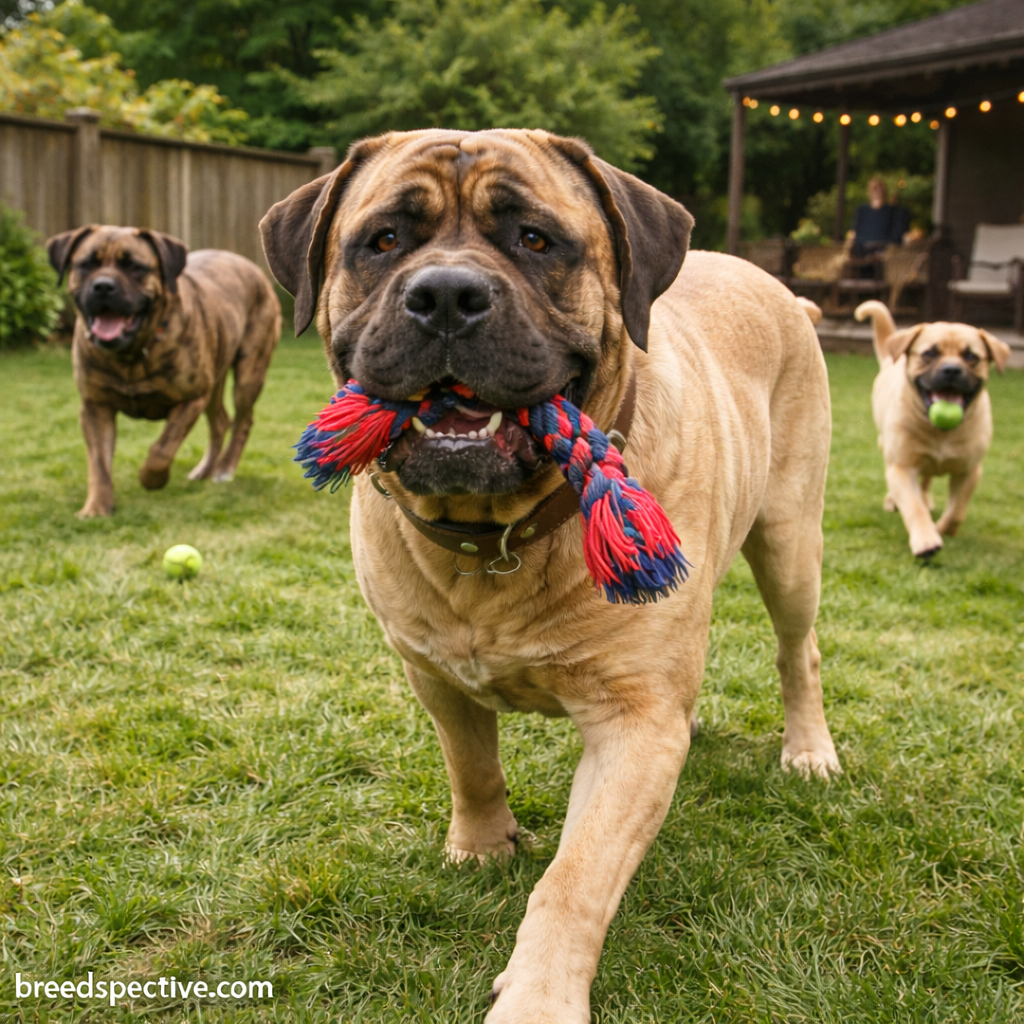
While Mastiffs are low-energy, they still need mental stimulation.
Common Destructive Behaviors
- Chewing furniture
- Digging
- Tearing up bedding or toys
These behaviors are often the result of boredom rather than excess energy.
Why It Happens
- Lack of mental engagement
- Long periods alone
- Under-stimulation
How to Prevent It
- Provide puzzle toys
- Rotate enrichment activities
- Offer structured routines
- Include daily mental challenges
Mental stimulation is just as important as physical activity for Mastiffs.
Separation Anxiety
Mastiffs form strong bonds with their families and may struggle when left alone.
Signs of Separation Anxiety
- Pacing or restlessness
- Destructive behavior when alone
- Whining or vocalization
- Excessive drooling
Why Mastiffs Are Prone to It
- Strong attachment to owners
- Calm indoor lifestyle
- Sensitivity to routine changes
How to Manage It
- Gradually build independence
- Avoid dramatic departures
- Create predictable schedules
- Provide comfort items
Early independence training is key to prevention.
Fearfulness From Poor Socialization
Despite their imposing size, Mastiffs can become fearful if under-socialized.
Signs of Fear-Based Behavior
- Freezing or avoidance
- Growling when approached
- Backing away from new situations
Fear-based behavior is often mistaken for aggression.
How to Build Confidence
- Introduce new environments slowly
- Use positive reinforcement
- Avoid forcing interactions
- Keep experiences calm and controlled
Confidence-building should start early and continue throughout adulthood.
Sensitivity to Harsh Training
Mastiffs are emotionally sensitive dogs.
Effects of Harsh Correction
- Shutdown behavior
- Increased stubbornness
- Loss of trust
- Anxiety
Because of their size, some owners mistakenly use force—but this often backfires.
Better Training Approach
- Calm voice and body language
- Clear expectations
- Consistent routines
- Reward-based methods
Respectful handling builds trust and reliability.
Jumping and Space Awareness Issues
Mastiffs may not realize how large they are.
Common Issues
- Leaning heavily on people
- Jumping during greetings
- Knocking over children or elderly individuals
These behaviors are rarely intentional.
How to Manage Size-Related Behaviors
- Teach polite greeting behaviors early
- Reinforce calm interactions
- Avoid encouraging jumping as puppies
Early training is essential due to their eventual size.
Preventing Behavioral Issues in Mastiffs
Most behavioral challenges are preventable with the right foundation.
Prevention Tips
- Start training early
- Socialize consistently
- Provide mental stimulation
- Maintain calm leadership
- Set clear boundaries
Understanding the breed’s guardian nature makes a major difference.
When to Seek Professional Help
Professional support may be necessary if behaviors escalate.
Seek help if you notice:
- Aggression
- Severe anxiety
- Unmanageable reactivity
- Loss of control due to size
A qualified trainer experienced with large guardian breeds can provide valuable guidance.
Final Thoughts
Most behavioral challenges in Mastiff dogs stem from their guardian instincts, emotional sensitivity, and independent nature—not from aggression or dominance. With proper socialization, calm leadership, and consistent training, Mastiffs are among the most loyal and stable companions a family can have.
Understanding their behavior is the key to building a respectful, balanced relationship with this powerful yet gentle breed.