

Overview of Great Pyrenees Behavior Challenges
Great Pyrenees dogs are calm, confident, and deeply instinctual guardians. While they are not aggressive or high-energy, their independent nature and livestock-guarding heritage can create behavioral challenges for owners who are unfamiliar with the breed.
Most behavioral issues in Great Pyrenees dogs are not the result of poor training or temperament flaws. Instead, they are natural expressions of instincts developed over centuries of autonomous guardian work.
Excessive Barking, Especially at Night
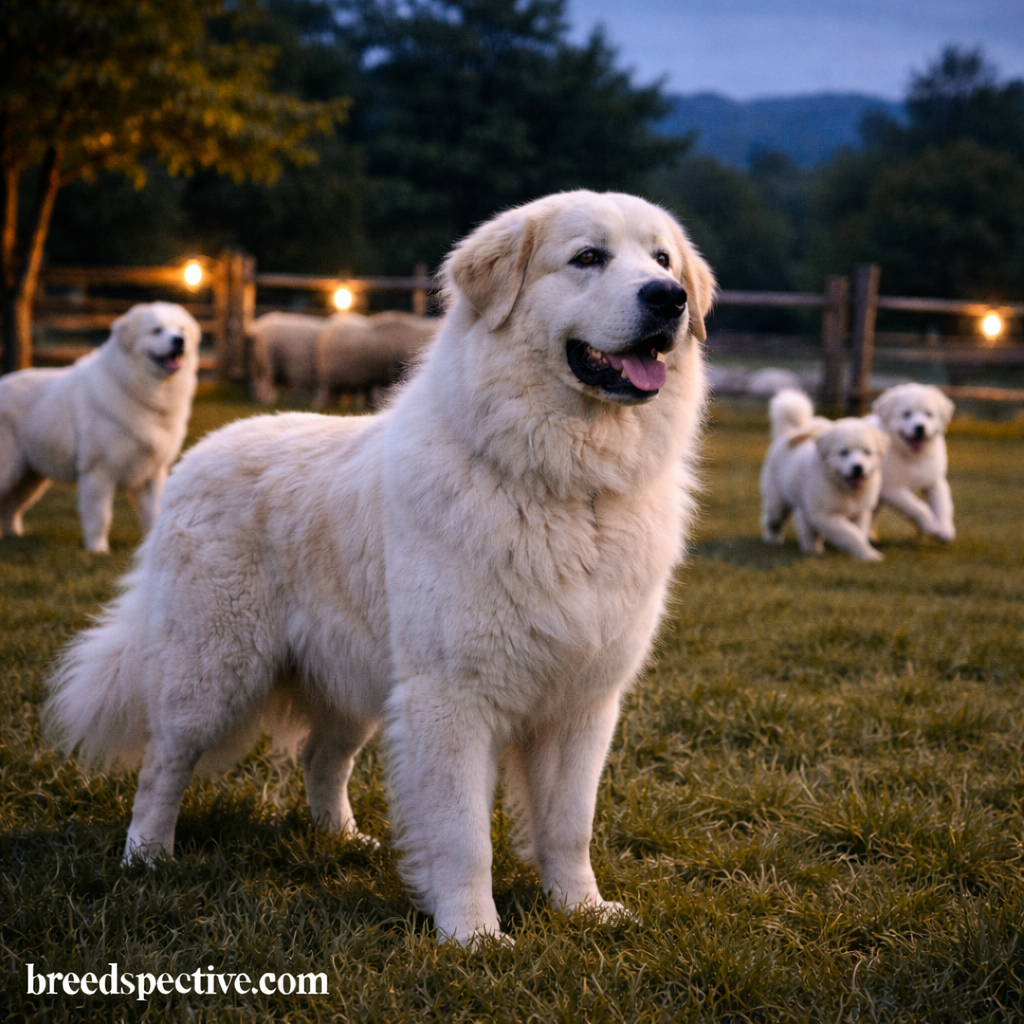
One of the most common challenges with Great Pyrenees dogs is frequent barking, particularly during nighttime hours.
This behavior stems from their original role as nocturnal livestock guardians.
Common barking triggers include:
- Unfamiliar sounds or movement
- Wildlife activity
- Changes in the environment
- Quiet nighttime conditions
The barking is purposeful and intended to warn predators rather than signal fear or anxiety.
Management strategies include:
- Secure fencing to establish clear boundaries
- Allowing controlled outdoor access
- Bringing the dog indoors overnight when appropriate
- Accepting some level of barking as instinctual
Complete elimination of barking is unrealistic for this breed.
Strong Independence and Selective Obedience
Great Pyrenees dogs were bred to make decisions without human direction. As a result, they often display independence that can be mistaken for stubbornness.
Common signs include:
- Ignoring commands they understand
- Slow response to cues
- Choosing their own actions based on assessment
This behavior reflects judgment, not defiance.
Effective training approaches include:
- Building trust rather than enforcing control
- Using calm, consistent leadership
- Avoiding repetitive drilling
- Reinforcing cooperation instead of obedience
They respond best to respect-based training.
Roaming and Boundary Testing
Another frequent challenge is roaming behavior. Great Pyrenees dogs instinctively patrol large areas to protect what they consider their territory.
Roaming behaviors may include:
- Testing fence lines
- Attempting to escape enclosures
- Patrolling property boundaries
This behavior is especially common in young adults.
Prevention strategies include:
- Tall, secure fencing
- Reinforced gates
- Supervised outdoor time
- Mental stimulation to reduce patrol frustration
Invisible fences are often ineffective due to the breed’s tolerance for discomfort when motivated.
Difficulty With Recall
Great Pyrenees dogs are notoriously unreliable off-leash. Their instinct to assess threats overrides recall cues when something captures their attention.
Common recall challenges include:
- Ignoring commands when distracted
- Delayed response to being called
- Prioritizing observation over interaction
Best practices include:
- Keeping the dog leashed in open areas
- Using fenced spaces for off-leash time
- Practicing recall in low-distraction environments
Reliable recall is not a realistic expectation in unsecured areas.
Territorial Behavior
Great Pyrenees dogs are naturally territorial, especially around their home and family.
Territorial behaviors may include:
- Standing between family and visitors
- Barking at unfamiliar people or animals
- Patrolling property edges
This behavior is protective rather than aggressive.
Management tips include:
- Early socialization
- Controlled introductions to visitors
- Clear boundaries and routines
With proper management, territorial behavior remains calm and controlled.
Sensitivity to Household Changes
Despite their independent nature, Great Pyrenees dogs are emotionally sensitive to changes in routine, environment, or family dynamics.
Stress-related behaviors may include:
- Increased barking
- Withdrawal or restlessness
- Heightened vigilance
Maintaining predictable routines helps reduce stress-driven behaviors.
Boredom-Related Behaviors
Although not high-energy, Great Pyrenees dogs still need mental engagement. Without it, boredom-related behaviors may develop.
These can include:
- Digging
- Excessive patrolling
- Increased vocalization
- Destructive chewing in rare cases
Mental stimulation strategies include:
- Allowing supervised observation time
- Providing enrichment toys
- Giving the dog a sense of responsibility
Purposeful activity is more important than physical exertion.
Difficulty With Traditional Obedience Training
Great Pyrenees dogs often struggle in structured obedience environments designed for eager-to-please breeds.
Training challenges include:
- Low motivation for repetitive tasks
- Disinterest in fast-paced commands
- Resistance to pressure-based methods
Training success improves when sessions are:
- Short and calm
- Purpose-driven
- Built around trust and cooperation
Adolescence and Maturity Challenges
Great Pyrenees mature slowly, both mentally and physically. Adolescent behavior can last well into adulthood.
Common adolescent behaviors include:
- Increased independence
- Boundary testing
- Temporary regression in training
Patience and consistency are essential during this stage.
Who These Challenges Affect Most
These behavioral challenges are most difficult for:
- Urban or apartment households
- Owners expecting high obedience
- Homes without secure fencing
- People unfamiliar with guardian breeds
They are far less problematic in rural or semi-rural settings.
Final Thoughts on Great Pyrenees Behavior Challenges
Great Pyrenees dogs are not difficult—they are purposeful. Their behaviors reflect centuries of independent guardian work rather than disobedience or poor temperament.
When their instincts are understood and respected, most behavioral challenges become manageable or even desirable traits. With the right environment, clear boundaries, and realistic expectations, the Great Pyrenees remains a calm, loyal, and deeply committed protector and companion.