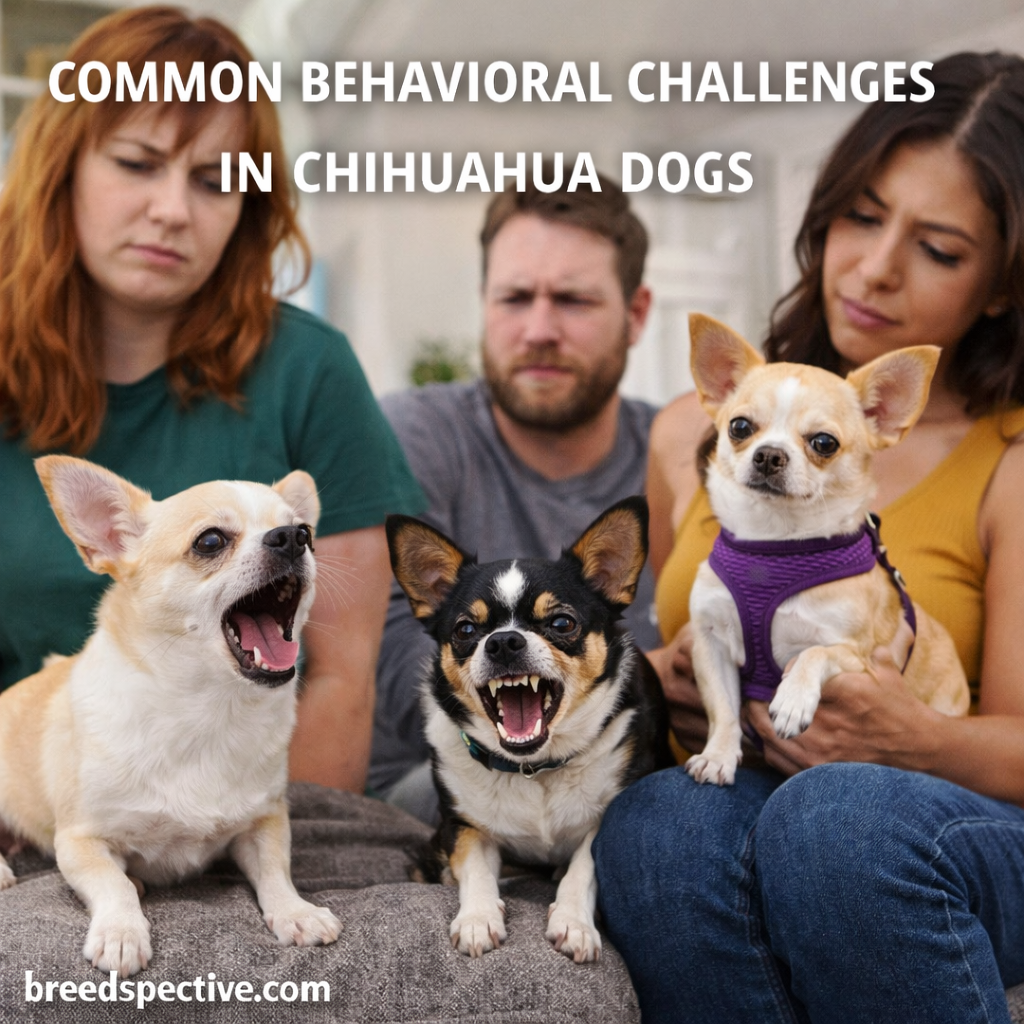
Chihuahuas are confident, intelligent, and deeply loyal—but their small size often causes their behavioral needs to be misunderstood or ignored. Many common Chihuahua behavior problems are not signs of a “bad temperament,” but natural responses to fear, overstimulation, or inconsistent boundaries.
Understanding why these behaviors occur is the key to preventing them and building a calm, confident companion.
Excessive Barking and Alert Reactivity
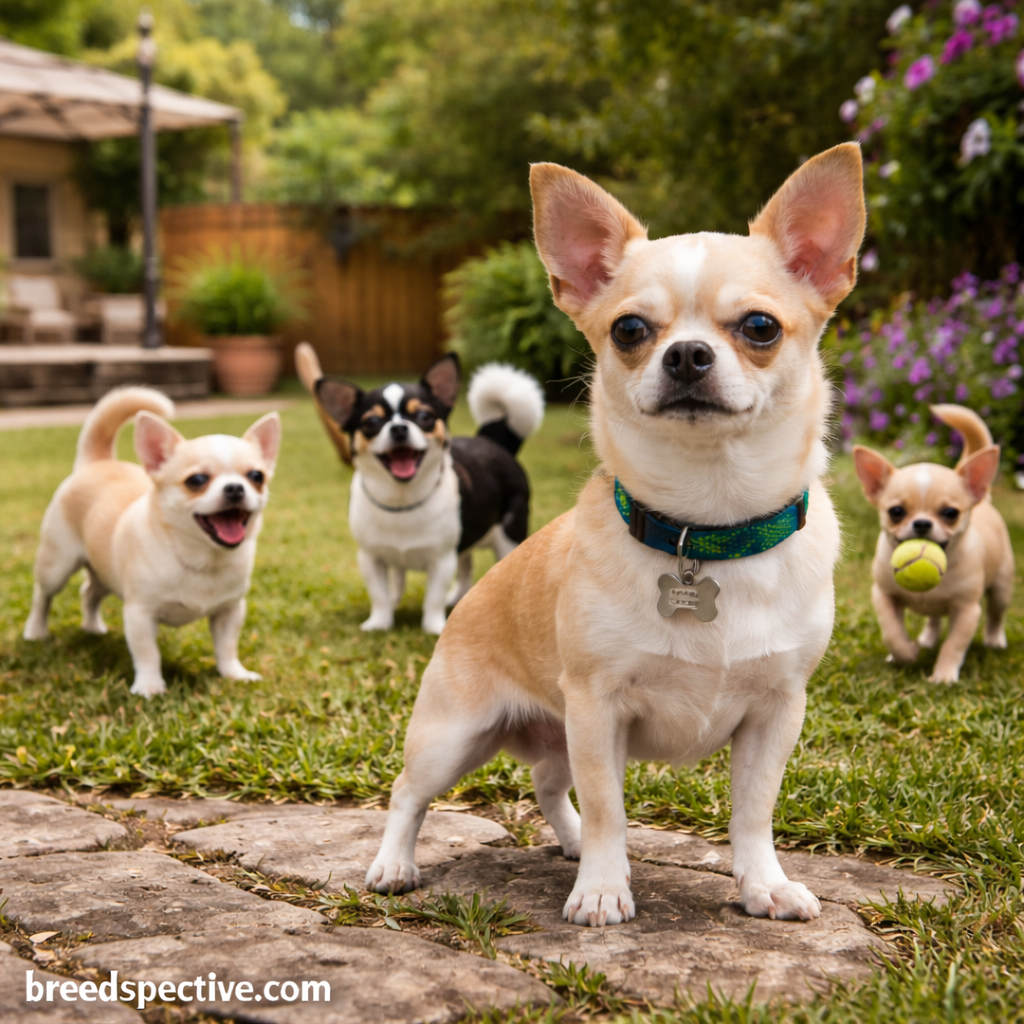
Chihuahuas are naturally alert dogs with strong watchdog instincts. Barking is one of the most common behavioral complaints.
Typical triggers include:
- Unfamiliar people or sounds
- Movement outside windows or doors
- Changes in routine
- Owner anxiety or tension
Why it happens:
- Heightened alertness
- Insecurity due to small size
- Reinforced barking (attention or reassurance)
Consistent boundaries and calm responses reduce barking far more effectively than punishment.
Fear-Based Reactivity
Because of their size, Chihuahuas are more prone to fear responses than larger breeds.
Fear-based behaviors may include:
- Growling or snapping when startled
- Freezing or trembling
- Avoidance of strangers
- Defensive aggression
This behavior often develops when a dog feels threatened, overwhelmed, or unprotected.
Preventive strategies:
- Early socialization
- Allowing the dog to approach at its own pace
- Avoiding forced interactions
Resource Guarding
Chihuahuas may guard items they value, including food, toys, or even people.
Common signs include:
- Growling when approached
- Stiff body posture
- Snapping near food bowls or laps
This behavior is usually rooted in insecurity rather than dominance.
Management includes:
- Structured feeding routines
- Teaching “trade” behaviors
- Avoiding punishment, which increases anxiety
Overattachment and Separation Anxiety
Chihuahuas form extremely strong bonds and may struggle when left alone.
Signs of separation anxiety include:
- Excessive barking or whining
- Destructive behavior
- House-soiling
- Panic when owners prepare to leave
This issue often worsens when dogs are constantly carried or never taught independence.
Gradual alone-time training and predictable routines help reduce anxiety.
Small Dog Syndrome
“Small dog syndrome” is not a breed flaw—it’s a handling issue.
Contributing factors include:
- Inconsistent rules
- Allowing behaviors that wouldn’t be tolerated in larger dogs
- Overprotective handling
This can lead to:
- Pushy behavior
- Reactivity
- Lack of impulse control
Chihuahuas benefit from the same structure and training as larger dogs.
House Training Difficulties
House training can be challenging with Chihuahuas.
Common reasons include:
- Small bladder size
- Cold sensitivity (avoiding outdoor potty trips)
- Inconsistent schedules
Consistency, positive reinforcement, and patience are essential for success.
Nipping and Boundary Testing
Nipping is often a communication tool for Chihuahuas rather than aggression.
Triggers include:
- Rough handling
- Ignoring warning signals
- Overstimulation
Chihuahuas tend to warn before biting. Punishing warning behaviors increases the risk of sudden bites without warning.
Sensitivity to Handling
Chihuahuas have limited tolerance for physical handling they perceive as invasive.
Problematic situations include:
- Being picked up unexpectedly
- Hugging or squeezing
- Handling by unfamiliar people
Teaching respectful interaction is especially important in households with children.
Why Many Chihuahua Behavior Issues Are Misdiagnosed
Chihuahuas are often labeled “aggressive” when they are actually:
- Fearful
- Overstimulated
- Lacking boundaries
- Reacting to inconsistent handling
When treated like toys instead of dogs, behavioral problems escalate.
Preventing Behavioral Challenges Early
Most Chihuahua behavior issues are preventable with proper guidance.
Healthy foundations include:
- Early socialization
- Clear, consistent rules
- Positive reinforcement training
- Respect for the dog’s boundaries
Structure creates confidence, even in the smallest dogs.
When Professional Help Is Needed
Professional support is recommended if:
- Aggression escalates
- Fear responses worsen
- Owners feel overwhelmed
- Safety becomes a concern
Choose trainers experienced with fear-based and small-breed behavior—not dominance-focused methods.
Final Thoughts
Chihuahuas are not difficult dogs—they are sensitive, intelligent dogs in small bodies. Most behavioral challenges stem from misunderstanding, overindulgence, or lack of structure rather than temperament flaws.
With consistency, respect, and appropriate training, Chihuahuas become confident, affectionate, and well-balanced companions whose behavior matches their bold personality rather than their size.