Australian Cattle Dogs are intelligent, driven, and intensely loyal working dogs. While these qualities make them exceptional partners in active and structured environments, they can also lead to behavioral challenges when the breed’s instincts and needs are misunderstood.
Most behavior issues in Australian Cattle Dogs are not signs of aggression or poor temperament. Instead, they are the result of unmet physical, mental, or instinctual needs rooted in the breed’s working history.
Excessive Energy and Restlessness
One of the most common challenges with Australian Cattle Dogs is managing their energy level.
How it shows up
- Inability to settle indoors
- Constant pacing or following owners
- Destructive chewing or digging
- Hyper-focus on movement
This breed was designed to work long hours moving cattle. Without sufficient daily exercise and mental engagement, excess energy often turns into frustration-driven behaviors.
Short walks alone are rarely enough to meet their needs.
Herding and Nipping Behaviors
Herding instincts are deeply ingrained and frequently misunderstood.
Common herding-related issues
- Nipping at heels or ankles
- Chasing children, joggers, or bikes
- Attempting to control household movement
- Fixation on fast-moving objects
These behaviors are not aggression—they are instinctive attempts to control motion. Without early training and redirection, herding behaviors can become disruptive, especially in family environments.
Destructive Behavior From Boredom
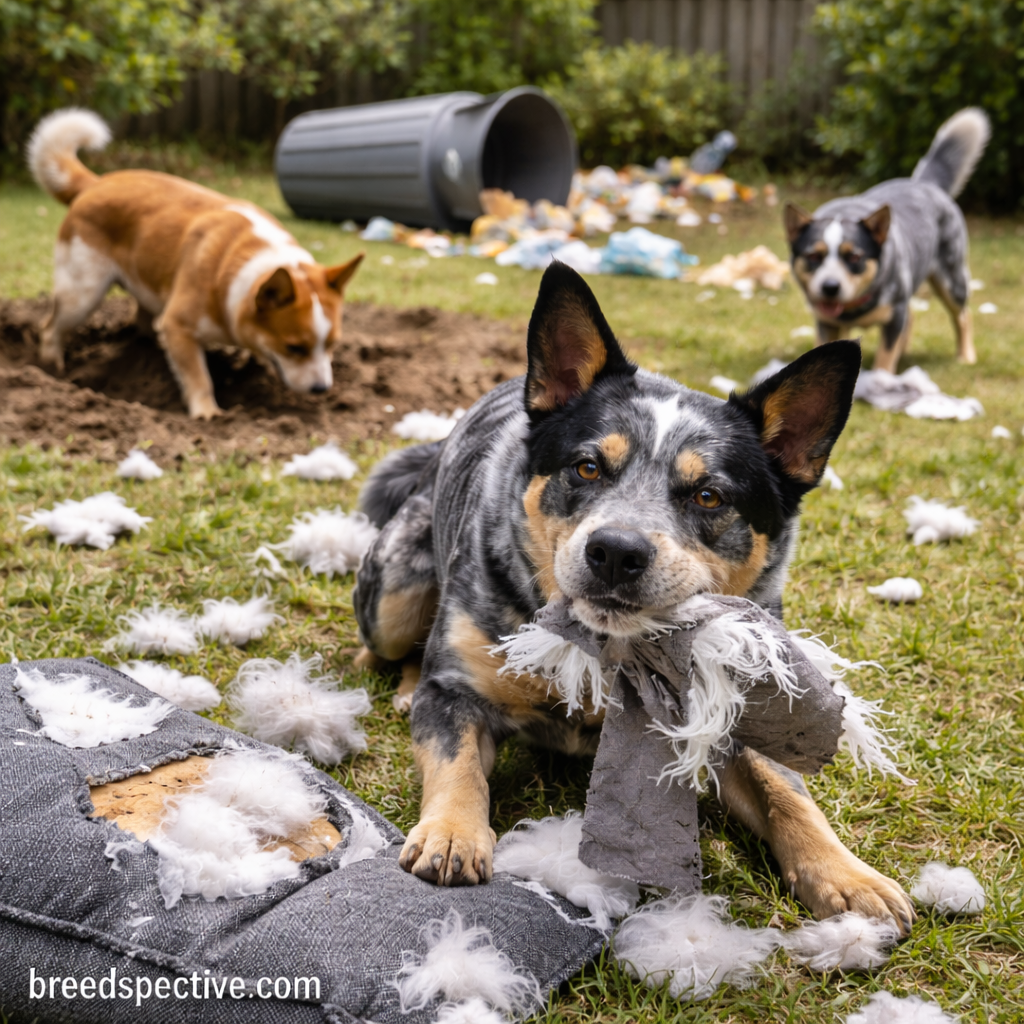
Australian Cattle Dogs are highly intelligent and become bored easily.
Typical boredom behaviors
- Chewing furniture or household items
- Digging in yards or carpets
- Escaping yards or enclosures
- Obsessive behaviors
Mental stimulation is just as important as physical exercise. A bored Australian Cattle Dog will often create its own activities, which rarely align with household expectations.
Reactivity Toward Strangers
Many Australian Cattle Dogs are naturally cautious around unfamiliar people.
Signs of reactivity
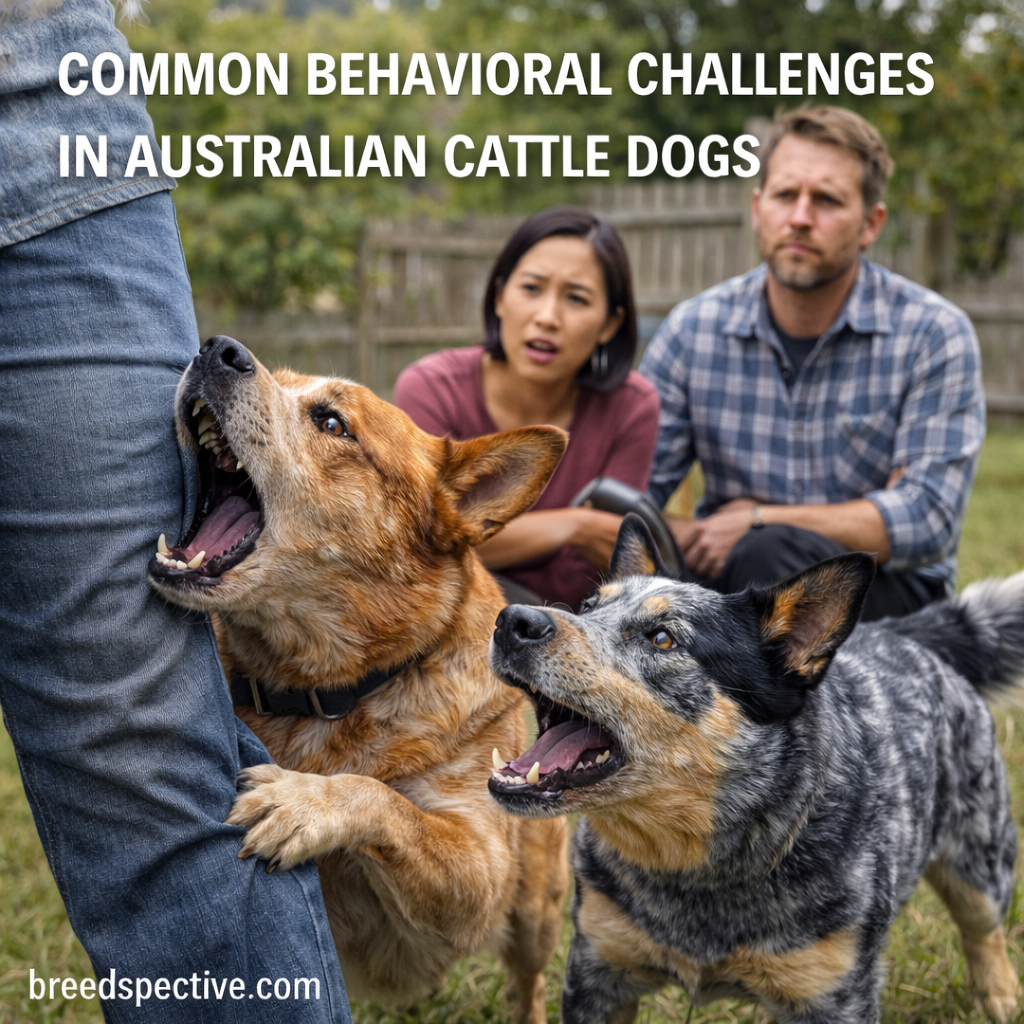
- Barking or lunging at strangers
- Growling when approached
- Stiff body language during introductions
- Difficulty settling when visitors are present
This behavior stems from the breed’s protective instincts and strong loyalty to its family. Without proper socialization, caution can escalate into reactivity.
Calm, controlled introductions and ongoing exposure are essential.
Dog-to-Dog Dominance Issues
Australian Cattle Dogs can be selective or dominant with other dogs.
Common patterns
- Same-sex aggression in adulthood
- Low tolerance for rude or pushy dogs
- Resource guarding of toys or space
- Preference for structured interactions
While many do well with familiar dogs, chaotic group play environments such as dog parks often trigger conflict.
Obsessive or Fixated Behaviors
The breed’s intense focus can sometimes become problematic.
Examples of fixation
- Chasing shadows or lights
- Obsessing over balls or toys
- Fixating on fences or windows
- Repetitive pacing or scanning
These behaviors often appear when a dog lacks balance between work, rest, and mental stimulation. Structured outlets help prevent fixation from becoming compulsive.
Stubbornness or Selective Listening
Owners often mistake independence for disobedience.
Why this happens
- Bred to make independent decisions
- High intelligence leads to questioning commands
- Inconsistent training causes confusion
- Lack of respect for unclear leadership
Australian Cattle Dogs respond best to confident, consistent handling. They are quick to exploit uncertainty or inconsistency in training.
Overprotectiveness Toward Owners
Strong bonding can sometimes lead to guarding behavior.
Signs of overprotectiveness
- Blocking strangers from approaching
- Positioning between owner and others
- Reacting to physical contact
- Increased alertness in public spaces
Without boundaries, loyalty can shift into possessiveness. Clear rules and calm leadership help prevent escalation.
Why Many Issues Are Preventable
Most behavioral challenges are avoidable with the right approach.
Preventive strategies
- Daily structured exercise
- Consistent mental enrichment
- Early and ongoing socialization
- Clear rules and leadership
- Purpose-driven training
Attempting to treat an Australian Cattle Dog like a low-energy companion breed often leads to conflict. Success comes from respecting what the breed was designed to do.
When to Seek Professional Help
Some behaviors require experienced intervention.
Consider professional support if
- Reactivity escalates despite training
- Aggression increases in frequency or intensity
- Obsessive behaviors worsen
- Safety becomes a concern
Working with trainers experienced in herding and working breeds is critical. Generic training methods may not address the root causes.
Final Thoughts
Australian Cattle Dogs are not problematic dogs—they are purposeful dogs. Their behavioral challenges are usually a reflection of unmet needs rather than temperament flaws.
With proper structure, activity, and leadership, many common issues diminish or disappear entirely. Understanding and respecting the breed’s working heritage is the key to a balanced, well-adjusted Australian Cattle Dog.