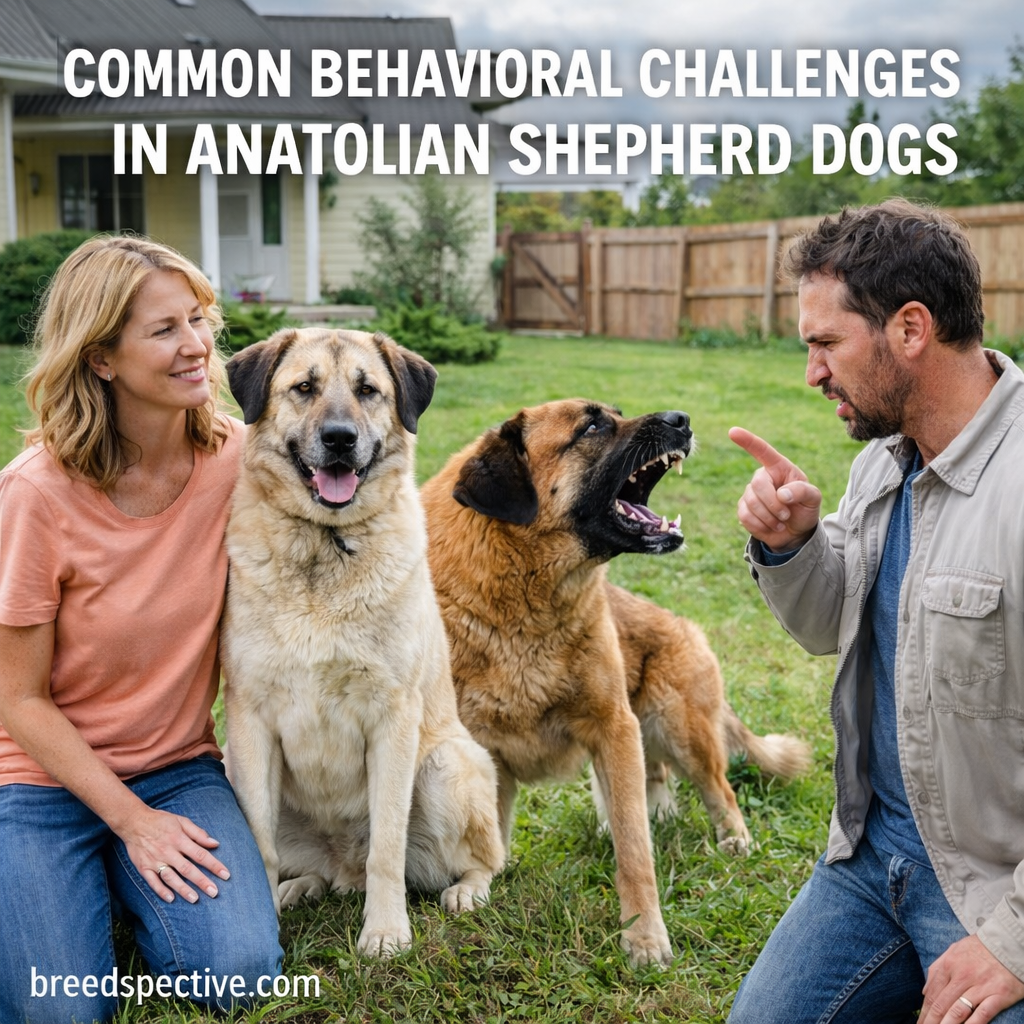
The Anatolian Shepherd is an intelligent, capable, and deeply instinct-driven livestock guardian breed. While these traits make the breed exceptional at protection and independent work, they can also lead to behavioral challenges—especially when the dog is placed in an environment that does not match its historical purpose.
Most behavioral issues seen in Anatolian Shepherds are not signs of a “bad dog,” but rather a mismatch between instincts, expectations, and lifestyle. Understanding these challenges is key to preventing problems and setting realistic ownership expectations.
Strong Territorial and Guarding Behavior
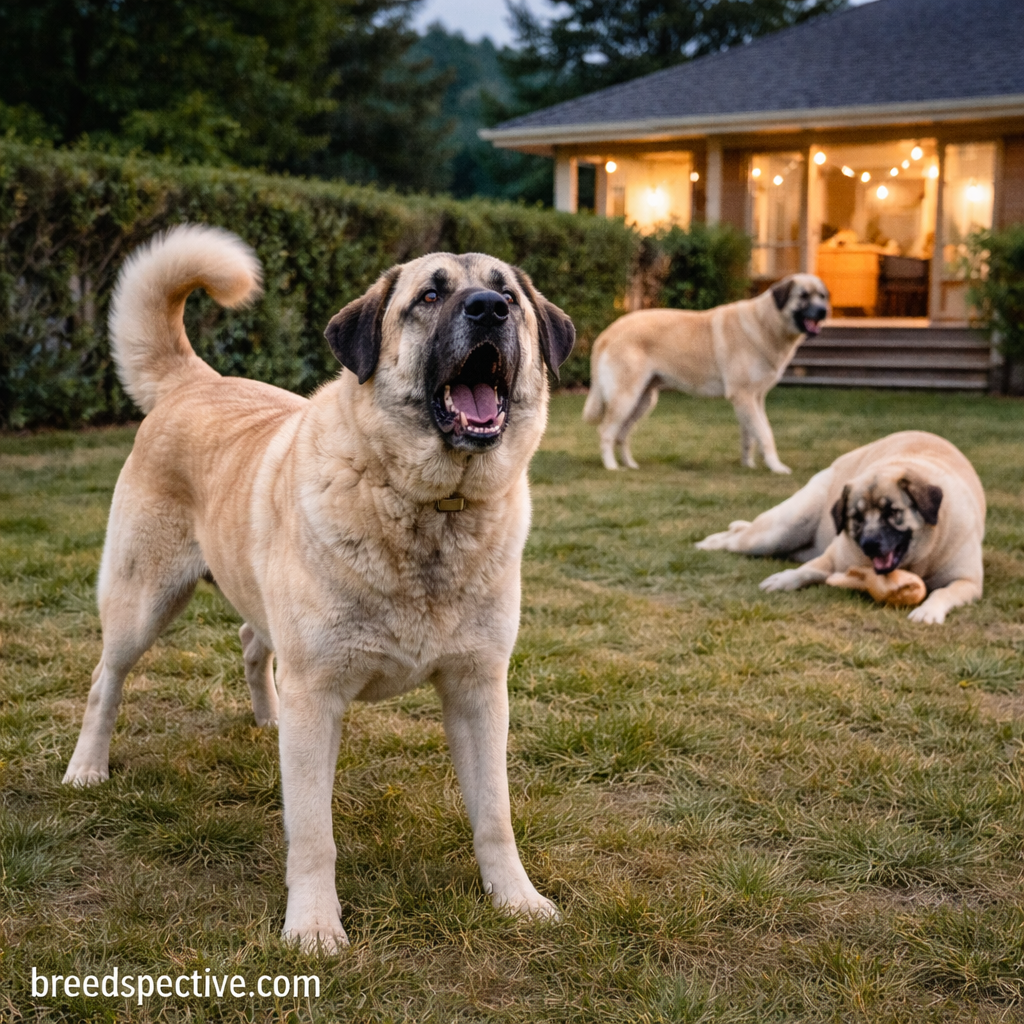
Territorial behavior is one of the most common challenges with Anatolian Shepherds.
How it shows up
- Barking at perceived threats or movement
- Guarding property boundaries intensely
- Suspicion toward unfamiliar people or animals
- Patrolling fences or entry points repeatedly
This behavior is deeply ingrained. Anatolian Shepherds were bred to treat land, livestock, and family as their responsibility. In suburban or urban settings, normal foot traffic, neighbors, and delivery vehicles can trigger constant alert responses.
Without proper management, this can escalate into excessive barking or reactivity.
Excessive Barking at Night
Nighttime barking is a frequent concern for owners.
Why it happens
- Livestock guardians are naturally nocturnal watchers
- Quiet nighttime sounds stand out more
- Dogs feel most responsible when humans are asleep
- Instinct to warn predators before confrontation
Anatolian Shepherds are not barking randomly. They are announcing presence and attempting to deter potential threats. In neighborhoods, this instinct can create conflict with neighbors.
Suppressing barking entirely is unrealistic. Management focuses on environment control, secure fencing, and ensuring the dog feels its territory is clearly defined.
Independence Mistaken for Stubbornness
Many owners struggle with what they perceive as stubborn or disobedient behavior.
Common frustrations
- Ignoring commands when distracted
- Delayed response to recalls
- Selective obedience
- Questioning instructions
This is not defiance. Anatolian Shepherds were bred to evaluate situations independently rather than respond immediately to commands. If a dog believes a task conflicts with its guarding duty, it may choose not to comply.
Traditional obedience expectations often clash with this mindset, leading to frustration on both sides.
Roaming and Boundary Testing
Roaming is a serious behavioral concern if boundaries are not secure.
Why Anatolian Shepherds roam
- Instinct to expand and patrol territory
- Curiosity about perceived threats beyond fences
- Lack of mental stimulation
- Insufficient boundary reinforcement
These dogs are capable of covering long distances. Weak fencing, underground gaps, or unclear property lines can lead to repeated escape attempts.
Once roaming becomes a habit, it is difficult to correct without environmental changes.
Dog-to-Dog Dominance Issues
Anatolian Shepherds may display dominance or intolerance toward other dogs.
Common patterns
- Same-sex aggression, especially in adulthood
- Resource guarding of territory
- Low tolerance for pushy dogs
- Preference for calm, neutral canine companions
This breed is not naturally social in the way many companion breeds are. While they can coexist peacefully with other animals, introductions must be handled carefully and early socialization is critical.
Dog parks and chaotic group play environments are often poor fits for this breed.
Overprotectiveness Toward Family Members
Protectiveness can cross into problematic behavior if not managed.
Signs of overprotectiveness
- Blocking strangers from approaching owners
- Positioning between children and visitors
- Growling when personal space is violated
- Difficulty accepting guests
Anatolian Shepherds take their role seriously. Without guidance, they may decide that normal social interactions are threats.
Clear leadership, controlled introductions, and consistent routines help reduce unnecessary protective reactions.
Destructive Behavior From Boredom
Though calm by nature, Anatolian Shepherds can become destructive if understimulated.
Typical boredom behaviors
- Digging along fences
- Chewing structures or equipment
- Pacing and restlessness
- Fence jumping or climbing
This breed needs purpose more than exercise alone. A lack of responsibility, space, or mental engagement often leads to frustration-driven behaviors.
Simply increasing walks does not always resolve the issue if the dog still lacks meaningful outlets.
Poor Fit for Urban or Apartment Living
Many behavioral challenges stem from environment mismatch.
Common urban-related issues
- Constant alertness from noise and movement
- Chronic stress from limited space
- Overreaction to neighbors
- Difficulty settling
Anatolian Shepherds thrive where they can observe, patrol, and relax without constant stimulation. Confined environments often amplify guarding instincts rather than reduce them.
This is not a breed that easily adapts to dense living conditions.
Why These Issues Are Often Preventable
Most behavioral challenges can be minimized with the right approach.
Preventive strategies
- Early and ongoing socialization
- Secure fencing and clear boundaries
- Calm, confident leadership
- Respect for the breed’s independence
- Choosing an appropriate living environment
Attempting to turn an Anatolian Shepherd into a typical obedience-focused companion often leads to conflict. Success comes from working with the breed’s instincts, not against them.
When Professional Help Is Needed
Some situations require experienced guidance.
Consider professional support if
- Aggression escalates beyond warning behaviors
- Roaming becomes uncontrollable
- Guarding interferes with daily life
- Anxiety or stress signs increase
Working with trainers experienced in livestock guardian breeds is essential. Standard pet training methods may not address the root of the behavior.
Final Thoughts
Behavioral challenges in Anatolian Shepherd dogs are almost always rooted in instinct, not temperament flaws. These dogs were bred to protect, decide independently, and remain vigilant in demanding environments.
When placed in the right setting with informed ownership, many so-called “problem behaviors” become manageable—or disappear entirely. Understanding the breed’s behavioral challenges is not about fixing the dog, but about honoring what the dog was designed to be.