

The Chihuahua is one of the smallest dog breeds in the world, yet its history is ancient, complex, and deeply tied to early Mesoamerican civilizations. Far from being a modern “purse dog,” the Chihuahua originated as a revered companion animal with spiritual, cultural, and practical significance.
Understanding Chihuahua history and original purpose helps explain the breed’s strong personality, loyalty, alertness, and deep attachment to its people today.
Ancient Origins in Mesoamerica
The Chihuahua’s roots trace back thousands of years to ancient civilizations in what is now Mexico.
Archaeological evidence suggests small companion dogs existed in the region as early as 100 BCE, long before European contact. These early dogs are widely believed to be ancestors of the modern Chihuahua.
Key early traits included:
- Small size and portability
- Strong bonding with humans
- Calm but alert temperament
- Suitability for indoor living
These traits were not accidental—they were intentionally preserved through early domestication.
The Techichi: Chihuahua’s Direct Ancestor
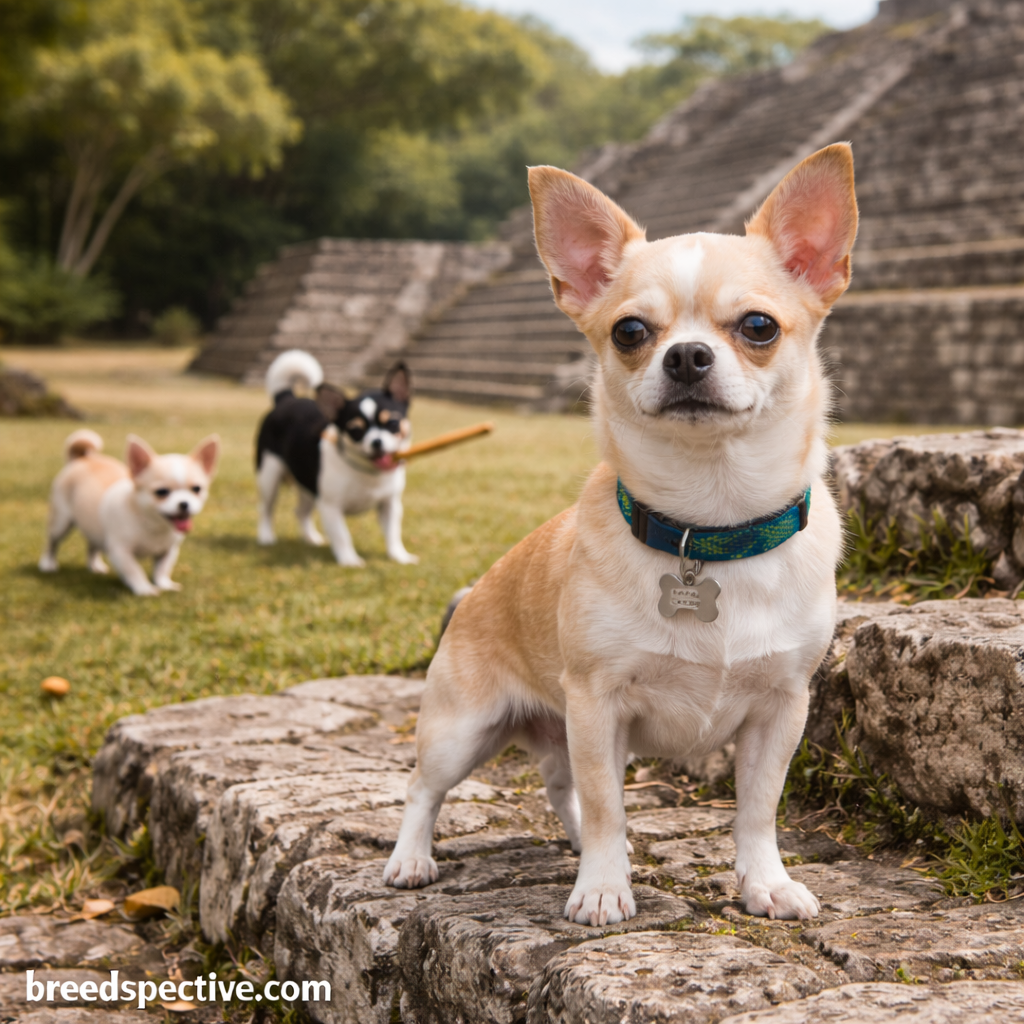
The Chihuahua is believed to descend from a small dog known as the Techichi, kept by the Toltec civilization.
Historical accounts describe the Techichi as:
- Small, quiet dogs
- Companions to nobles and priests
- Spiritually significant animals
Unlike many working dogs, the Techichi was bred primarily for companionship and ceremonial roles rather than labor.
Spiritual and Ceremonial Purpose
One of the Chihuahua’s most unique historical roles was spiritual rather than practical.
In ancient belief systems:
- Dogs were thought to guide souls to the afterlife
- Techichis were often buried alongside humans
- The dogs were believed to absorb illness or negative energy
This belief elevated small dogs from pets to sacred companions, deeply embedded in cultural rituals.
Role in Daily Life
Beyond spiritual symbolism, small companion dogs played practical roles in early households.
Possible daily functions included:
- Providing warmth in sleeping areas
- Alerting owners to intruders or animals
- Offering emotional companionship
Their size made them easy to keep indoors, reinforcing close human bonds.
Decline and Survival After Conquest
Following Spanish colonization, many native animal breeds declined or disappeared.
Factors affecting early Chihuahua ancestors included:
- Cultural disruption
- Introduction of European dog breeds
- Loss of ceremonial traditions
However, small dogs resembling the Techichi survived in rural villages, particularly in the northern regions of Mexico.
Rediscovery in the Chihuahua Region
The modern Chihuahua takes its name from the Mexican state where the breed was rediscovered in the 1800s.
Travelers and traders encountered small dogs in the region of Chihuahua and brought them to the United States.
These dogs attracted attention due to:
- Extremely small size
- Lively personality
- Strong attachment to owners
This marked the beginning of the breed’s modern recognition.
Development of the Modern Chihuahua
As the breed gained popularity, selective breeding refined its appearance.
Developments included:
- Standardized size and proportions
- Distinct coat types (smooth and long-haired)
- Refined facial features
Despite these changes, the Chihuahua retained its ancient companion-focused temperament.
Original Purpose Compared to Modern Role
Unlike many breeds developed for hunting or labor, the Chihuahua’s original purpose aligns closely with its modern role.
Historically and today, Chihuahuas excel as:
- Companion animals
- Indoor dogs
- Alert watchdogs
- Emotionally bonded pets
Their need for closeness and reassurance is rooted in centuries of human companionship.
How History Shapes Chihuahua Temperament Today
Many modern Chihuahua traits directly reflect their origins.
Historically influenced traits include:
- Strong loyalty to one person
- Alertness and vocal behavior
- Sensitivity to environment and routine
- Preference for warmth and comfort
Understanding this background helps owners appreciate the breed’s behavior rather than mislabel it as “difficult.”
Common Myths About Chihuahua History
Several misconceptions persist about the breed’s past.
Clarifications include:
- Chihuahuas are not modern designer dogs
- They were not bred purely for novelty
- Their bold temperament is historically functional
Their confidence and alertness once served spiritual and protective roles within households.
Chihuahua History Summary
The Chihuahua’s story is one of survival, reverence, and companionship.
Key historical points:
- Origins in ancient Mesoamerican civilizations
- Descent from the Techichi
- Spiritual and ceremonial importance
- Rediscovery in northern Mexico
- Evolution into a modern companion breed
Final Thoughts
The Chihuahua is not simply a tiny dog with a big attitude—it is a living connection to ancient human history. Its loyalty, alertness, and emotional depth are traits shaped by centuries of close companionship and cultural significance.
By understanding the Chihuahua’s history and original purpose, owners can better respect and support this small but remarkably enduring breed.