Common Behavioral Challenges in Rhodesian Ridgeback Dogs

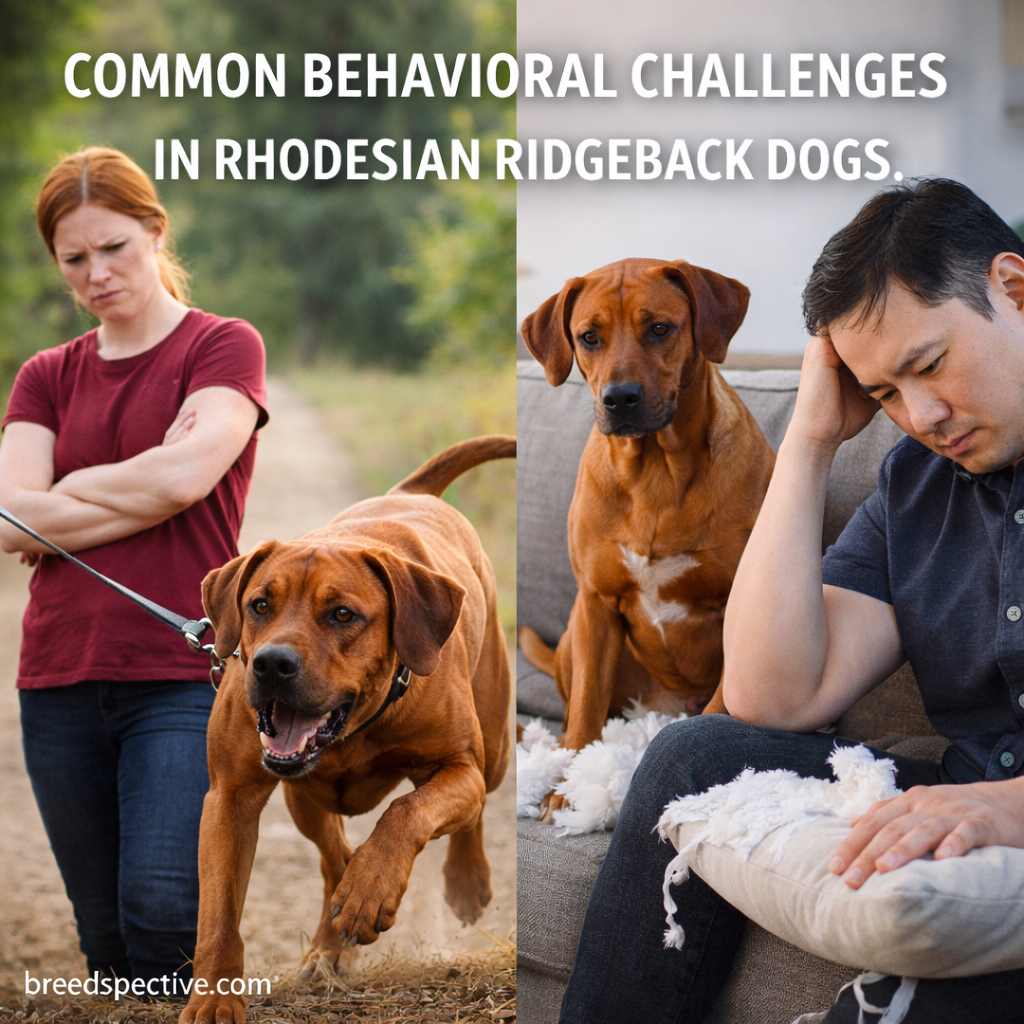
Rhodesian Ridgeback dogs with owners illustrating common behavioral challenges such as leash pulling and destructive behavior.
Rhodesian Ridgeback dogs with owners highlighting common behavioral challenges and training difficulties. breedspective.com

The Rhodesian Ridgeback is a confident, intelligent, and independent breed with deep working-dog roots. While calm and composed in many situations, the Rhodesian Ridgeback can develop behavioral challenges if its physical, mental, and emotional needs are not properly met.

Most behavioral issues in Rhodesian Ridgebacks are not signs of aggression or poor temperament, but rather a mismatch between the dog’s instincts and its living environment. Understanding these challenges helps owners prevent problems before they escalate.

Continue reading “Common Behavioral Challenges in Rhodesian Ridgeback Dogs”


Common Behavioral Challenges in Vizsla Dogs

Vizsla dog with owners illustrating common behavioral challenges in Vizsla dogs.
A Vizsla dog with owners representing common behavioral challenges in Vizsla dogs. breedspective.com

Vizslas are affectionate, athletic, and deeply people-oriented dogs. Bred to work closely alongside hunters, the Vizsla thrives on physical activity, mental stimulation, and constant companionship. When those needs aren’t fully met, behavioral challenges can develop quickly.

This article explains the most common behavioral issues seen in Vizsla dogs, why they occur, and how owners can manage them effectively.

Continue reading “Common Behavioral Challenges in Vizsla Dogs”

Common Behavioral Challenges in Weimaraner Dogs

Weimaraner displaying separation anxiety and high-energy behavior with owners nearby, illustrating common behavioral challenges.
A Weimaraner showing signs of common behavioral challenges such as separation anxiety, destructive behavior, and excess energy. breedspective.com.

Weimaraners are intelligent, athletic, and deeply devoted dogs, but they are also one of the more behaviorally demanding breeds. Originally developed for intensive hunting work and close partnership with humans, Weimaraners thrive on structure, activity, and companionship. When their needs aren’t met, behavioral challenges can quickly appear.

Understanding these common behavioral issues helps owners prevent problems early and manage them effectively throughout the dog’s life.

Continue reading “Common Behavioral Challenges in Weimaraner Dogs”

Common Behavioral Challenges in Samoyed Dogs

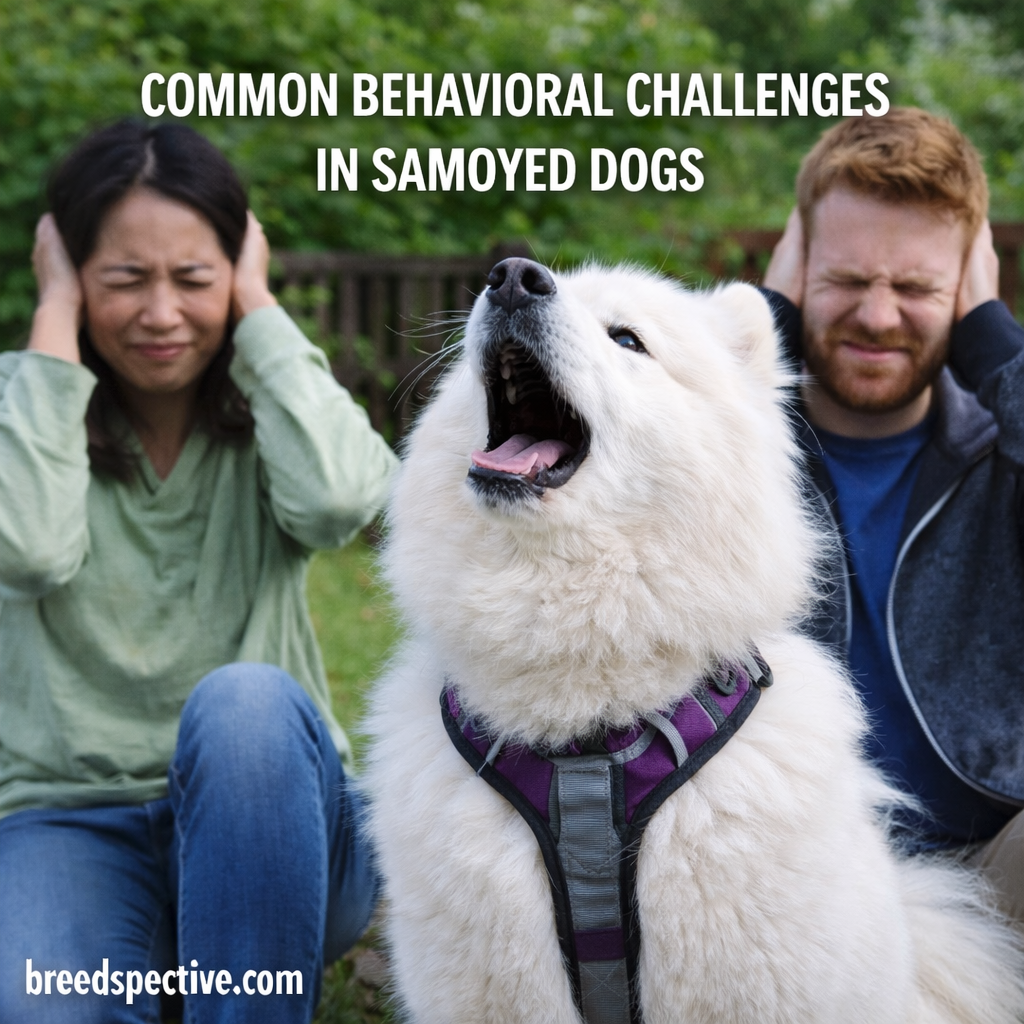
Samoyed barking outdoors with people nearby, illustrating common behavioral challenges such as vocalization and high energy.
A Samoyed vocalizing during outdoor time, highlighting common behavioral challenges like barking, restlessness, and attention-seeking behavior. breedspective.com.

Samoyeds are known for their joyful expressions, fluffy white coats, and affectionate personalities. While they are loving and social companions, they also come with distinct behavioral challenges rooted in their history as hardworking Arctic dogs. Understanding these behaviors is essential for managing expectations and creating a positive, structured environment.

This article explores the most common behavioral challenges seen in Samoyed dogs, why they occur, and what owners should be prepared to handle.

Continue reading “Common Behavioral Challenges in Samoyed Dogs”

Common Behavioral Challenges in Basset Hound Dogs

Basset Hound howling outdoors with people nearby, illustrating common behavioral challenges in the breed.
A Basset Hound vocalizing during a walk, highlighting common behavioral challenges such as howling, scent fixation, and attention-seeking behavior. breedspective.com.

Basset Hounds are known for their gentle nature, soulful expressions, and relaxed personalities. However, like all breeds, they come with specific behavioral challenges shaped by their history as scent-tracking dogs. Understanding these common issues helps owners set realistic expectations and build a happier, more balanced relationship with their Basset Hound.

This guide breaks down the most frequent behavioral challenges seen in Basset Hound dogs, why they happen, and how owners can manage them effectively.

Continue reading “Common Behavioral Challenges in Basset Hound Dogs”

Common Behavioral Challenges in Bloodhound Dogs

Bloodhound displaying common behavioral challenges such as vocalization, leash pulling, and scent-driven distraction with owners nearby.
A Bloodhound exhibiting instinct-driven behaviors that commonly challenge owners, including vocalization and strong scent focus. breedspective.com.

Bloodhounds are gentle, intelligent, and famously scent-driven dogs, but their unique instincts can create behavioral challenges—especially in modern home environments. Many issues owners experience are not signs of poor temperament, but natural behaviors shaped by centuries of tracking work.

Understanding these challenges helps owners manage expectations, prevent frustration, and support a balanced Bloodhound.

Continue reading “Common Behavioral Challenges in Bloodhound Dogs”

Common Behavioral Challenges in Australian Cattle Dogs

Australian Cattle Dogs displaying common behavioral challenges such as herding and reactivity with owners nearby.
Australian Cattle Dogs exhibiting instinct-driven behaviors in a home environment, reflecting common challenges owners may encounter. breedspective.com.

Australian Cattle Dogs are intelligent, driven, and intensely loyal working dogs. While these qualities make them exceptional partners in active and structured environments, they can also lead to behavioral challenges when the breed’s instincts and needs are misunderstood.

Most behavior issues in Australian Cattle Dogs are not signs of aggression or poor temperament. Instead, they are the result of unmet physical, mental, or instinctual needs rooted in the breed’s working history.

Continue reading “Common Behavioral Challenges in Australian Cattle Dogs”

Common Behavioral Challenges in Anatolian Shepherd Dogs

Anatolian Shepherd dogs with owners demonstrating common behavioral challenges such as guarding and reactivity.
Anatolian Shepherds shown with owners in a residential setting, illustrating typical behavior challenges linked to guarding instincts. breedspective.com.

The Anatolian Shepherd is an intelligent, capable, and deeply instinct-driven livestock guardian breed. While these traits make the breed exceptional at protection and independent work, they can also lead to behavioral challenges—especially when the dog is placed in an environment that does not match its historical purpose.

Most behavioral issues seen in Anatolian Shepherds are not signs of a “bad dog,” but rather a mismatch between instincts, expectations, and lifestyle. Understanding these challenges is key to preventing problems and setting realistic ownership expectations.

Continue reading “Common Behavioral Challenges in Anatolian Shepherd Dogs”

Common Behavioral Challenges in Great Pyrenees Dogs

Great Pyrenees sitting outdoors with owners, illustrating common behavioral challenges such as independence and alert barking.
A Great Pyrenees with its owners in an outdoor setting, representing common behavioral challenges rooted in the breed’s guardian instincts. breedspective.com.

Overview of Great Pyrenees Behavior Challenges

Great Pyrenees dogs are calm, confident, and deeply instinctual guardians. While they are not aggressive or high-energy, their independent nature and livestock-guarding heritage can create behavioral challenges for owners who are unfamiliar with the breed.

Most behavioral issues in Great Pyrenees dogs are not the result of poor training or temperament flaws. Instead, they are natural expressions of instincts developed over centuries of autonomous guardian work.

Continue reading “Common Behavioral Challenges in Great Pyrenees Dogs”

Common Behavioral Challenges in Saint Bernard Dogs

Saint Bernard sitting indoors with owners looking concerned, illustrating common behavioral challenges such as drooling and stubbornness.
A Saint Bernard indoors with its owners, representing common behavioral challenges and the breed’s gentle but demanding nature. breedspective.com.

Overview of Saint Bernard Behavior Challenges

Saint Bernards are famous for their gentle temperament, patience, and affectionate nature. While they are rarely aggressive or high-strung, their size, emotional sensitivity, and slow-maturing nature can lead to specific behavioral challenges if their needs are not properly understood.

Most behavior issues in Saint Bernards are not caused by dominance or defiance. Instead, they usually stem from boredom, lack of structure, emotional attachment, or physical discomfort related to their size and growth.

Continue reading “Common Behavioral Challenges in Saint Bernard Dogs”