
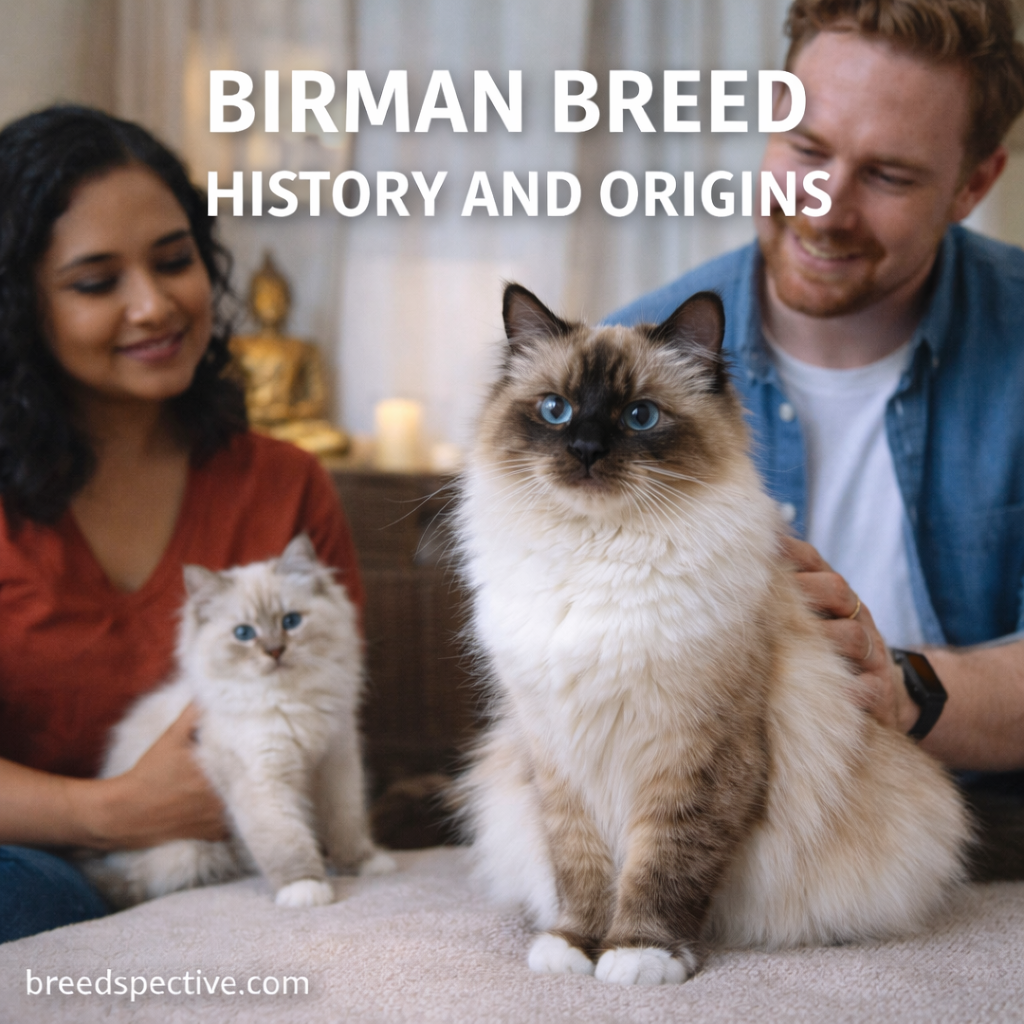
The Birman cat is admired today for its striking blue eyes, silky coat, and gentle personality, but its history is wrapped in legend, mystery, and careful breeding. Understanding Birman breed history and origins offers insight into how this calm, affectionate cat developed and why it differs from other long-haired breeds.
This article explores the myths, documented history, and modern development of the Birman cat.
The Legendary Origins of the Birman Cat
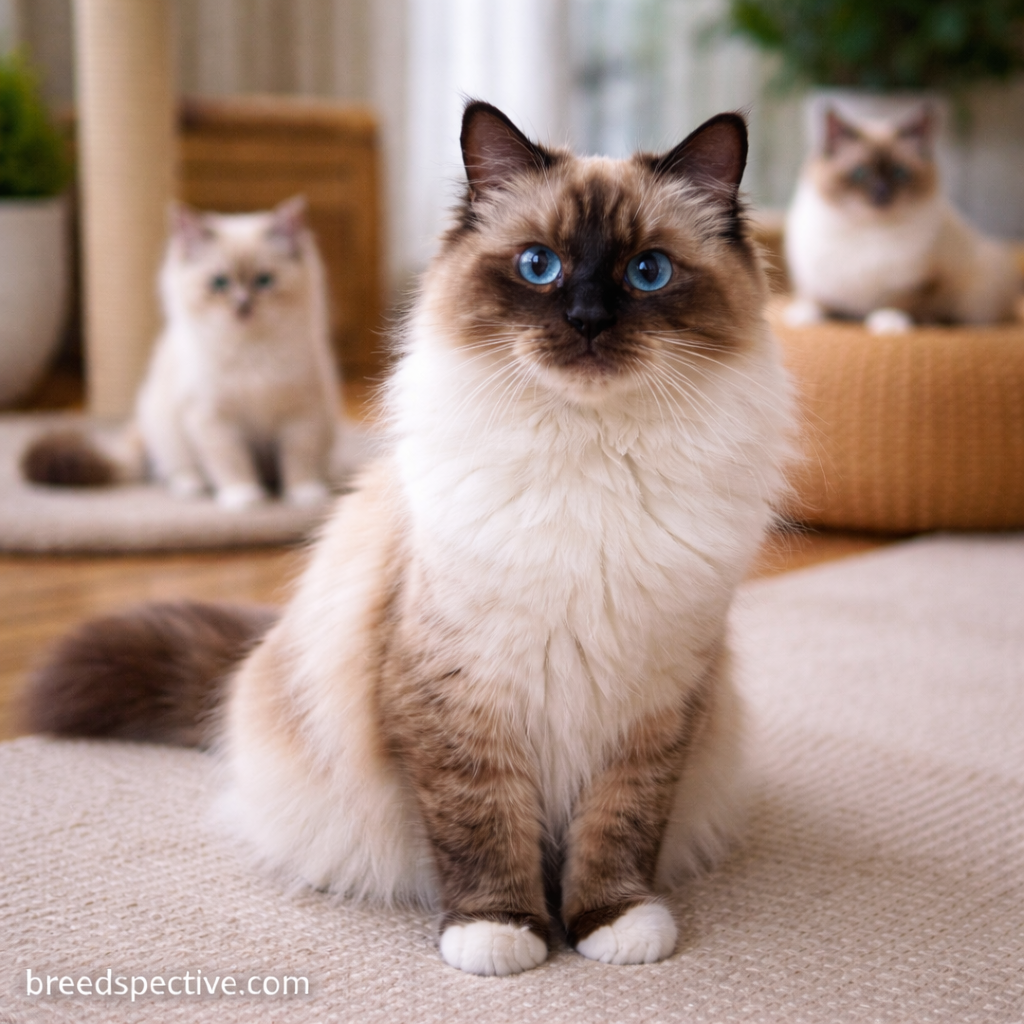
Birman history is famously linked to ancient legend. According to traditional stories, Birmans were sacred temple cats kept by priests in Burma, now known as Myanmar.
The legend tells of:
- White temple cats living alongside monks
- A divine transformation that gave the cats blue eyes
- Golden or cream coats symbolizing purity
- Dark points reflecting spiritual balance
While these stories are not historically proven, they played a major role in shaping the breed’s mystique and name. The Birman is often called the “Sacred Cat of Burma,” a title rooted more in mythology than documented fact.
Documented Beginnings in Europe
The first verifiable records of Birman cats appear in Europe in the early 20th century. It is believed that a small number of cats were brought from Southeast Asia to France.
Key early developments include:
- Arrival of early Birmans in France around the 1910s
- Selective breeding to stabilize appearance and temperament
- Formal recognition as a distinct breed
Due to limited breeding stock, early Birman populations were small and carefully managed.
The Impact of World War II
World War II nearly wiped out the Birman breed in Europe. By the end of the war, only a few breeding pairs were known to exist.
To save the breed, breeders:
- Crossed remaining Birmans with Siamese and Persian cats
- Carefully selected offspring that matched Birman traits
- Gradually re-established consistent characteristics
This period was critical to the survival of the breed and shaped the Birman’s modern appearance and temperament.
Development of the Modern Birman Appearance
Through selective breeding, the Birman developed a distinct look that sets it apart from similar breeds.
Defining physical traits include:
- Deep blue, round eyes
- Light-colored body with darker point coloration
- Silky, medium-long coat without heavy matting
- White “gloves” on the front paws and white “laces” on the back paws
The white glove pattern became a defining hallmark of the breed and remains a strict standard in show-quality Birmans.
How the Birman Differs From Similar Breeds
Birman cats are often confused with other pointed breeds, but their history and traits are unique.
Key differences include:
- Calmer temperament than Siamese cats
- Less grooming demand than Persians
- Softer body type than long, slender Oriental breeds
- Distinctive white paw markings not found in similar breeds
These differences reflect careful breeding decisions made during the breed’s redevelopment in Europe.
Expansion Into the United States and Beyond
Birman cats were introduced to the United States in the mid-20th century and quickly gained popularity.
Milestones in global recognition include:
- Recognition by major cat registries
- Growth in dedicated Birman breeding programs
- Increasing popularity as companion cats
Their gentle personality and adaptability helped the breed spread worldwide.
Historical Influence on Birman Personality
The Birman’s calm, affectionate nature is not accidental. Breeders emphasized temperament as much as appearance.
Historical breeding priorities favored:
- Gentle social behavior
- Strong human bonding
- Low aggression and adaptability
- Balanced energy levels
These traits remain defining characteristics of the breed today.
Birman Cats in Modern Times
Today, Birmans are primarily companion animals known for their people-oriented nature.
Modern Birman traits influenced by history include:
- Strong attachment to family members
- Tolerance for children and other pets
- Quiet communication style
- Preference for indoor living
While no longer associated with temples, the breed retains a calm, dignified presence.
Why Birman History Still Matters
Understanding Birman breed history helps owners better appreciate the breed’s needs and personality.
Benefits of knowing the breed’s origins include:
- Realistic expectations of temperament
- Better care and enrichment choices
- Deeper appreciation of breed traits
- Stronger human-cat relationships
History explains why Birmans thrive on companionship and routine rather than independence.
Final Thoughts
Birman breed history blends legend with careful modern breeding. From mystical temple stories to near extinction and recovery, the Birman’s journey has shaped a cat known for beauty, balance, and gentle companionship.
Understanding the origins of the Birman reveals why this breed remains one of the most beloved and emotionally intuitive cats in the world.