
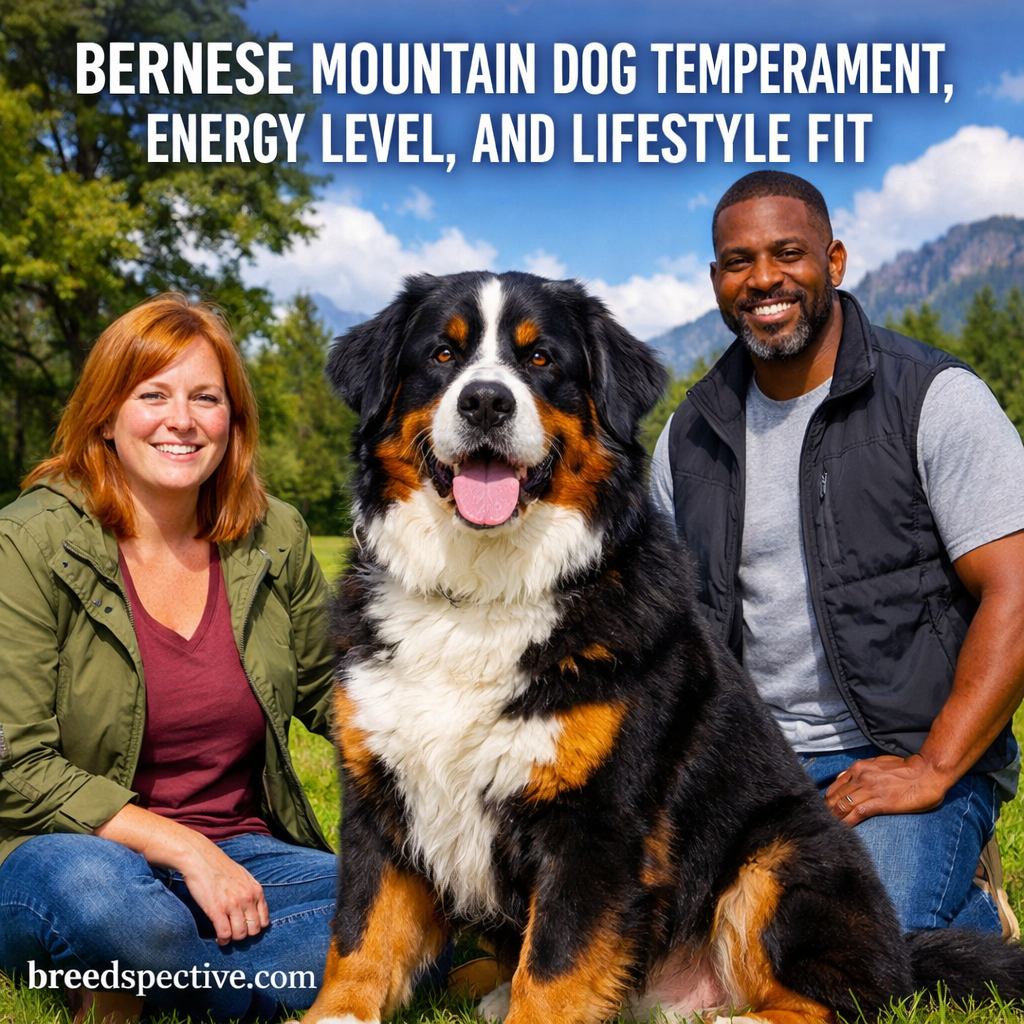
Bernese Mountain Dog Temperament Overview
The Bernese Mountain Dog is widely known for its gentle nature, affectionate personality, and strong emotional bond with its family. Often described as a “gentle giant,” this breed combines impressive size with a calm and loving demeanor.
Bernese Mountain Dogs are people-oriented and thrive when they feel included in daily family life. They are not typically independent or aloof and prefer being close to their humans rather than spending long periods alone.
Key temperament traits include:
- Loyal and devoted to their family
- Calm and even-tempered indoors
- Affectionate without being overly demanding
- Sensitive to tone, mood, and household energy
- Naturally friendly toward familiar people
Their emotional intelligence makes them excellent companions, but it also means they do best in homes where they receive regular attention and companionship.
Personality Traits in Everyday Life
Bernese Mountain Dogs tend to form deep bonds with their primary caregivers but are usually friendly with everyone in the household. They often follow family members from room to room and enjoy being present rather than the center of attention.
Common personality characteristics include:
- Gentle interactions with children
- Patient and tolerant behavior
- Desire to please their owners
- Calm confidence rather than dominance
- Occasional stubborn streak during adolescence
While not aggressive by nature, Bernese Mountain Dogs may appear reserved around strangers at first. Proper socialization helps ensure they remain confident and welcoming rather than shy.
Energy Level and Activity Needs
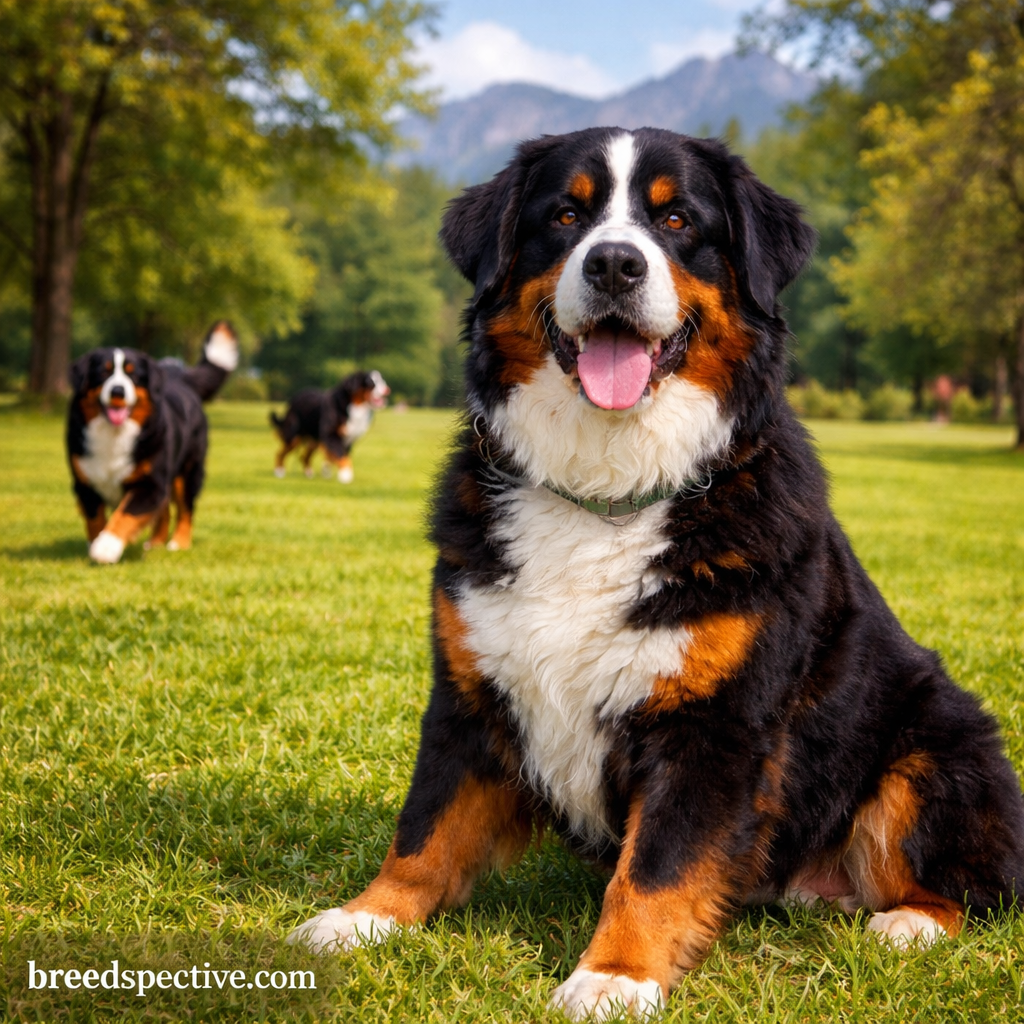
Despite their large size, Bernese Mountain Dogs have a moderate energy level. They are not hyperactive or high-strung but do require consistent physical activity to stay healthy and emotionally balanced.
Their energy pattern typically includes:
- Moderate bursts of play and exploration
- Calm periods of relaxation indoors
- Enjoyment of outdoor activities without excessive intensity
Recommended daily activity includes:
- 45–75 minutes of exercise per day
- Leashed walks or gentle hikes
- Supervised playtime in a secure yard
- Mental stimulation through training or enrichment
They enjoy purposeful movement, such as pulling carts or hiking with their owners, but are not suited for repetitive high-impact exercise.
Bernese Mountain Dogs and Family Life
Bernese Mountain Dogs are well known for their family-friendly nature. Their patience, gentleness, and emotional awareness make them excellent companions for households with children.
Why they work well in family environments:
- Calm and tolerant with kids
- Rarely reactive or aggressive
- Enjoy routine and predictability
- Strong sense of loyalty and protectiveness
However, their large size means supervision is still important, especially with younger children. Accidental bumps are more likely than intentional roughness.
They do best in homes where someone is present most of the day, as they can become distressed if left alone too often.
Compatibility With Other Pets
Bernese Mountain Dogs are generally accepting of other animals, especially when raised together or properly introduced.
Typical pet compatibility includes:
- Peaceful coexistence with other dogs
- Low prey drive compared to many breeds
- Calm behavior around cats when socialized early
They are more likely to avoid conflict than initiate it, but early exposure and consistent boundaries are important to ensure smooth relationships.
Trainability and Intelligence
Bernese Mountain Dogs are intelligent and eager to please, but their sensitive nature affects how they respond to training. Harsh methods or raised voices can cause them to shut down or become hesitant.
Best training practices include:
- Positive reinforcement techniques
- Calm, consistent guidance
- Short, engaging training sessions
- Praise and food-based rewards
They learn commands quickly but may mature mentally slower than smaller breeds. Patience during puppyhood and adolescence is key to long-term success.
Emotional Needs and Sensitivity
One of the defining traits of the Bernese Mountain Dog is emotional sensitivity. They are highly attuned to household moods and changes in routine.
Signs of emotional sensitivity include:
- Seeking comfort during stress or tension
- Becoming anxious if ignored for long periods
- Strong reaction to owner emotions
This makes them excellent emotional companions but also means they do poorly in chaotic or high-conflict households.
Ideal Living Environment
Bernese Mountain Dogs adapt best to homes that offer space, routine, and companionship.
Ideal living conditions include:
- Homes with yards or access to outdoor space
- Cooler climates or climate-controlled environments
- Predictable daily schedules
- Owners who enjoy regular outdoor time
Apartment living is possible but challenging unless owners are highly committed to daily exercise and enrichment.
Climate Considerations
Bernese Mountain Dogs were bred for cold environments and struggle in hot weather.
Important climate factors:
- Prefer cooler temperatures
- Require shade and air conditioning in warm climates
- Exercise should be limited during heat
- Higher risk of overheating than short-coated breeds
Owners in warmer regions must be especially mindful of seasonal activity adjustments.
Common Behavioral Challenges
While generally easygoing, Bernese Mountain Dogs can develop issues if their needs are not met.
Potential challenges include:
- Separation anxiety if left alone too often
- Destructive behavior from boredom
- Stubbornness during adolescence
- Weight gain from insufficient exercise
Most issues are preventable with consistent routines, proper training, and emotional engagement.
Who Is a Bernese Mountain Dog Best For?
Bernese Mountain Dogs are best suited for owners who value companionship and gentle loyalty over intensity or independence.
They are a great fit for:
- Families with children
- Owners who work from home
- Calm, patient dog owners
- People who enjoy outdoor activities without extreme intensity
They may not be ideal for:
- People away from home most of the day
- Those living in very hot climates without accommodations
- Owners seeking a low-shedding or low-maintenance breed
Final Thoughts on Bernese Mountain Dog Lifestyle Fit
The Bernese Mountain Dog offers a rare combination of strength, gentleness, and emotional connection. Their calm demeanor, affectionate personality, and family-oriented nature make them a deeply rewarding companion for the right household.
If you can provide consistent companionship, moderate exercise, and a stable environment, the Bernese Mountain Dog can become not just a pet, but a devoted member of your family.