
Bernese Mountain Dog History Overview
The Bernese Mountain Dog has a long and practical history rooted in the rural farming regions of Switzerland. This breed was developed not for appearance or companionship alone, but for hard work, reliability, and close cooperation with humans in challenging alpine environments.
Every defining trait of the Bernese Mountain Dog—its size, strength, coat, and temperament—was shaped by its original working purpose. Understanding this history helps explain why the breed remains calm, loyal, and deeply people-oriented today.
Origins in the Swiss Alps
The Bernese Mountain Dog originated in the canton of Bern, a central region of Switzerland known for dairy farming, cattle herding, and mountainous terrain. Farmers needed a versatile dog that could perform multiple tasks while remaining steady and dependable.
Key environmental influences included:
- Cold alpine weather requiring a thick, weather-resistant coat
- Steep hills and uneven terrain demanding strength and balance
- Isolated farms needing self-sufficient working dogs
- Close daily interaction between dogs and farming families
The breed became an essential part of rural life rather than a specialized working animal with a single role.
Ancestral Roots and Early Development
Bernese Mountain Dogs are believed to descend from large mastiff-type dogs brought to the region by Roman legions more than 2,000 years ago. These early dogs were later crossed with local farm dogs, gradually developing into the sturdy mountain dogs of Switzerland.
Over generations, selective breeding emphasized:
- Physical strength and endurance
- Calm, non-aggressive temperament
- Willingness to work closely with humans
- Ability to tolerate cold and harsh conditions
This careful development produced a dog that could work long hours without being reactive or difficult to manage.
Original Working Roles on Swiss Farms
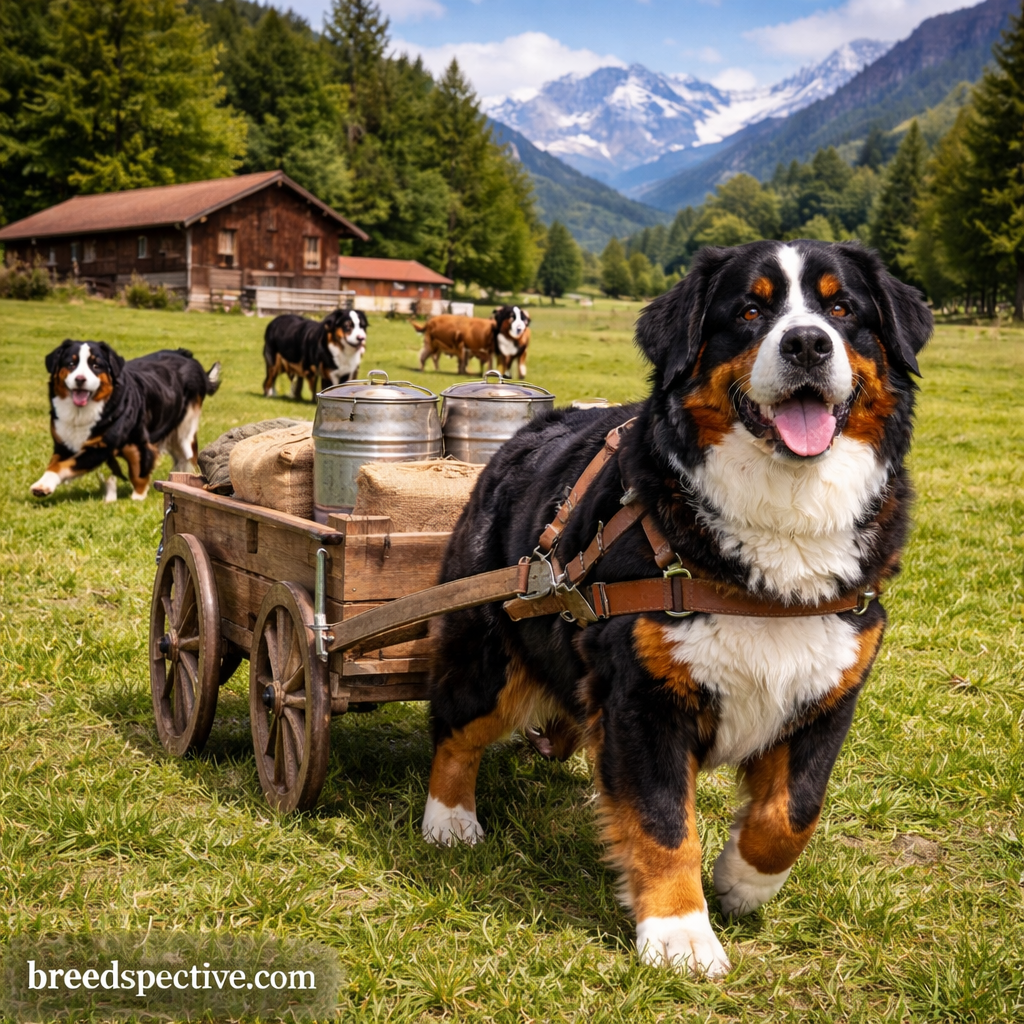
Bernese Mountain Dogs were true multi-purpose farm dogs. Rather than excelling in just one task, they assisted farmers in a variety of daily responsibilities.
Their primary roles included:
- Pulling carts loaded with milk, cheese, or supplies
- Herding cattle between pastures
- Guarding farm property from predators or intruders
- Serving as steady companions during long workdays
Cart pulling was especially important, as many small farms relied on dogs instead of horses for transportation.
Why Cart Pulling Was Central to the Breed
The Bernese Mountain Dog’s strength and calm demeanor made it ideal for draft work. These dogs could pull heavy carts through narrow village roads and uneven terrain without becoming stressed or reactive.
Traits that supported this role included:
- Broad chest and muscular build
- Strong joints and bone structure
- Steady, unhurried movement
- High tolerance for repetitive tasks
Even today, modern Bernese Mountain Dogs often excel in drafting and carting sports, reflecting their historical roots.
Relationship With Farmers and Families
Unlike some working breeds that lived separately from humans, Bernese Mountain Dogs were integrated into daily family life. They worked during the day and rested near their owners at night.
This close bond encouraged traits such as:
- Strong loyalty to caregivers
- Emotional sensitivity to human behavior
- Gentle behavior around children
- Preference for companionship over independence
These qualities remain central to the breed’s temperament today.
Decline and Near Disappearance
By the late 19th century, industrialization and modernization reduced the need for farm dogs in Switzerland. Machinery replaced animal labor, and many traditional working breeds declined in numbers.
The Bernese Mountain Dog faced:
- Reduced demand for cart-pulling dogs
- Crossbreeding with non-working dogs
- Loss of rural farming traditions
Without intervention, the breed may have disappeared entirely.
Breed Preservation and Revival
In the early 20th century, Swiss breeders and enthusiasts recognized the importance of preserving native mountain dog breeds. Organized breeding programs were established to protect the Bernese Mountain Dog’s physical traits and working temperament.
Key preservation efforts included:
- Formal breed documentation
- Selective breeding for health and temperament
- Promotion of the breed beyond farming communities
These efforts stabilized the population and introduced the breed to wider audiences.
Spread Beyond Switzerland
The Bernese Mountain Dog gained international recognition in the mid-20th century. Its striking appearance and gentle personality made it appealing outside of its original working environment.
As the breed spread globally:
- Working roles declined
- Companion and family roles increased
- Temperament became a key selection focus
- Drafting and herding became recreational activities
Despite this shift, responsible breeders continue to honor the breed’s working heritage.
How History Influences the Modern Bernese Mountain Dog
The Bernese Mountain Dog’s history directly explains many modern traits:
- Calm demeanor rooted in farm work
- Strong attachment to family from close human interaction
- Moderate energy level suited for steady labor
- Sensitivity developed through cooperative work
These dogs still thrive when given purpose, structure, and meaningful engagement.
Final Thoughts on Bernese Mountain Dog History
The Bernese Mountain Dog is more than a beautiful companion—it is a living piece of agricultural history. Bred for strength, reliability, and partnership, this breed reflects centuries of thoughtful development shaped by real-world needs.
Understanding the Bernese Mountain Dog’s original purpose provides valuable insight into its behavior, needs, and personality today, helping owners appreciate not just how the breed looks, but why it is the way it is.