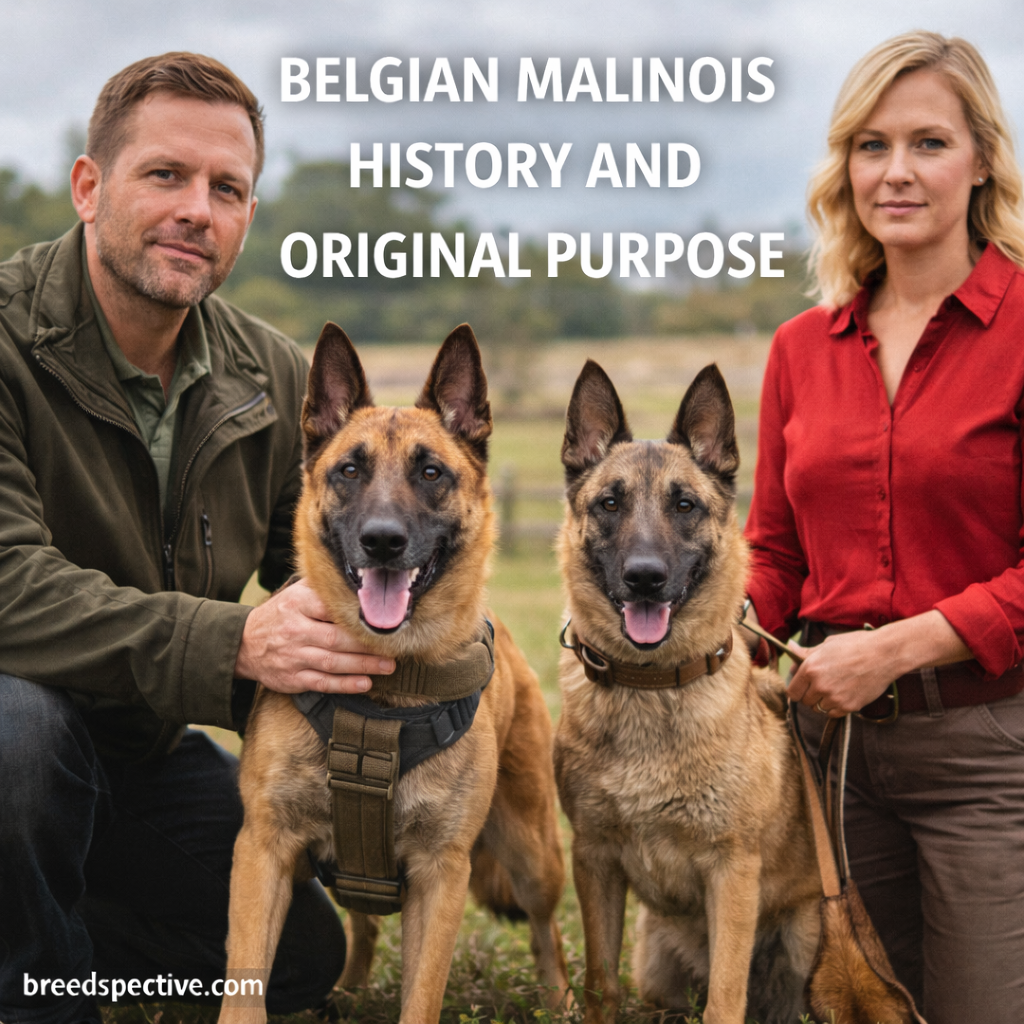
The Belgian Malinois is widely recognized today as one of the world’s premier working dogs, trusted by military units, police forces, and professional handlers across the globe. This reputation is the result of deliberate, function-first breeding rooted in real agricultural and protection needs—not modern trends.
Understanding the Belgian Malinois’ history and original purpose explains why the breed is so driven, intelligent, and demanding today.
Origins in Belgium’s Working Countryside
The Belgian Malinois originated in Belgium during the late 19th century, where farmers and shepherds needed versatile, resilient dogs capable of handling multiple tasks.
Key historical conditions included:
- Rural farming communities requiring livestock management
- A need for alert, fast-reacting dogs
- Harsh working environments demanding endurance and intelligence
Rather than focusing on appearance, early breeders prioritized working ability, reliability, and responsiveness.
Part of the Belgian Shepherd Dog Group
The Malinois is one of four varieties of Belgian Shepherd Dogs, all developed in Belgium for herding and protection work.
The four varieties include:
- Malinois – short coat, fawn with black mask
- Groenendael – long black coat
- Tervuren – long fawn coat with black overlay
- Laekenois – rough, wiry coat
While similar in structure and purpose, the Malinois became especially valued for speed, agility, and intensity.
The Role of the City of Malines
The breed takes its name from Malines (Mechelen), a city in Belgium where this variety was commonly developed.
In this region:
- Dogs were expected to herd livestock efficiently
- Guard farms and property
- Respond quickly to handler commands
The Malinois distinguished itself as a sharper, more driven working dog compared to other shepherd varieties.
Original Purpose: Herding and Guarding
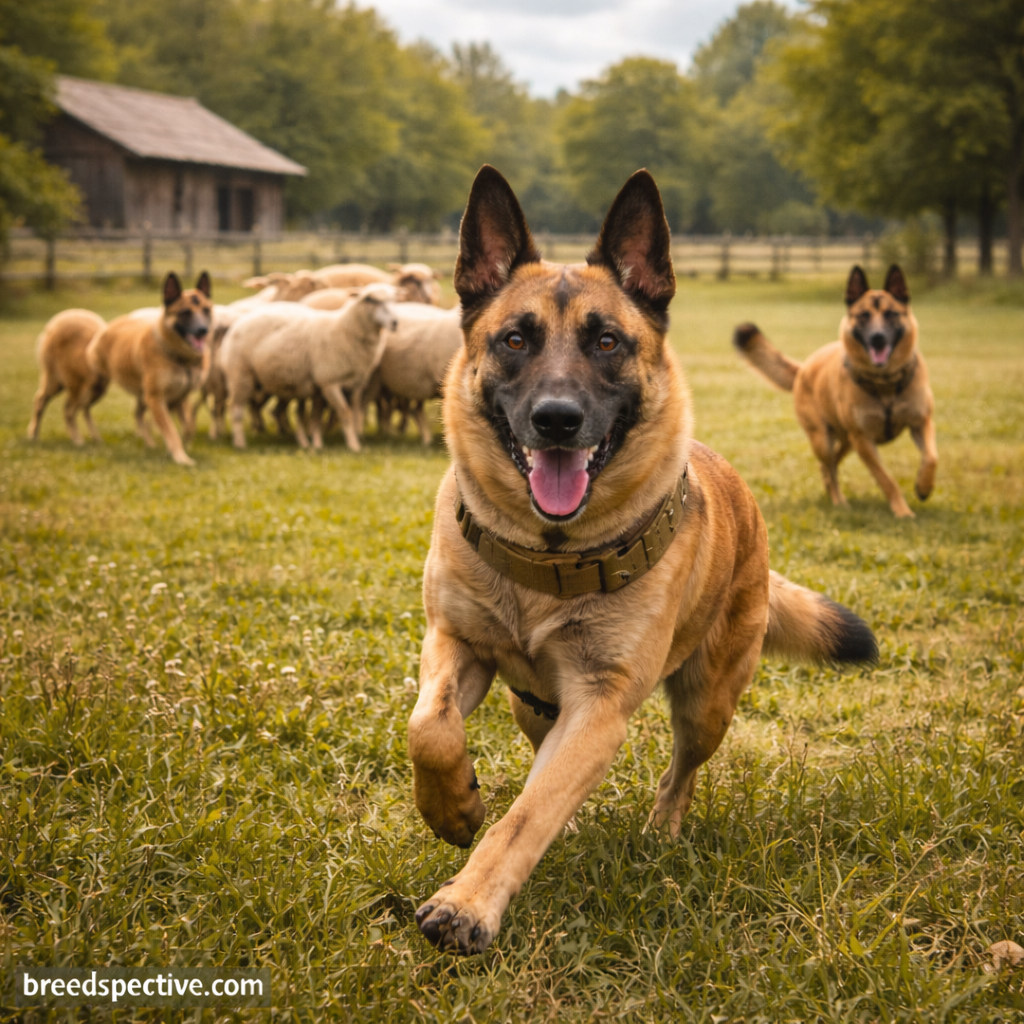
The Belgian Malinois was originally bred as a multi-purpose farm dog rather than a single-task specialist.
Primary responsibilities included:
- Herding sheep and livestock
- Guarding property and animals
- Alerting owners to intruders
- Responding instantly to handler direction
This required a dog that could think independently while remaining deeply responsive to human guidance.
Early Use in Police and Military Work
By the early 1900s, the Malinois’ abilities began attracting attention beyond farming.
Early professional roles included:
- Police patrol and tracking
- Messenger duties during wartime
- Guarding military installations
Belgium was among the first countries to deploy dogs in organized police work, and the Malinois quickly proved superior in stamina and adaptability.
Expansion Beyond Belgium
As international demand for capable working dogs grew, the Malinois spread throughout Europe and eventually worldwide.
Key reasons for expansion included:
- Exceptional trainability
- High endurance and speed
- Strong nerves under pressure
- Versatility across working disciplines
Unlike heavier breeds, the Malinois combined power with agility, making it suitable for modern tactical roles.
Evolution Into a High-Drive Specialist
Over time, selective breeding intensified the traits that made the Malinois successful in demanding work.
These traits included:
- Extreme focus and drive
- High pain tolerance
- Strong handler bonding
- Rapid learning ability
While these qualities made the breed elite in professional settings, they also increased the demands placed on owners.
Malinois vs. German Shepherd History
Although often compared, the Malinois and German Shepherd were developed with different priorities.
Key historical distinctions include:
- Malinois bred for speed and intensity
- German Shepherd bred for versatility and structure
- Malinois retained a leaner, lighter build
- German Shepherd became more common in show lines
These differences explain why Malinois are often favored in modern military and police work.
Modern Working Roles
Today, the Belgian Malinois is one of the most widely used working dogs in the world.
Common roles include:
- Police K9 units
- Military special operations
- Search and rescue
- Detection work
- Protection sports
These roles closely mirror the breed’s original purpose: working closely with humans under pressure.
How History Shapes the Modern Malinois
The Malinois’ history directly explains many modern behavioral traits.
Historically driven traits include:
- Constant readiness and alertness
- Need for structured work
- High physical and mental energy
- Strong response to leadership
Without appropriate outlets, these traits can become overwhelming in a typical household.
Why the Original Purpose Still Matters
The Belgian Malinois was never intended to be a passive companion. Even modern Malinois retain strong instincts shaped by generations of working demands.
Understanding the breed’s origins helps owners:
- Set realistic expectations
- Choose appropriate training paths
- Prevent frustration and behavioral issues
- Respect the dog’s need for purpose
Ignoring this history often leads to mismatched placements and unhappy outcomes.
Final Thoughts on Belgian Malinois History
The Belgian Malinois is the product of intentional, purpose-driven breeding focused on performance, resilience, and intelligence. Its history is not ornamental—it is functional.
For experienced handlers willing to provide structure, training, and engagement, the Malinois remains one of the most capable working dogs ever developed. For others, its history serves as an important reminder that not every impressive breed fits every lifestyle.