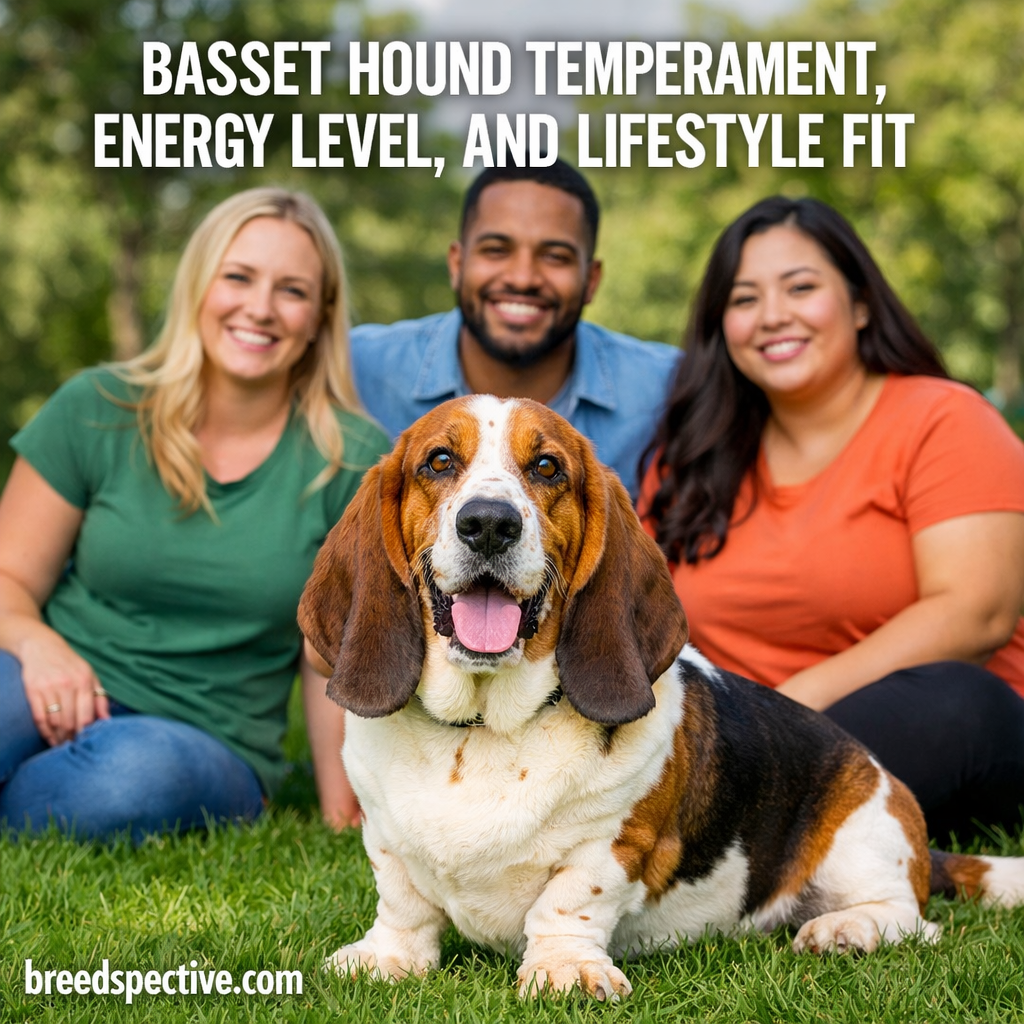
The Basset Hound is instantly recognizable thanks to its long ears, droopy eyes, and relaxed expression. Beneath that laid-back appearance is a scent hound with a strong nose, an independent streak, and a deeply affectionate personality. Originally bred for tracking game over long distances, today’s Basset Hound is best known as a loyal, easygoing companion.
Before choosing this breed, it’s important to understand how their temperament, energy level, and lifestyle needs fit into everyday life. While Basset Hounds are calm and loving, they also have quirks that can surprise first-time owners.
This guide covers everything you need to know to decide if a Basset Hound is the right match for your home.
Basset Hound Temperament
Basset Hounds are gentle, friendly, and highly social dogs. They enjoy being around people and often prefer company over solitude. Their temperament makes them popular with families, seniors, and multi-pet households.
Typical Basset Hound temperament traits include:
- Affectionate and loyal with family members
- Calm and relaxed indoors
- Patient and tolerant, especially with children
- Social and welcoming toward strangers
- Independent and occasionally stubborn
- Sensitive to tone and treatment
Although they are sweet-natured, Basset Hounds were bred to work independently while following scent trails. This independence can show up as selective listening, especially if something interesting catches their nose.
They respond best to gentle, consistent training and positive reinforcement rather than firm or repetitive commands.
Energy Level and Exercise Needs
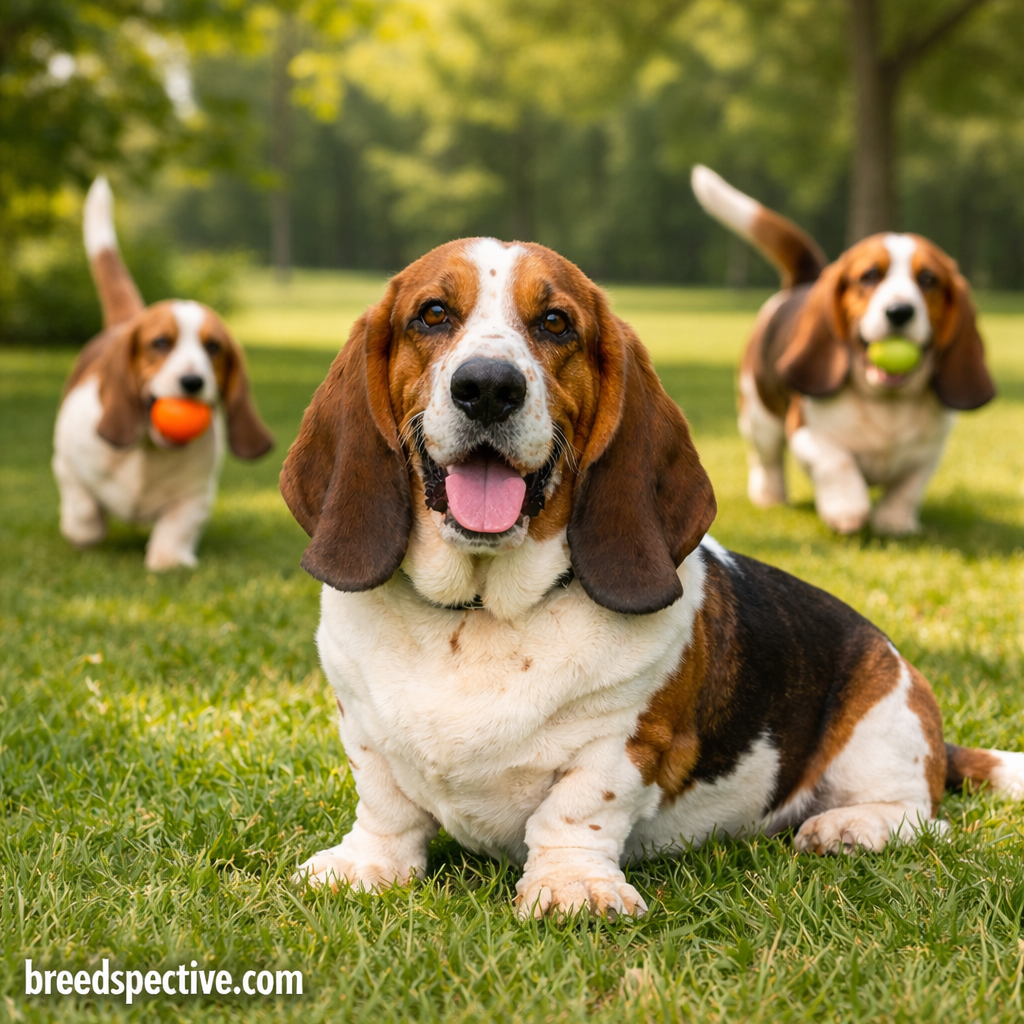
Basset Hounds have a low-to-moderate energy level. They are not hyperactive dogs, but they do need regular activity to stay healthy and prevent weight gain.
Energy and activity characteristics include:
- Enjoy leisurely daily walks
- Prefer sniffing and exploring over running
- Experience short bursts of energy followed by long rest periods
- Can become lazy without routine exercise
Most Basset Hounds do well with:
- One or two moderate walks per day
- Short play sessions indoors or in the yard
- Mental stimulation through scent games or puzzle toys
Because of their long backs and short legs, intense exercise or jumping should be limited to protect their joints.
Training and Intelligence
Basset Hounds are intelligent dogs, but they are not eager-to-please in the traditional sense. Their intelligence is often overshadowed by stubbornness and a strong instinct to follow scents.
Training considerations include:
- Slower response times compared to more obedient breeds
- Easily distracted by smells
- Best trained using food rewards and praise
- Require patience and repetition
Early obedience training and socialization are important. Short, engaging training sessions work far better than long or demanding ones.
Consistency matters more than strictness with this breed.
Social Behavior With People and Other Pets
Basset Hounds are highly social and usually thrive in households with companionship. They generally do well with children, other dogs, and even cats when properly introduced.
Social traits include:
- Friendly and tolerant with kids
- Rarely aggressive
- Often enjoy the company of other dogs
- Can become lonely or vocal if left alone too long
They are pack-oriented by nature, so homes where someone is frequently around—or where another dog is present—are often a good fit.
Ideal Living Environment
Despite their hunting background, Basset Hounds adapt well to a variety of living spaces. Their calm indoor behavior makes them surprisingly suitable for apartments, as long as their exercise needs are met.
Best living situations for Basset Hounds include:
- Apartments or homes with moderate space
- Families or individuals who are home often
- Homes with access to safe walking areas
- Owners who enjoy relaxed daily routines
They are not well suited for households that expect a highly obedient or athletic dog.
Potential Challenges to Consider
While lovable, Basset Hounds come with a few challenges that future owners should be prepared for.
Common challenges include:
- Stubbornness during training
- Tendency to gain weight easily
- Loud baying or howling when bored
- Strong pulling on leash due to scent tracking
- Drooling and shedding
Understanding and accepting these traits is key to a successful relationship with this breed.
Who Is a Basset Hound Best For?
A Basset Hound may be an excellent match if you are looking for:
- A calm, affectionate companion
- A dog that enjoys a slower pace of life
- A family-friendly and gentle breed
- A social dog that enjoys companionship
They may not be ideal for:
- Owners wanting a highly obedient dog
- Very active runners or hikers
- People away from home for long hours
Final Thoughts on Basset Hound Lifestyle Fit
The Basset Hound is a loving, laid-back breed with a big personality packed into a low-slung body. Their calm temperament, moderate energy level, and affectionate nature make them wonderful companions for the right household.
If you value companionship, patience, and a relaxed lifestyle, the Basset Hound can be a loyal and rewarding addition to your home for many years to come.