
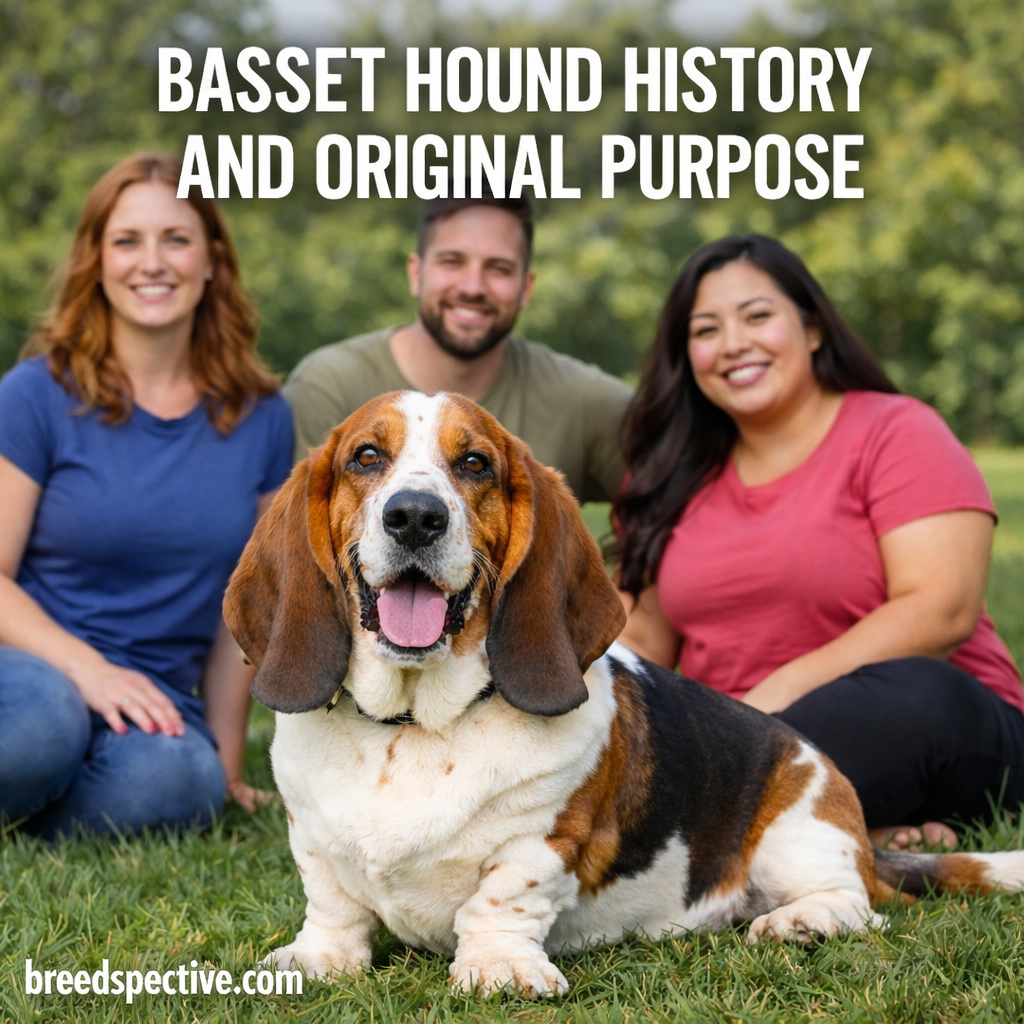
The Basset Hound is one of the most distinctive dog breeds in the world, instantly recognizable by its long ears, droopy eyes, and short, sturdy frame. While many people today know the Basset Hound as a relaxed family companion, the breed has a long and purposeful history rooted in hunting and scent work.
Understanding the Basset Hound’s history and original purpose helps explain its temperament, physical traits, and behavior patterns that still show up in modern homes.
Origins of the Basset Hound
The Basset Hound’s history traces back to France, where the breed was developed as a specialized scent hound. The word “basset” comes from the French term bas, meaning “low,” a direct reference to the breed’s short legs and low-slung body.
Early ancestors of the Basset Hound were bred by French monks during the Middle Ages. These monks focused on developing dogs with exceptional scenting ability that could track game slowly and methodically rather than chasing at high speeds.
Key points about the breed’s origins include:
- Developed in France during the Middle Ages
- Descended from ancient French scent hounds
- Selectively bred for short stature and strong noses
- Designed to hunt on foot alongside humans
This slow-paced tracking style made Basset Hounds especially useful for hunters who preferred walking rather than riding horses.
Original Purpose: Scent Tracking and Hunting
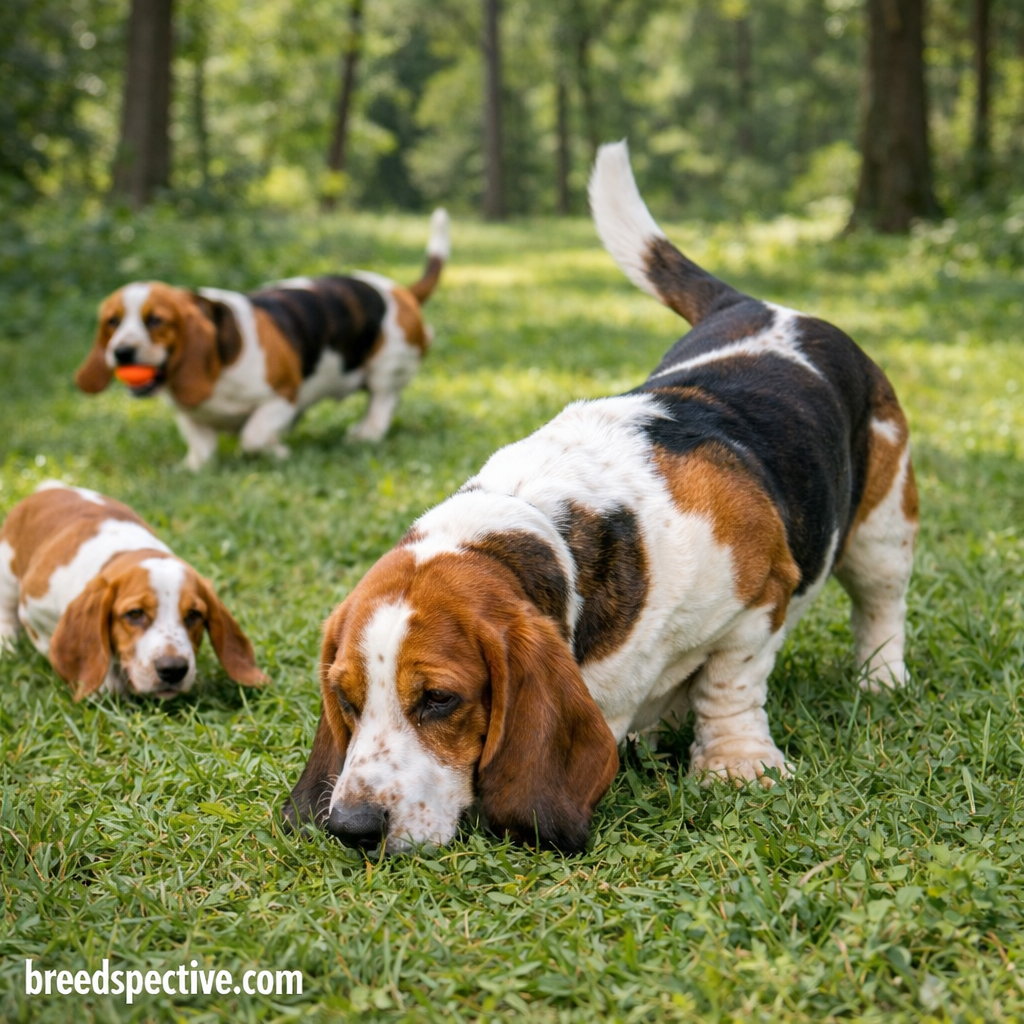
The Basset Hound was originally bred to hunt small game, particularly rabbits and hares. Their short legs were not a flaw but a feature, allowing hunters to follow comfortably on foot without losing sight of the dog.
Primary purposes of the Basset Hound included:
- Tracking scent trails over long distances
- Hunting small game close to the ground
- Maintaining steady, predictable movement
- Working independently without constant direction
Basset Hounds possess one of the strongest noses in the canine world, second only to the Bloodhound. Their long ears help sweep scent particles toward the nose, while loose skin around the face helps trap and hold scent.
Physical Traits Shaped by Purpose
Every major physical feature of the Basset Hound was shaped by its original working role.
Key functional traits include:
- Long ears to funnel scent toward the nose
- Heavy bone structure for endurance
- Short legs for slow, controlled tracking
- Loose facial skin to retain scent
- Broad chest for stamina rather than speed
These traits allowed Basset Hounds to track game for hours without tiring, even across rough terrain.
Spread to England and the United States
In the 19th century, Basset Hounds gained popularity beyond France. English breeders refined the breed’s appearance while preserving its scenting ability. This helped standardize the Basset Hound’s look and temperament.
The breed was later introduced to the United States, where it quickly gained attention for both hunting and companionship.
Important milestones include:
- Formal breeding in England during the 1800s
- Introduction to American hunters and dog enthusiasts
- Recognition by kennel clubs in the early 20th century
- Transition from working dog to family companion
By the mid-1900s, the Basset Hound had become a popular household pet, valued as much for its personality as its heritage.
Transition From Hunter to Companion
While modern Basset Hounds are rarely used for hunting, their instincts remain strong. Many of their everyday behaviors can be traced directly to their original purpose.
Common behaviors rooted in history include:
- Strong focus on scents during walks
- Selective listening when following a smell
- Loud baying and vocal communication
- Independent problem-solving
These traits are not signs of stubbornness alone—they reflect centuries of breeding for independent scent tracking.
How History Influences Modern Behavior
The Basset Hound’s past explains why the breed behaves the way it does today. Their calm indoor demeanor contrasts with their intense focus outdoors, especially when encountering new smells.
Modern owners often notice:
- A relaxed attitude at home
- Determination once a scent is found
- Preference for routine and familiarity
- Strong attachment to people and other dogs
Understanding this history helps owners train and manage Basset Hounds more effectively by working with their instincts rather than against them.
Legacy of the Basset Hound
The Basset Hound’s history is a story of purpose-driven design, patience, and endurance. From medieval French hunting grounds to modern living rooms, the breed has remained true to its original role as a scent-driven tracker.
Today’s Basset Hound may spend more time napping than hunting, but beneath that relaxed exterior lies a dog shaped by centuries of careful breeding and purposeful work.
Final Thoughts on Basset Hound History
The Basset Hound was never meant to be fast or flashy. It was built to be reliable, steady, and deeply focused on scent. Understanding the breed’s history and original purpose provides valuable insight into its temperament, training needs, and lifestyle fit today.
For owners who appreciate patience, character, and a rich working heritage, the Basset Hound remains a timeless and rewarding breed.