
Despite what the name suggests, the Australian Shepherd was developed in the United States, not Australia. This intelligent, energetic breed was shaped by the needs of ranchers who required a versatile, hardworking herding dog capable of handling demanding livestock tasks. Understanding Australian Shepherd history and original purpose explains why the breed is so driven, loyal, and mentally sharp today.
This article explores where Australian Shepherds came from, what they were bred to do, and how their working roots continue to influence their behavior.
Early Roots and Misleading Name
The Australian Shepherd’s name is linked to sheep, not geography. In the 19th century, sheep imported to the United States from Australia were often accompanied by skilled herding dogs. These dogs, along with other European herding breeds, contributed to the foundation of what would become the Australian Shepherd.
Key influences in the breed’s early development include:
- Herding dogs from the Basque region of Europe
- Sheepdog types associated with Australian-imported livestock
- Ranch dogs used in the western United States
Over time, these dogs were selectively bred in the U.S. to meet the needs of American ranchers.
Development in the American West
Australian Shepherds were refined primarily in the western United States, where ranching required intelligent, agile, and resilient dogs.
Ranchers valued dogs that could:
- Herd sheep and cattle efficiently
- Work long hours in harsh conditions
- Respond quickly to commands
- Make independent decisions when needed
This environment shaped the Australian Shepherd into a versatile, problem-solving working dog.
Original Purpose: Herding Livestock
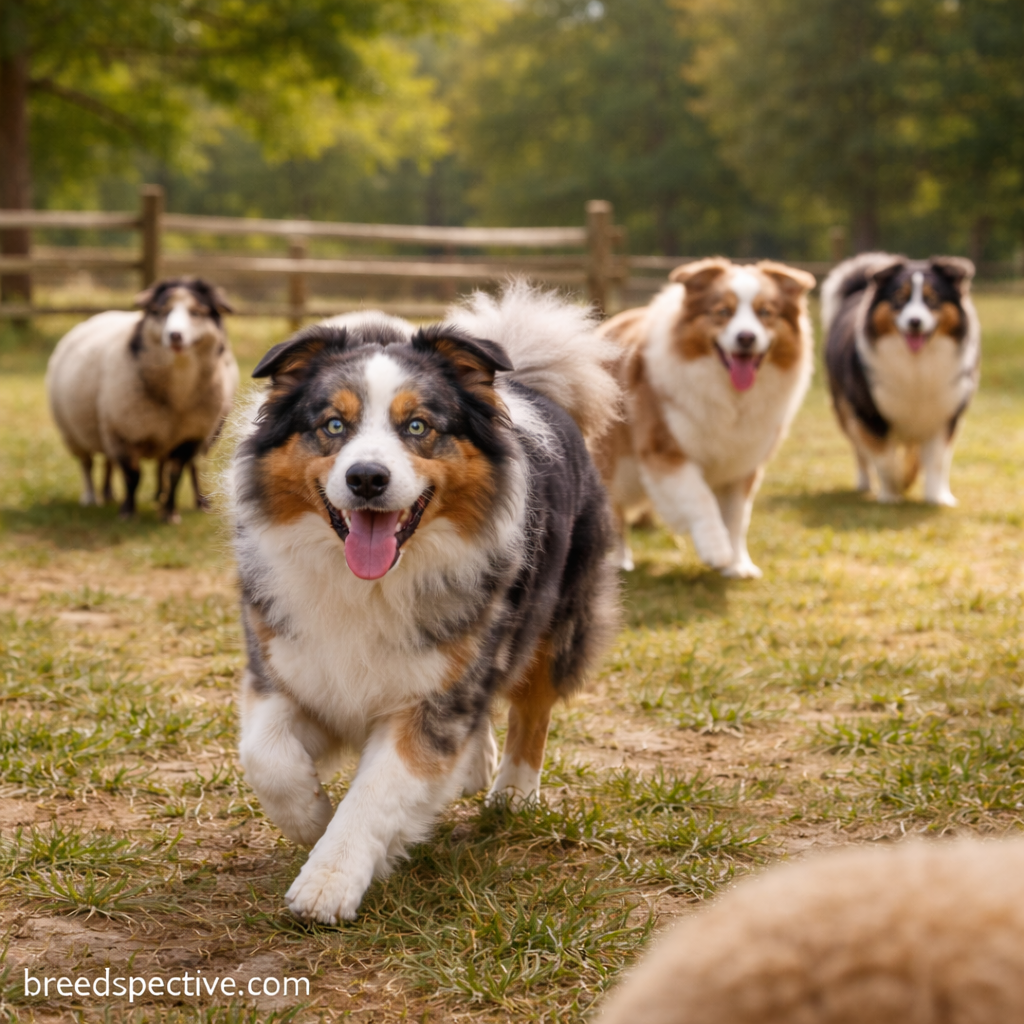
The primary role of the Australian Shepherd was herding livestock, especially sheep and cattle. Unlike some herding breeds that rely solely on instinct, Australian Shepherds were bred to combine instinct with intelligence and adaptability.
Their herding responsibilities included:
- Gathering and moving livestock
- Controlling movement through eye contact and body positioning
- Protecting livestock from threats
- Working closely with handlers
Their ability to adjust to different animals and terrain made them invaluable on farms and ranches.
Physical Traits Shaped by Function
Australian Shepherds were bred for performance, not appearance. Their physical structure reflects the demands of herding work.
Functional traits include:
- Athletic, balanced build
- Strong endurance and stamina
- Weather-resistant double coat
- Agile movement and quick reflexes
These traits allowed Australian Shepherds to work effectively in varying climates and landscapes.
Intelligence and Independent Thinking
One defining feature of the Australian Shepherd is its intelligence. Herding livestock often required dogs to think independently rather than rely on constant direction.
This led to:
- Strong problem-solving ability
- Quick learning and adaptability
- Confidence in decision-making
- Responsiveness to training
These traits remain central to the breed’s identity today.
Rise in Popularity Beyond Ranches
Australian Shepherds gained popularity beyond ranching due to their performance skills and striking appearance.
Key moments in their broader recognition include:
- Use in rodeos and horse shows
- Appearances in western entertainment and exhibitions
- Recognition by dog organizations
- Growth in dog sports such as agility and obedience
Their versatility helped transition the breed from working dog to companion.
Recognition as a Distinct Breed
Formal recognition helped standardize the Australian Shepherd while preserving its working ability.
Important milestones include:
- Development of consistent breed standards
- Establishment of breed clubs
- Emphasis on maintaining working traits
Even today, many breeders prioritize temperament and work ethic over appearance.
How History Shapes Modern Australian Shepherd Behavior
The Australian Shepherd’s history strongly influences its modern temperament and needs.
Historical traits seen today include:
- High energy levels
- Strong work drive
- Need for mental stimulation
- Loyalty to handlers and family
- Sensitivity to routine and structure
These traits make the breed a poor fit for sedentary lifestyles but ideal for active, engaged owners.
Australian Shepherds in Modern Roles
While many Australian Shepherds still work livestock, others have found success in modern roles.
Common modern activities include:
- Dog sports such as agility and flyball
- Search and rescue work
- Therapy and service roles
- Active family companionship
Their adaptability reflects the breed’s purposeful origins.
Why Australian Shepherd History Matters
Understanding the breed’s original purpose helps owners meet their needs more effectively.
Benefits include:
- More effective training approaches
- Better exercise planning
- Reduced frustration with instinct-driven behavior
- Stronger human-dog bonds
Breed history provides valuable insight into why Australian Shepherds behave the way they do.
Final Thoughts
Australian Shepherd history is rooted in hard work, intelligence, and adaptability. Bred to manage livestock in demanding environments, the breed developed into a loyal, energetic, and highly capable working dog.
Understanding Australian Shepherd history and original purpose helps modern owners appreciate the breed’s drive and create an environment where these remarkable dogs can truly thrive.