
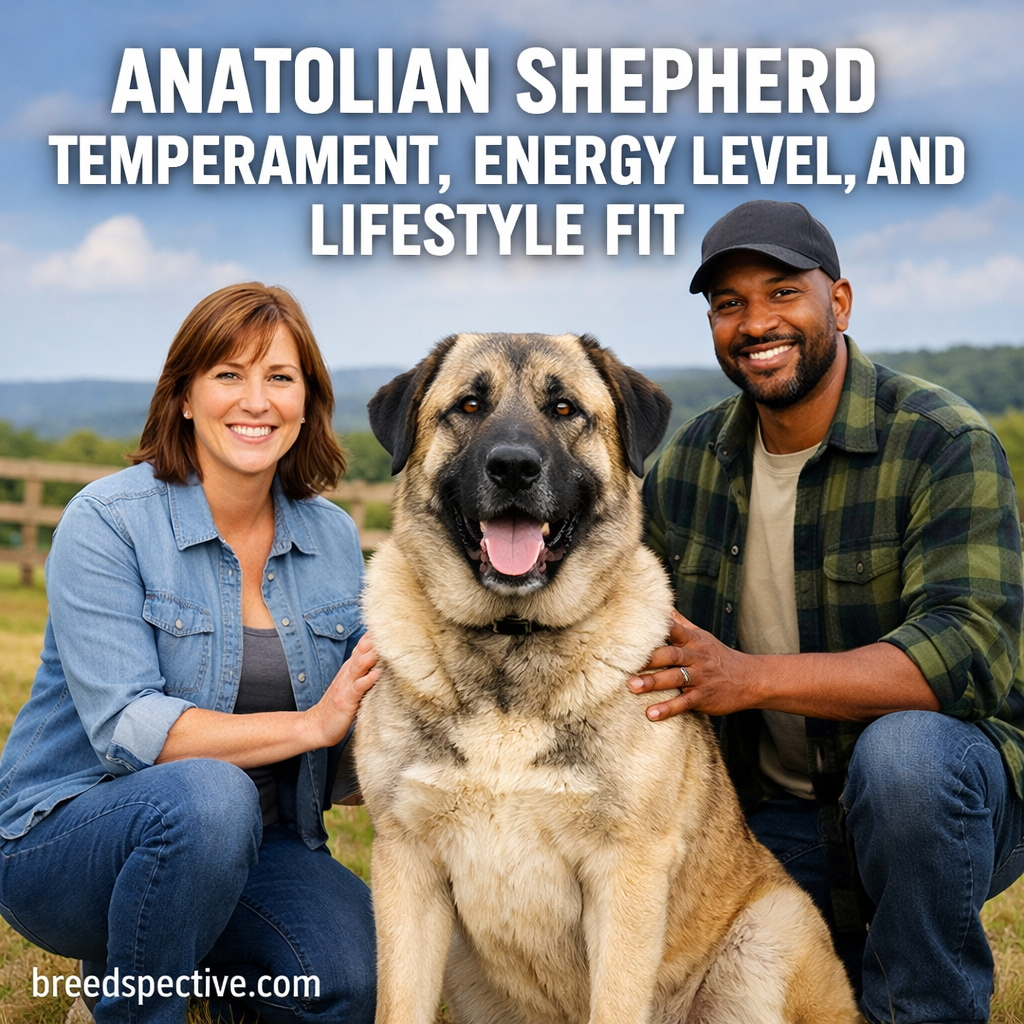
The Anatolian Shepherd is a powerful, intelligent livestock guardian breed known for independence, loyalty, and strong protective instincts. Bred to guard flocks across wide, rugged landscapes with little human supervision, this breed has a temperament and lifestyle requirement that differs greatly from typical family companion dogs.
Understanding how an Anatolian Shepherd thinks, moves, and interacts with its environment is essential before bringing one into your life.
Anatolian Shepherd Temperament
The Anatolian Shepherd’s temperament is shaped by centuries of working alone and making critical decisions without human direction.
Core temperament traits
- Naturally protective and territorial
- Calm, serious, and observant
- Strongly loyal to its family or flock
- Independent rather than eager-to-please
- Reserved or aloof with strangers
- Confident and emotionally steady
This breed forms deep bonds with its household but expresses affection in a subtle way. Anatolian Shepherds are not typically clingy or attention-seeking. Instead, they show loyalty by remaining alert, positioning themselves strategically, and watching over their territory.
They tend to be cautious around unfamiliar people and animals, which is normal and expected behavior for a livestock guardian.
Independence and Decision-Making
Unlike many breeds that wait for direction, the Anatolian Shepherd is wired to think for itself.
- Makes independent decisions based on perceived threats
- Assesses situations quietly before reacting
- May ignore commands it deems unnecessary
- Not motivated by constant praise or repetition
This independence does not mean the breed is unintelligent. In fact, Anatolian Shepherds are highly intelligent, but their intelligence is purpose-driven. Training must focus on trust, consistency, and mutual respect rather than strict obedience.
Energy Level and Activity Needs
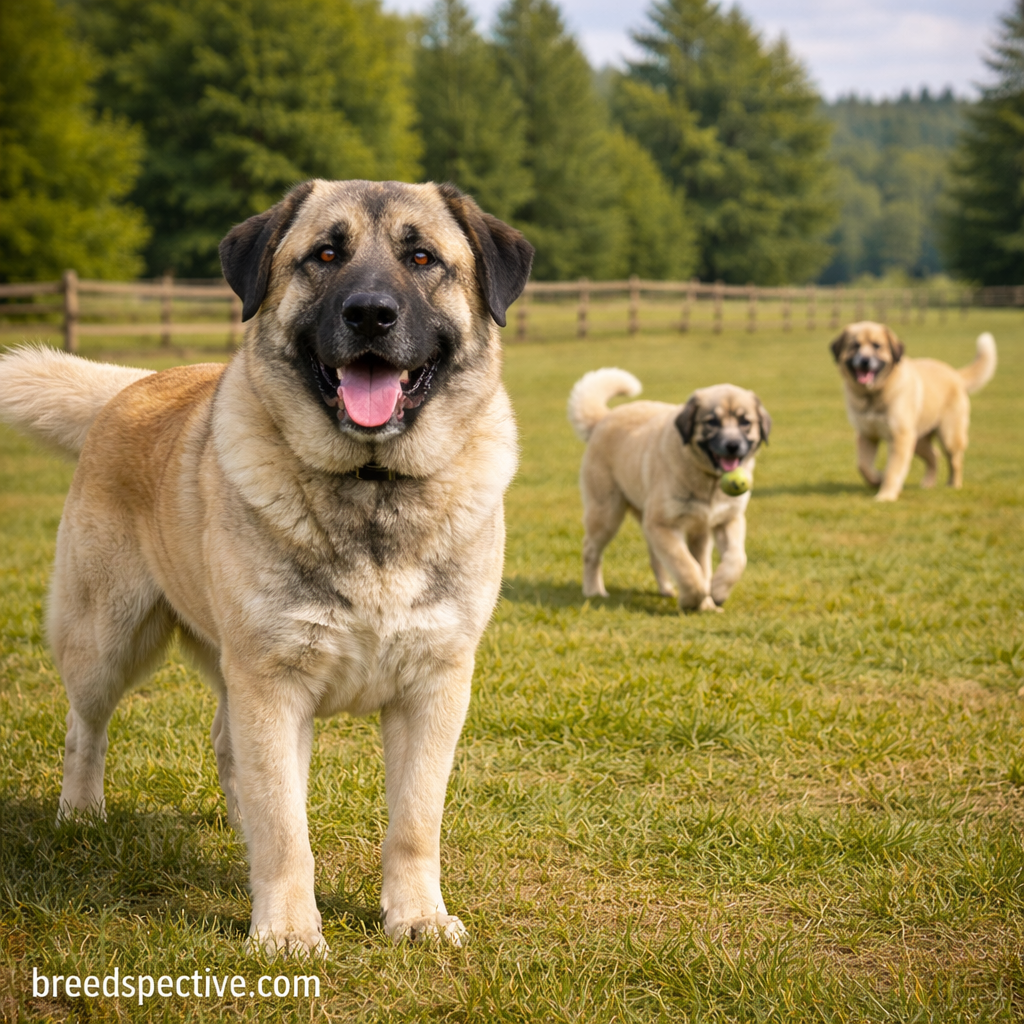
The Anatolian Shepherd has a moderate energy level but very high endurance.
What their energy looks like
- Calm and relaxed for much of the day
- Capable of sudden bursts of speed and power
- Built for long hours of steady movement
- Mentally active even when physically still
This is not a hyperactive breed, but it does require space to move and a sense of purpose. Short walks alone are not enough. Anatolian Shepherds thrive when they can patrol, observe, and feel responsible for their surroundings.
Without adequate physical and mental outlets, boredom can lead to destructive or overly territorial behaviors.
Space and Environment Requirements
This breed is not well-suited to apartment living or densely populated neighborhoods.
Ideal living environment
- Large, securely fenced property
- Rural or semi-rural setting
- Clear boundaries to patrol
- Minimal foot traffic near the home
Anatolian Shepherds instinctively guard what they view as their territory. In small spaces or busy areas, this instinct can become stressful for both the dog and the owner.
A tall, reinforced fence is essential, as this breed is capable of roaming long distances if boundaries are not clear.
Socialization and Behavior With Others
Early and ongoing socialization is critical for an Anatolian Shepherd.
Social tendencies
- Protective of family members, including children
- Neutral or cautious with unfamiliar adults
- Can be dominant with other dogs, especially same-sex
- Generally calm but assertive when challenged
Proper socialization helps the dog distinguish between normal activity and real threats. Poorly socialized Anatolian Shepherds may become overly suspicious or reactive, especially in suburban environments.
They are best introduced to new people and animals in controlled, calm settings.
Training Considerations
Training an Anatolian Shepherd requires patience and realistic expectations.
Training challenges
- Not highly food- or praise-driven
- May resist repetitive drills
- Responds poorly to harsh corrections
- Learns best through consistency and structure
Positive reinforcement, firm boundaries, and clear leadership work far better than force-based methods. This breed benefits most from an experienced owner who understands guardian-type dogs.
Obedience training should focus on safety commands and boundary respect rather than competition-style precision.
Family Compatibility
Anatolian Shepherds can be excellent family dogs in the right environment.
Best fit households
- Experienced dog owners
- Families living on large properties
- Homes needing a natural guardian
- Owners who value independence over constant affection
They are typically gentle and tolerant with children in their household, especially when raised alongside them. However, supervision is always recommended due to the breed’s size and strength.
This breed is not ideal for first-time dog owners or families looking for a highly social, people-oriented pet.
Is the Anatolian Shepherd Right for You?
The Anatolian Shepherd is a remarkable breed, but it is not a casual companion dog. Its independence, protective nature, and space requirements demand commitment and understanding.
If you have the land, experience, and lifestyle to support a confident guardian dog, the Anatolian Shepherd can be an incredibly loyal and dependable partner. For those seeking a low-maintenance, highly obedient, or urban-friendly dog, this breed may prove challenging.
Choosing an Anatolian Shepherd means embracing a working mindset, respecting independence, and providing a purpose-driven life.