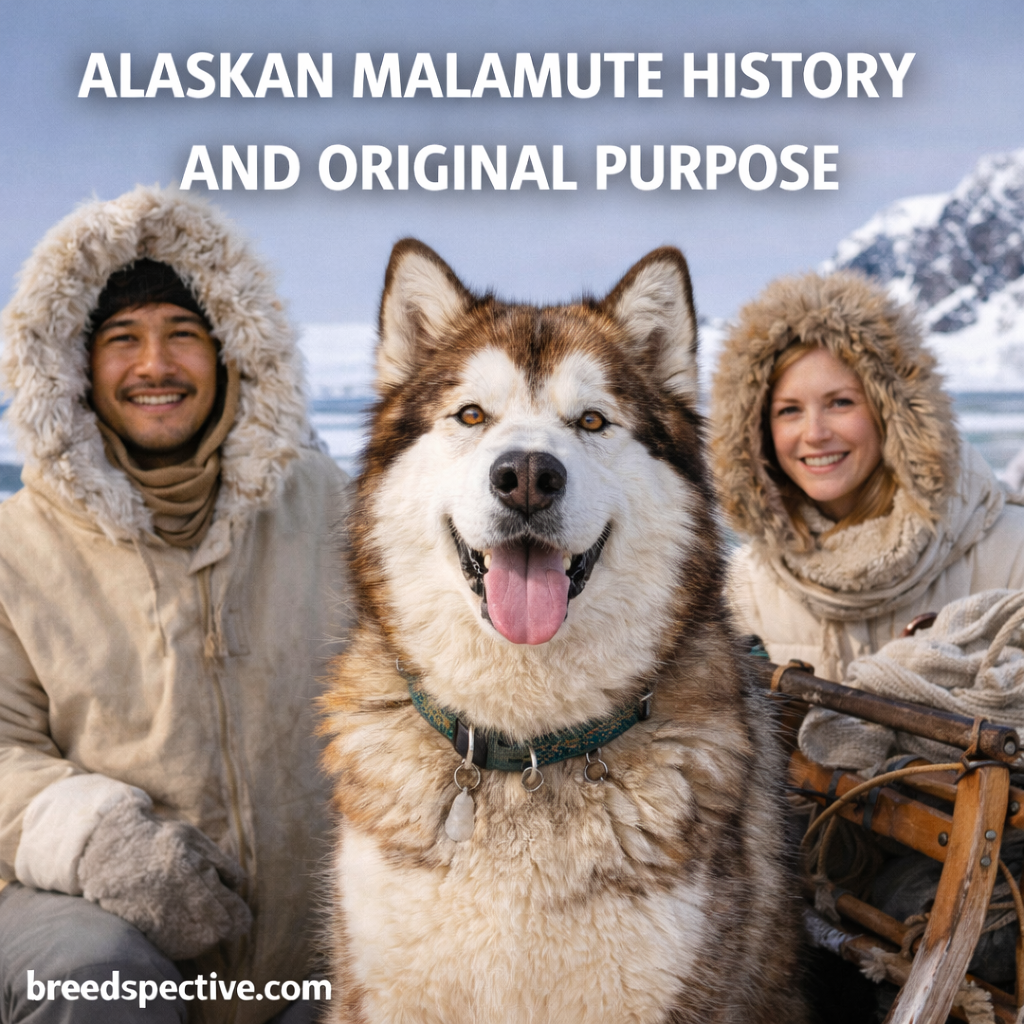
The Alaskan Malamute is one of the oldest Arctic dog breeds in the world, developed for strength, endurance, and cooperation rather than speed. Long before becoming a modern companion animal, this breed played a vital role in human survival in some of the harshest environments on Earth.
Understanding the history and original purpose of the Alaskan Malamute explains why the breed is powerful, social, independent, and driven by purpose rather than obedience.
Ancient Origins in the Arctic
The Alaskan Malamute traces its roots to the indigenous peoples of northwestern Alaska, where survival depended heavily on working dogs.
The breed is named after the Mahlemut people, an Inuit tribe who lived along the Kotzebue Sound region. These dogs were not pets—they were essential partners.
Early Malamutes were bred to:
- Withstand extreme cold
- Pull heavy loads over long distances
- Work cooperatively in teams
- Live closely with human families
Their value was measured by reliability and strength, not appearance.
Original Purpose: Heavy Hauling and Transportation
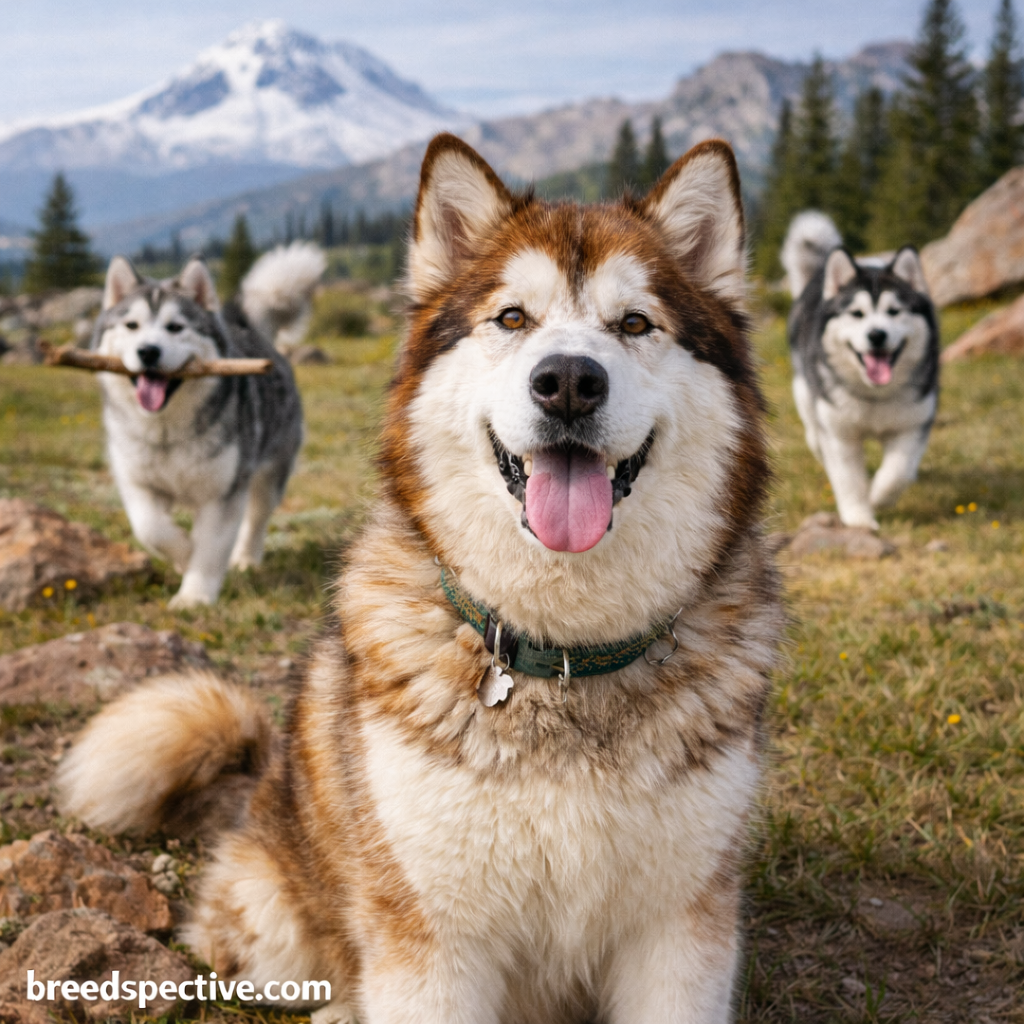
Unlike faster sled dogs, Alaskan Malamutes were bred for power and stamina.
Primary working roles included:
- Hauling heavy freight and supplies
- Pulling sleds across frozen terrain
- Transporting food, tools, and trade goods
- Supporting nomadic and semi-nomadic lifestyles
Malamutes could pull large loads for many miles at a steady pace, making them indispensable in Arctic communities.
A Cooperative Pack Dog
Malamutes were raised to work as part of a team—both canine and human.
Key behavioral traits shaped by history include:
- Strong pack orientation
- High tolerance for other dogs
- Social dependence on group structure
- Preference for cooperation over dominance
This pack-based upbringing explains why Malamutes today are highly social and often struggle with isolation.
Survival Companion Beyond Sled Work
The Alaskan Malamute’s role extended beyond pulling sleds.
Additional historical duties included:
- Helping locate seal breathing holes
- Guarding camps from predators
- Providing warmth by sleeping with families
- Assisting in hunting large game
Their close bond with humans fostered trust, emotional awareness, and a strong sense of belonging.
Selective Breeding for Function, Not Looks
Malamutes were not bred for uniform appearance. Survival dictated breeding choices.
Preferred traits included:
- Thick double coat for insulation
- Broad chest and strong bone structure
- Large paws for traction on snow
- Efficient metabolism for scarce food
These functional traits still define the breed today and contribute to its physical and behavioral needs.
The Gold Rush and Breed Expansion
During the late 1800s and early 1900s, the Klondike Gold Rush dramatically increased demand for sled dogs.
This period led to:
- Wider exposure of Malamutes outside native communities
- Crossbreeding with other Arctic dogs
- Decline in pure Malamute bloodlines
Despite this, some isolated communities preserved original Malamute lines.
Preservation and Breed Standardization
In the early 20th century, breeders recognized the importance of preserving the Alaskan Malamute as a distinct breed.
Preservation efforts focused on:
- Restoring original working traits
- Avoiding excessive crossbreeding
- Establishing consistent breed standards
These efforts ensured the Malamute’s survival beyond working necessity and into modern recognition.
Recognition as a Formal Breed
The Alaskan Malamute gained official recognition in the mid-20th century as interest in Arctic breeds grew.
Key milestones included:
- Formal breed standard development
- Recognition by kennel organizations
- Increased presence in dog shows and sledding sports
Despite recognition, the breed retained its working-dog temperament rather than being reshaped into a purely ornamental dog.
How History Shapes Modern Alaskan Malamutes
The Malamute’s ancient purpose still influences its behavior today.
Historically rooted traits include:
- High endurance and need for activity
- Independence in decision-making
- Strong social bonds with people and dogs
- Low guarding instinct despite large size
They are thinkers and workers, not automatic followers.
Common Misconceptions About Malamute History
Some misunderstandings arise when history is ignored.
Clarifications include:
- Malamutes are not wolves or wolf hybrids
- They were not bred for speed like Huskies
- They are working companions, not guard dogs
Their friendliness and independence are direct results of their original purpose.
Alaskan Malamute History Summary
The Alaskan Malamute is a breed forged by necessity, environment, and partnership.
Key historical points:
- Originated with Inuit tribes in Alaska
- Bred for heavy hauling and endurance
- Lived closely with humans as survival partners
- Preserved through deliberate conservation efforts
Final Thoughts
The Alaskan Malamute is not simply a large, fluffy dog—it is a living legacy of Arctic survival. Its history explains its strength, sociability, and need for purpose.
For modern owners, understanding the Malamute’s original role is essential. When respected for what it was bred to do, the Alaskan Malamute becomes a deeply loyal, capable, and rewarding companion.