

The Akita is a breed shaped by centuries of tradition, survival, and cultural significance. Known today for its loyalty and dignified presence, the Akita’s origins trace back to ancient Japan, where strength, courage, and devotion were essential working traits rather than companion qualities.
Understanding Akita history and original purpose helps explain why this breed behaves the way it does today—independent, protective, calm, and deeply loyal.
Origins of the Akita Breed
The Akita originated in northern Japan, specifically in the mountainous region now known as Akita Prefecture. This harsh environment required dogs that could withstand cold temperatures, rough terrain, and physically demanding tasks.
Early Akitas were part of a group known as “matagi dogs,” named after traditional Japanese hunters.
Early roles included:
- Hunting large game such as boar, elk, and bears
- Tracking prey silently over long distances
- Guarding villages and property
- Protecting hunters in dangerous conditions
These dogs were bred for performance, not appearance, which is why temperament and physical resilience remain core Akita traits today.
Original Purpose: Big-Game Hunting
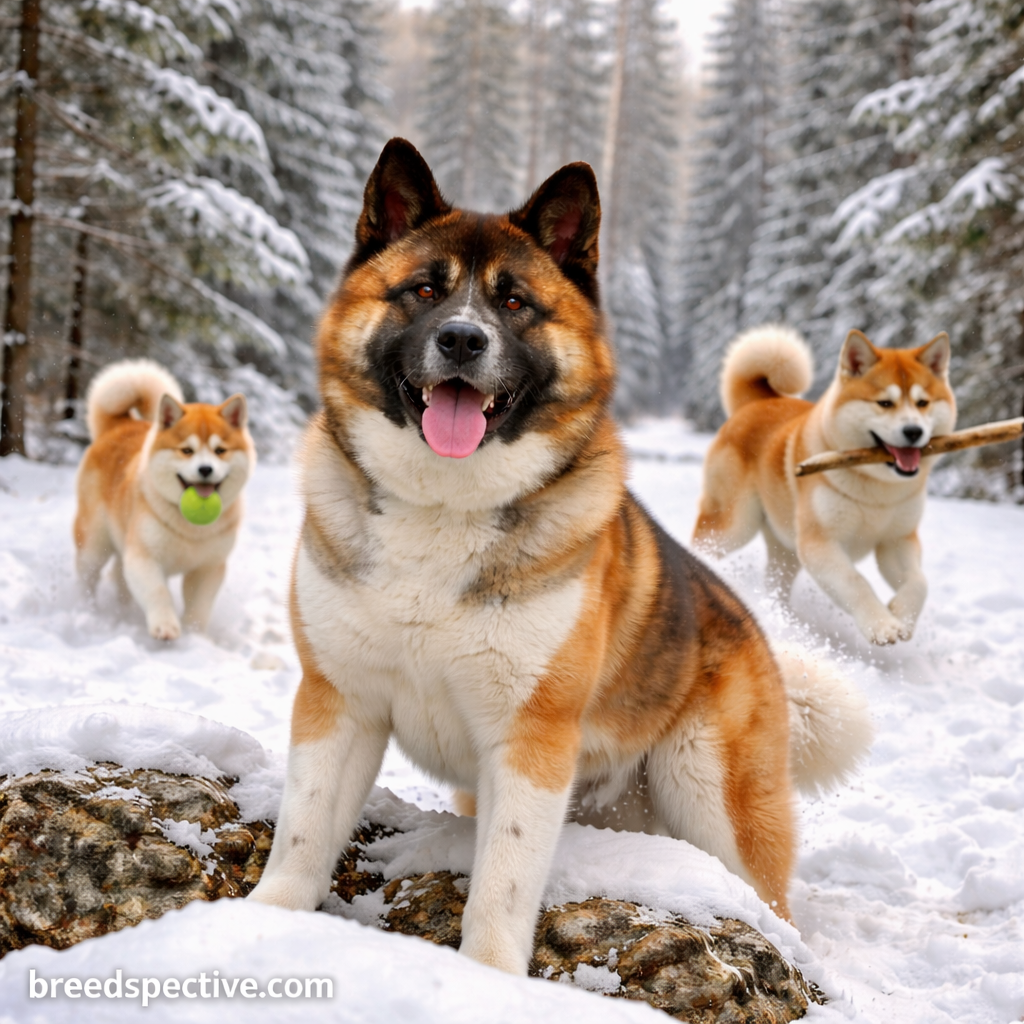
One of the Akita’s primary historical roles was hunting large and dangerous animals. This required a rare combination of traits.
Key working characteristics included:
- Fearlessness in the face of large prey
- Strong bite force and muscular build
- High situational awareness
- Independence to make decisions without constant direction
Unlike pack-hunting dogs, Akitas were expected to think and act independently. This explains their modern-day tendency to assess situations rather than immediately respond to commands.
Akitas and Japanese Nobility
Over time, the Akita became more than a working dog. In feudal Japan, the breed gained favor among nobility and samurai families.
During this period:
- Akitas symbolized strength, loyalty, and protection
- Ownership was often restricted to the upper class
- Dogs were treated as respected guardians rather than pets
In some eras, harming an Akita carried severe punishment, reflecting how highly valued the breed had become.
Cultural Significance in Japan
The Akita holds a unique place in Japanese culture, representing loyalty, health, and good fortune.
Cultural traditions include:
- Gifting Akita statues to symbolize protection and recovery
- Viewing the breed as a symbol of unwavering devotion
- Celebrating the Akita in folklore and national pride
This deep cultural reverence continues today, especially in Japan, where the breed is considered a national treasure.
Near Extinction and Preservation Efforts
The Akita’s survival was threatened multiple times, particularly during the early 20th century.
Major threats included:
- Declining need for hunting dogs
- Crossbreeding with foreign breeds
- Food shortages during wartime
- Government orders to cull dogs for resources
By the early 1900s, pure Akitas were rare. Dedicated breeders and preservation groups worked to restore the breed by carefully selecting dogs that retained original traits.
These efforts helped solidify the Akita’s identity and prevent the breed from disappearing entirely.
Divergence: Japanese vs. American Akita
After World War II, Akitas were introduced to the United States. Over time, breeding preferences diverged.
This resulted in two distinct types:
Japanese Akita (Akita Inu)
- More fox-like appearance
- Narrower head and lighter frame
- Strict color standards
American Akita
- Larger, heavier build
- Broader head and stronger bone structure
- Wider range of accepted colors
Despite physical differences, both types share the same historical foundation of independence, loyalty, and guarding instinct.
How History Shaped Modern Akita Temperament
The Akita’s historical purpose still influences its behavior today.
Traits rooted in history include:
- Aloofness with strangers due to guarding instincts
- Strong loyalty to a small family unit
- Low tolerance for perceived threats
- Calm confidence rather than constant activity
These traits make Akitas excellent guardians but challenging companions for owners unfamiliar with working breeds.
Akitas as Modern Companions
While Akitas are no longer used to hunt bears, their original purpose still matters in modern homes.
Today’s Akitas thrive when:
- Given structure and clear leadership
- Treated with mutual respect rather than force
- Allowed to bond deeply with their family
- Provided mental engagement and purpose
Owners who understand Akita history are far more likely to succeed with the breed.
Common Misunderstandings About Akita History
Some modern misconceptions stem from ignoring the breed’s origins.
Common myths include:
- “Akitas are aggressive by nature”
- “They should behave like typical family dogs”
- “They are stubborn without reason”
In reality, Akitas behave exactly as their history designed them to—independent, thoughtful, and protective.
Akita History Summary
The Akita is not a breed created for companionship alone. It was shaped by centuries of hunting, guarding, and cultural reverence.
Historical foundations include:
- Origins as a big-game hunting dog
- Strong ties to Japanese nobility and tradition
- Near extinction and careful preservation
- Evolution into two recognized types
Final Thoughts
Understanding Akita history and original purpose is essential for appreciating the breed as it truly is. This is a dog built for responsibility, loyalty, and strength—not blind obedience or casual ownership.
When respected for its past, the Akita becomes a deeply rewarding companion with a presence unlike any other breed.