The American Shorthair is one of the oldest and most historically significant cat breeds in the United States. Valued for its resilience, adaptability, and practical working abilities, this breed played an important role in early American life long before becoming the beloved companion it is today.
Understanding the American Shorthair’s history provides insight into its balanced temperament, strong health, and enduring popularity.
Early Roots of the American Shorthair
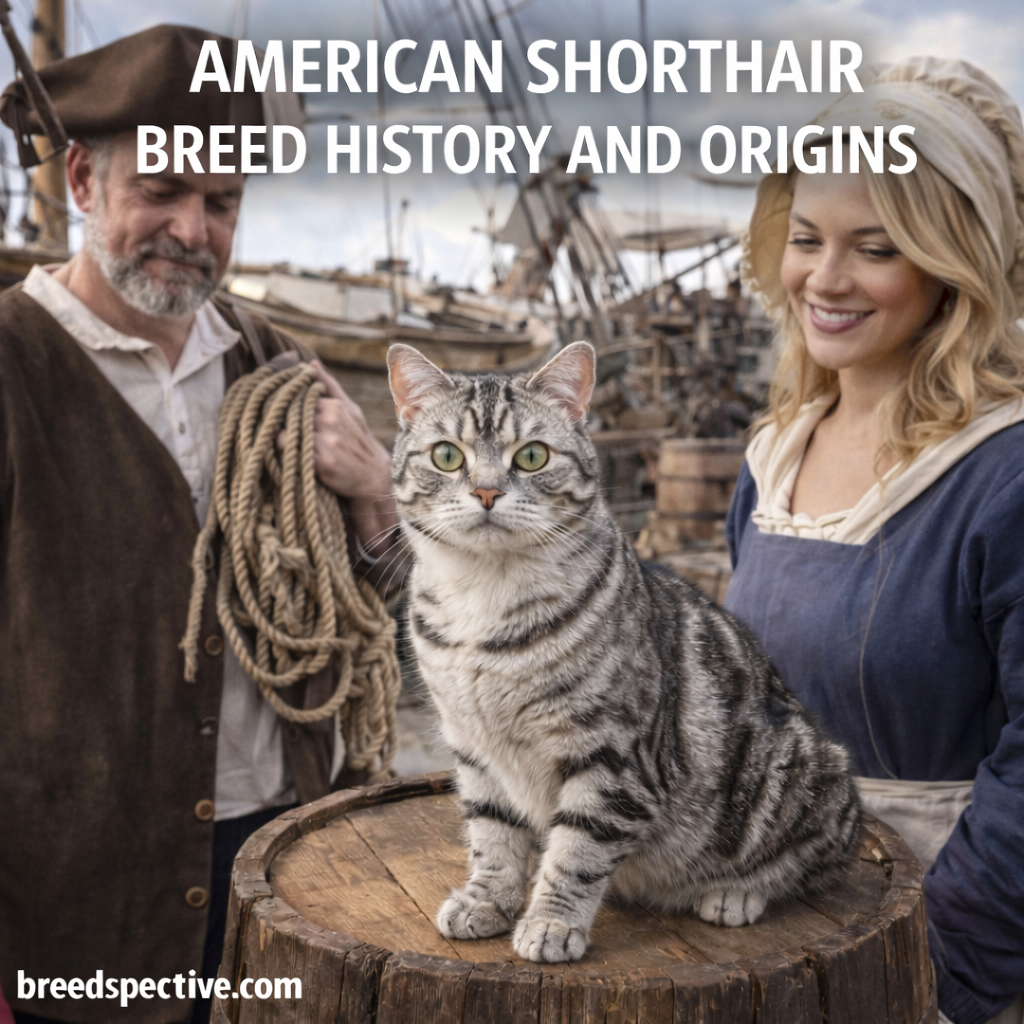
The American Shorthair traces its origins back to European cats brought to North America by early settlers.
Key historical foundations include:
- Cats arriving with colonists in the 1600s
- Use aboard ships to control rodents
- Early settlement life in homes, barns, and warehouses
These cats were selected for survival skills rather than appearance, laying the groundwork for a hardy and adaptable breed.
Role in Early American Settlements
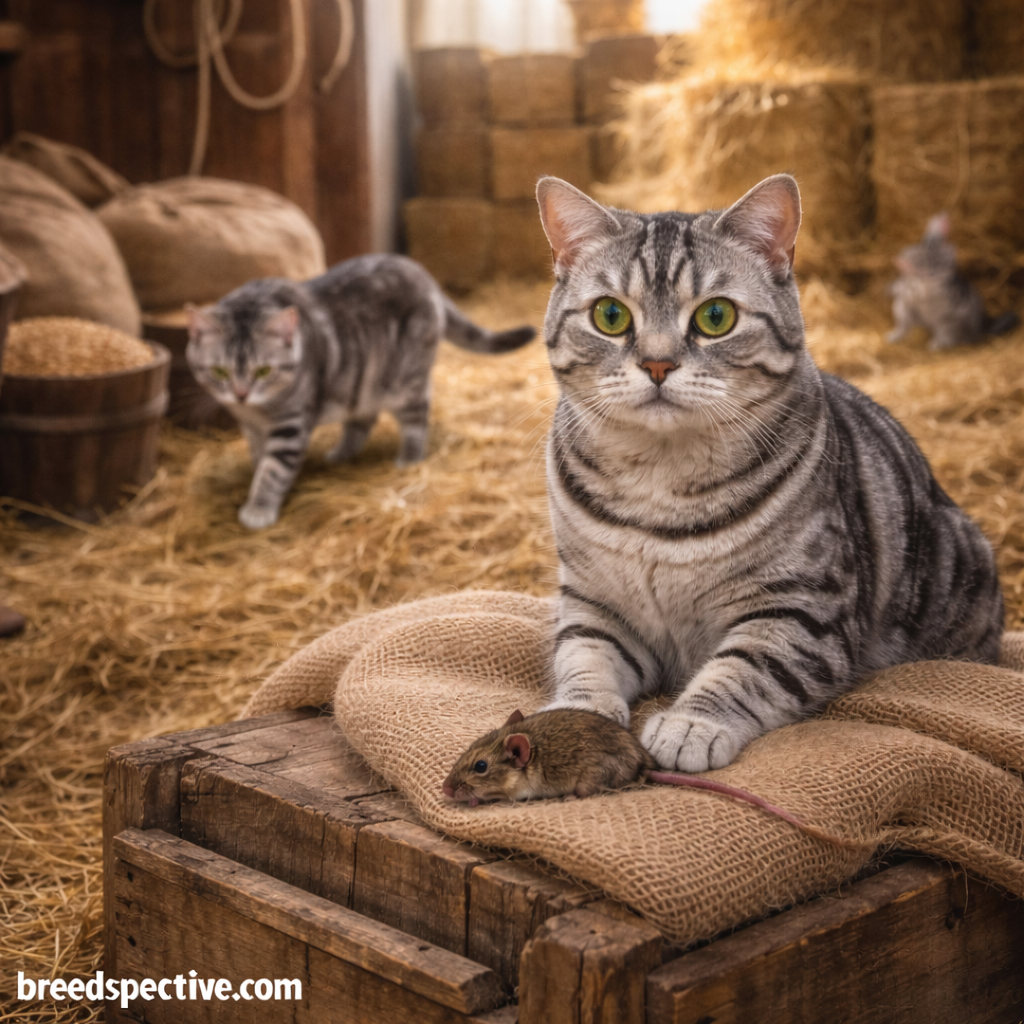
Rodent control was essential in colonial America, and cats quickly became indispensable.
Primary roles included:
- Protecting food stores from rats and mice
- Safeguarding ships and trade goods
- Living alongside families on farms and homesteads
Cats that proved effective hunters and adaptable companions were more likely to survive and reproduce.
Development as a Distinct Breed
For many years, American Shorthairs were simply considered domestic working cats.
Over time:
- Breeders began selectively pairing cats with strong health and temperament
- Physical consistency slowly emerged
- The breed developed a muscular, sturdy build
By the late 19th and early 20th centuries, these cats began gaining recognition as a distinct type.
Influence of European Shorthair Cats
The American Shorthair’s ancestors were influenced by several European breeds.
Common contributors include:
- British Shorthair-type cats
- Other European domestic shorthairs
- Working farm cats with proven hunting skills
Unlike show-focused breeding, early development emphasized function over form.
Recognition by Cat Associations
Formal recognition helped solidify the breed’s identity.
Key milestones include:
- Early cat show appearances in the late 1800s
- Official recognition by major cat registries
- Standardization of size, coat, and structure
The breed was originally known as the Domestic Shorthair before being renamed to distinguish it from non-pedigreed cats.
Why the Name Changed to American Shorthair
The name change was an important step in preserving the breed’s identity.
Reasons for the rename:
- To separate pedigreed cats from random domestic shorthairs
- To highlight the breed’s uniquely American development
- To protect breeding standards
The name “American Shorthair” emphasizes both heritage and purpose.
Coat Colors and Patterns Through History
One of the breed’s defining features is its wide variety of coat colors and patterns.
Historically favored traits include:
- Tabby patterns for camouflage while hunting
- Dense coats for climate adaptability
- Low-maintenance fur
These traits were naturally selected long before aesthetics became a priority.
Transition From Working Cat to Companion
As pest control methods evolved, the American Shorthair’s role gradually shifted.
Contributing factors:
- Urbanization and improved sanitation
- Changing household dynamics
- Growing appreciation for calm, adaptable pets
Despite this shift, the breed retained its athleticism and hunting instincts.
American Shorthairs in Modern Times
Today, American Shorthairs are known primarily as companion cats, but their working roots remain evident.
Modern roles include:
- Family companions
- Apartment-friendly pets
- Show cats
- Therapy and emotional support animals
Their adaptability makes them suitable for a wide range of lifestyles.
How History Shaped the Breed’s Personality
The American Shorthair’s past directly influences its modern temperament.
Historical traits still present today:
- Calm confidence
- Moderate independence
- Strong physical health
- Low anxiety levels
These qualities make them one of the most reliable and low-maintenance breeds.
Common Myths About American Shorthair Origins
Some misconceptions persist about the breed’s background.
Common myths include:
- They are simply mixed-breed cats
- They lack a defined lineage
- They were bred only for appearance
In reality, American Shorthairs have a carefully preserved history rooted in function and selective breeding.
Final Thoughts
The American Shorthair’s journey from early settler companion to modern household favorite is a testament to its versatility and resilience. Bred for survival, work, and companionship, this breed embodies the practical spirit of early America while offering the calm, affectionate presence many families value today.
Understanding the American Shorthair’s history helps explain why it remains one of the most dependable and enduring cat breeds in the world.