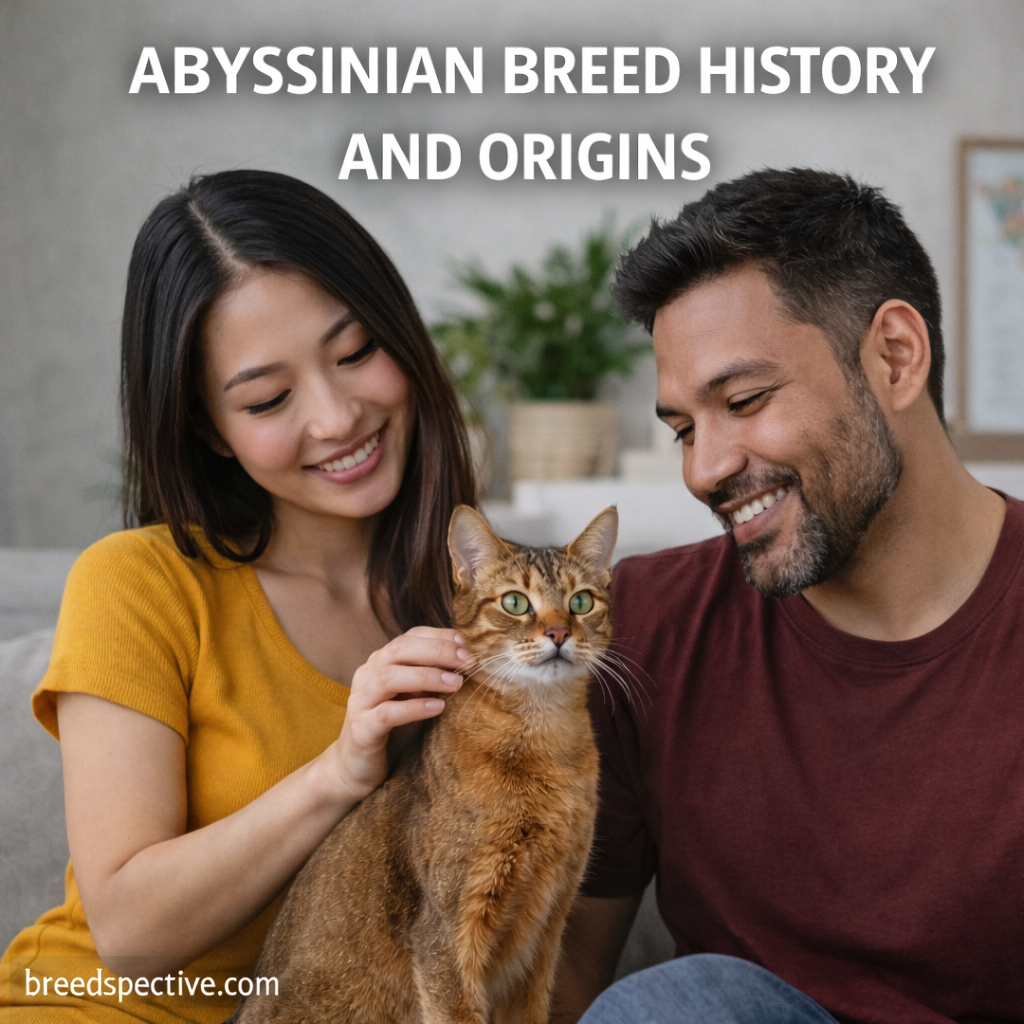
The Abyssinian is one of the oldest and most visually striking cat breeds, often associated with ancient civilizations and admired for its sleek build and ticked coat. While romantic myths link the breed to ancient Egypt, the true origins of the Abyssinian are more complex and grounded in 19th-century breeding history.
This article explores the history and origins of the Abyssinian cat, separating legend from documented fact and explaining how the modern breed came to be.
The Mystique Surrounding the Abyssinian’s Origins
For many years, Abyssinians were believed to descend directly from cats worshipped in ancient Egypt. Their resemblance to cats depicted in ancient art fueled this belief.
However:
- No direct genetic link to ancient Egyptian cats has been proven
- The theory is largely based on appearance rather than evidence
- Modern research points elsewhere for the breed’s true origins
While the Egyptian connection remains part of the breed’s mystique, it is best viewed as symbolic rather than factual.
Early Links to East Africa
The name “Abyssinian” refers to Ethiopia, formerly known as Abyssinia.
Historical accounts suggest that cats resembling modern Abyssinians were present in the region, and early imported cats may have originated from areas near the Red Sea.
Important points include:
- Early cats may have come from East Africa or nearby coastal regions
- Trade routes could have facilitated the movement of cats
- The name likely reflects geographic association rather than precise origin
Arrival in England in the 19th Century
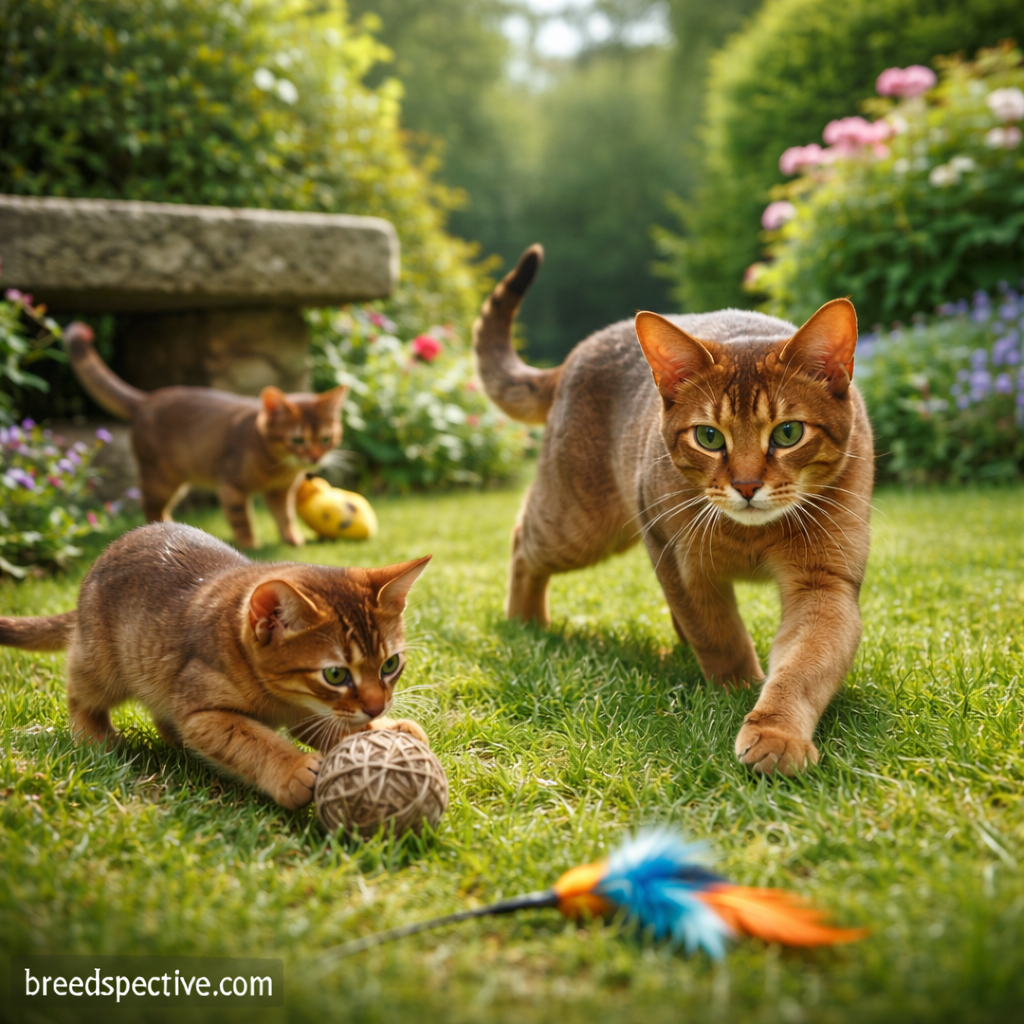
The modern Abyssinian breed began taking shape in England during the mid-to-late 1800s.
One of the earliest recorded Abyssinians was a cat named Zula, reportedly brought to England after a British military expedition.
Key developments included:
- Early exhibition of Abyssinian-like cats at cat shows
- Growing interest in their unique ticked coat
- Selective breeding to refine appearance and temperament
These early efforts laid the foundation for the breed standard.
Establishment of the Ticked Coat
One defining feature of the Abyssinian is its ticked coat, where each hair has multiple bands of color.
Breeders in England focused on:
- Enhancing the warm, glowing coat color
- Maintaining short, close-lying fur
- Preserving an athletic, graceful body type
This coat pattern became the hallmark of the breed and set Abyssinians apart from other shorthaired cats.
Early Breed Standardization
By the late 19th century, Abyssinians were being bred more consistently.
Early breed goals included:
- Elegant, medium-sized bodies
- Alert, expressive faces
- Lively but balanced temperament
- Distinctive ticked coloration
Breed standards emphasized function and vitality, not exaggeration.
Challenges During the World Wars
Like many pedigree breeds, Abyssinians faced significant setbacks during World War I and World War II.
Major challenges included:
- Drastic reductions in breeding populations
- Loss of breeding records
- Limited resources for selective breeding
After the wars, breeders worked carefully to rebuild the breed using a small number of surviving cats.
Expansion to North America
Abyssinians were introduced to the United States in the early 20th century, where they gained popularity for their unique look and engaging personality.
American breeders contributed to:
- Refining coat colors
- Strengthening genetic diversity
- Promoting the breed through cat associations
Over time, Abyssinians became one of the most popular and recognizable shorthaired breeds in North America.
Modern Genetic Insights
Modern genetic research suggests that the Abyssinian is closely related to cats from regions along the Indian Ocean and Southeast Asia.
This supports the idea that:
- The breed is not exclusively African in origin
- Trade routes played a role in early cat movement
- The modern Abyssinian is the result of selective breeding rather than a preserved ancient lineage
This blend of influences explains both the breed’s exotic appearance and its adaptability.
How History Shaped the Abyssinian Personality
The Abyssinian’s history influenced more than just appearance.
Traits shaped by early breeding include:
- High intelligence and curiosity
- Athletic build and agility
- Strong engagement with humans
- Confidence and alertness
These qualities reflect a breed developed for vitality and interaction rather than passive companionship.
Common Myths About Abyssinian Origins
Several misconceptions still persist.
Clarifying the facts:
- Abyssinians are not directly descended from ancient Egyptian cats
- The breed is not thousands of years old in its modern form
- Its appearance inspired myths, not genetic proof
Understanding these distinctions helps appreciate the breed’s true story.
The Abyssinian Today
Today’s Abyssinian is a carefully refined breed known for:
- A sleek, muscular body
- A glowing ticked coat
- High energy and intelligence
- Strong social bonds with humans
Responsible breeding now prioritizes health, temperament, and genetic diversity.
Final Thoughts on Abyssinian History and Origins
The Abyssinian’s story is one of legend meeting documentation. While its appearance evokes ancient history, the breed as we know it emerged through thoughtful breeding in 19th-century England, influenced by cats from Africa and beyond.
Understanding the Abyssinian’s true origins adds depth to its appeal and highlights the careful human stewardship that shaped one of the most captivating cat breeds in the world.