
The Bengal cat is one of the most visually striking domestic breeds, known for its leopard-like spots and athletic build. But behind its exotic appearance is a carefully developed history rooted in both wild ancestry and selective domestic breeding. Understanding the Bengal breed’s origins helps explain its intelligence, energy, and distinctive personality traits.
This article explores where Bengal cats came from, how the breed developed, and how it became the popular companion animal it is today.
Early Origins of the Bengal Cat
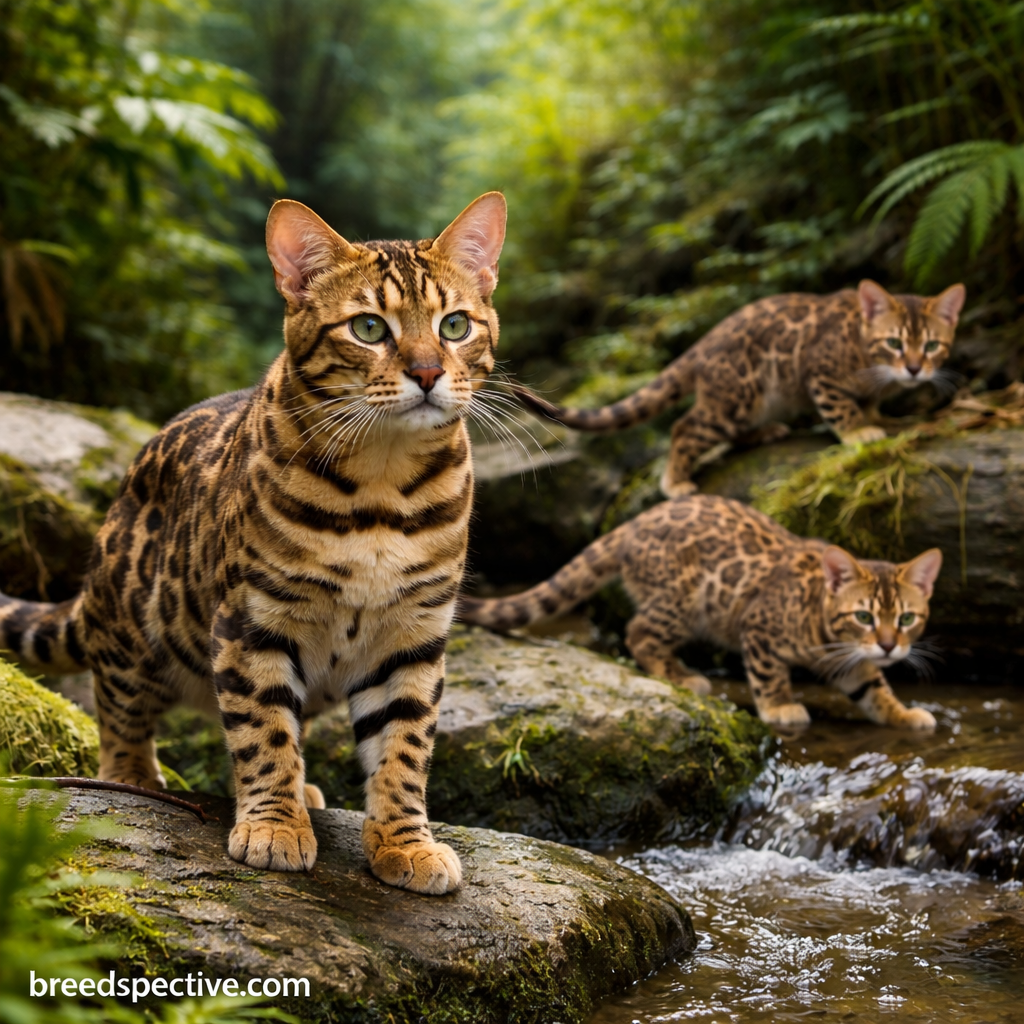
The Bengal cat’s history begins with the Asian leopard cat, a small wild feline native to parts of Asia. This wild cat was admired for its spotted coat, compact size, and adaptability to different environments.
In the mid-20th century, breeders began experimenting with crossing Asian leopard cats with domestic cats. The goal was not to create a wild pet, but to preserve the exotic look while developing a friendly, manageable temperament suitable for life in human homes.
Early hybrid cats displayed:
- Distinctive spotted or marbled coats
- Strong hunting instincts
- High intelligence and alertness
However, early generations were unpredictable and often retained strong wild traits.
The Role of Jean Mill in Bengal Development
The Bengal breed as we know it today would not exist without the work of Jean Mill, a breeder who played a central role in refining the breed.
In the 1960s and later in the 1970s, Mill began crossing Asian leopard cats with carefully selected domestic breeds. Her approach focused on:
- Reducing aggressive or overly wild behavior
- Preserving the unique spotted coat
- Creating a stable, affectionate companion cat
She believed that developing a domestic cat with a wild appearance could reduce demand for real wild animals in the pet trade.
Development of a Domestic Temperament
Early-generation Bengals (often called F1 or F2) were closer to their wild ancestors and were not ideal household pets. Over time, breeders continued crossing Bengals with domestic cats to stabilize temperament and behavior.
Later-generation Bengals became:
- More predictable in personality
- Social and people-oriented
- Better suited for family environments
Today’s Bengal cats are considered fully domestic, though they retain their athleticism and alertness.
Recognition as an Official Breed
By the 1980s, the Bengal cat had gained enough consistency in appearance and temperament to be recognized by major cat associations.
Key milestones include:
- Increased interest from breeders worldwide
- Standardized breed characteristics
- Official recognition by cat registries
Once recognized, Bengals quickly grew in popularity due to their striking appearance and engaging personalities.
Influence of Domestic Breeds
To refine the Bengal’s temperament and appearance, several domestic breeds were used during development. These cats contributed traits such as:
- Friendly, people-focused behavior
- Strong immune systems
- Balanced body structure
The result was a cat that looked wild but behaved like a confident, interactive companion.
Evolution of the Bengal’s Signature Look
One of the Bengal’s defining features is its coat. Over time, breeders emphasized:
- Rosetted and marbled patterns
- High-contrast coloring
- A soft, sleek, almost glittered coat texture
These traits helped distinguish Bengals from other spotted breeds and contributed to their rapid rise in popularity.
Modern Bengal Cats Today
Modern Bengals are several generations removed from their wild ancestors. They are bred for:
- Stable, affectionate temperaments
- High intelligence and trainability
- Strong athletic builds
While their energy level remains high, today’s Bengals are well-suited to life indoors when given proper enrichment and interaction.
Why Bengal History Still Matters
Understanding the Bengal’s origins helps owners appreciate why this breed behaves differently from more laid-back cats. Their history explains:
- Their need for stimulation and activity
- Their confidence and curiosity
- Their strong bond with humans
Bengals are not accidental creations—they are the result of decades of careful, intentional breeding.
Final Thoughts
The Bengal cat’s history is a fascinating blend of wild ancestry and thoughtful domestic development. From early hybrid experiments to global recognition, the breed was shaped with a clear purpose: to combine exotic beauty with a loving, intelligent personality.
Today’s Bengal cats reflect that vision—bold, beautiful, and deeply connected to their human companions.