
The Bulldog is one of the most recognizable dog breeds in the world, known today for its stocky build, wrinkled face, and calm, affectionate temperament. However, the Bulldog’s early history tells a very different story. Originally bred for strength, endurance, and tenacity, Bulldogs played a functional role in a brutal sport that shaped their physical traits and reputation.
Understanding the Bulldog’s origins helps explain how this once-ferocious working dog evolved into the loyal companion many families cherish today.
Early Origins of the Bulldog
The Bulldog’s roots trace back to medieval England, where dogs were selectively bred for blood sports involving large animals.
Key early influences include:
- Mastiff-type dogs brought to Britain by Roman invaders
- Selective breeding for strength, courage, and pain tolerance
- A compact, muscular body designed for gripping and holding
These early Bulldogs were far leaner and more athletic than modern Bulldogs, built for function rather than appearance.
The Role of Bulldogs in Bull-Baiting
The Bulldog was originally bred for bull-baiting, a popular public spectacle from the Middle Ages through the early 1800s.
Bull-baiting required dogs that could:
- Clamp onto a bull’s nose and maintain grip
- Stay low to the ground to avoid horns
- Withstand injury and exhaustion
- Exhibit extreme determination and fearlessness
Physical traits such as a wide jaw, undershot bite, short muzzle, and strong neck were intentionally developed to improve performance in this violent activity.
Physical Traits Shaped by Purpose
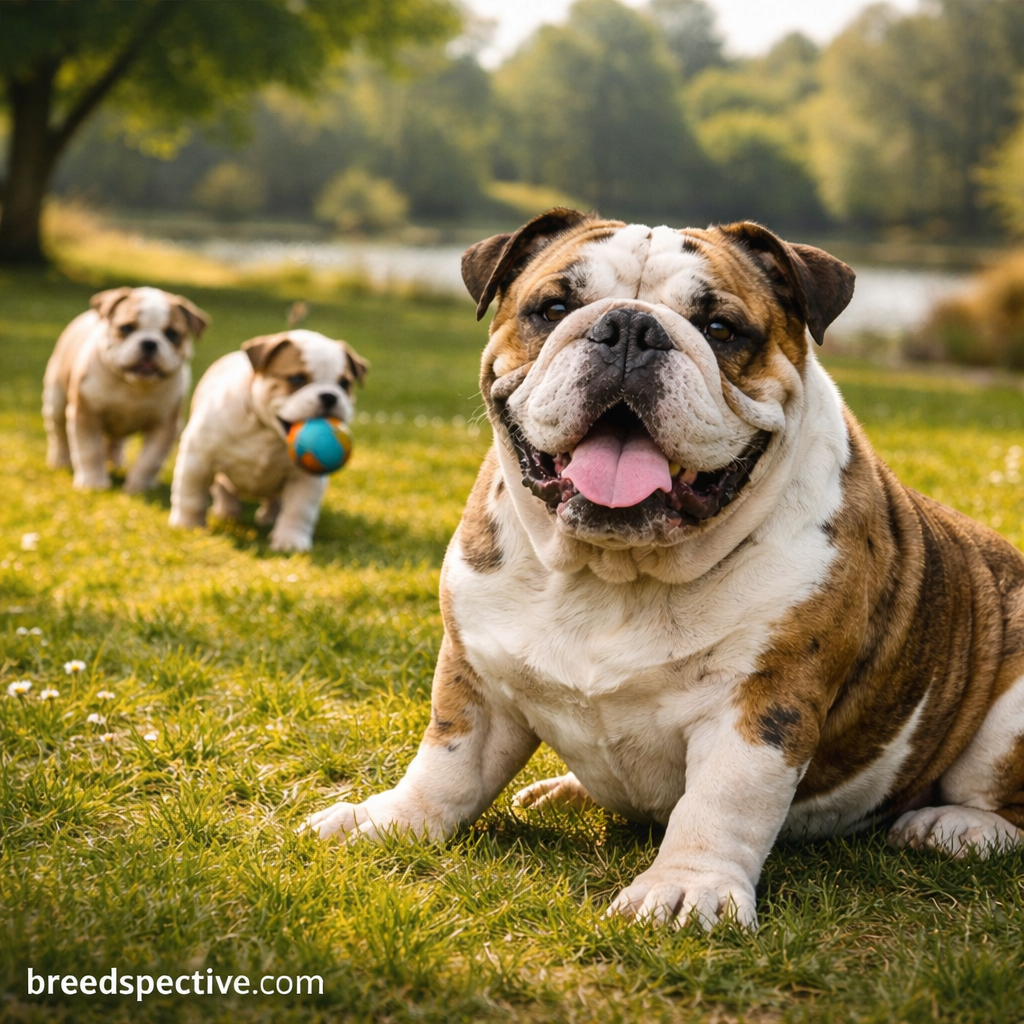
Many hallmark Bulldog features are direct results of their original function.
Traits shaped by early work include:
- Broad head and powerful jaw for gripping
- Short muzzle to allow breathing while latched on
- Low center of gravity for stability
- Thick skin and loose facial wrinkles to reduce injury
These features were practical adaptations rather than cosmetic choices during the breed’s early development.
The End of Bull-Baiting and the Breed’s Decline
In 1835, the British Parliament passed the Cruelty to Animals Act, officially banning bull-baiting and other blood sports.
As a result:
- Bulldogs lost their primary working purpose
- The breed nearly disappeared due to lack of demand
- Remaining dogs were often crossbred or abandoned
Without human intervention, the original Bulldog may have gone extinct.
Transformation Into a Companion Breed
Dedicated breeders worked to preserve the Bulldog by reshaping its temperament and role.
Major changes during this period included:
- Selective breeding for calmer, friendlier personalities
- Reduced aggression and increased sociability
- Emphasis on companionship over working ability
- Standardization of appearance for show purposes
By the late 19th century, Bulldogs had become symbols of resilience and loyalty rather than aggression.
Bulldogs as Cultural Symbols
Over time, the Bulldog became closely associated with British identity and perseverance.
Common symbolic associations include:
- Determination and courage
- Strength in adversity
- National pride and resilience
This symbolic role helped solidify the Bulldog’s popularity beyond working or sporting functions.
Modern Bulldogs vs. Their Ancestors
Today’s Bulldogs differ significantly from their historical counterparts.
Key differences include:
- Heavier, more compact bodies
- Shorter muzzles and flatter faces
- Gentle, affectionate temperaments
- Increased need for human care and health management
While modern Bulldogs retain their iconic appearance, their purpose has shifted entirely toward companionship.
Final Thoughts
The Bulldog’s journey from bull-baiting dog to beloved family companion is one of the most dramatic transformations in canine history. Bred initially for strength and tenacity, Bulldogs were reshaped by changing laws, social values, and human affection.
Understanding the Bulldog’s original purpose not only deepens appreciation for the breed but also highlights the powerful role humans play in shaping the destiny of domestic animals.