Newfoundland History Overview
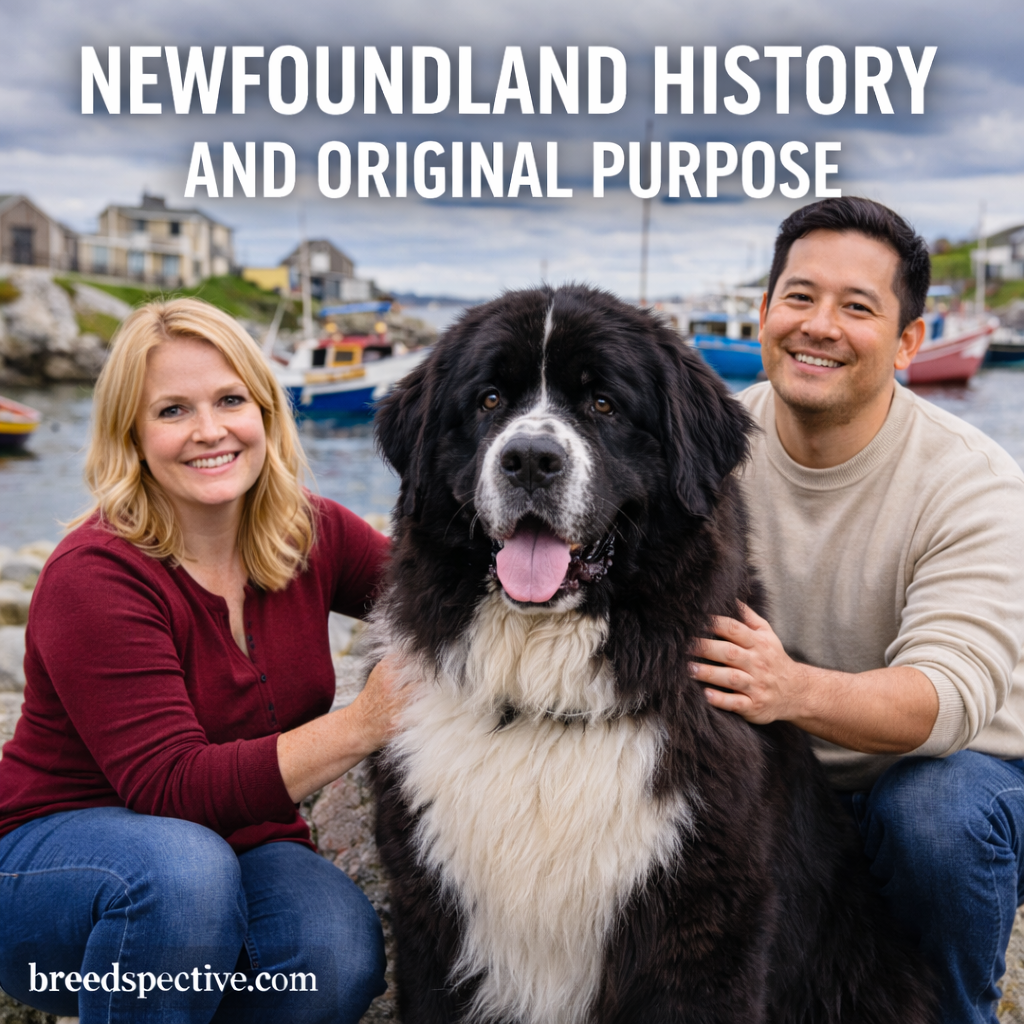
The Newfoundland dog has one of the most remarkable working histories of any large breed. Originating in the rugged coastal regions of Newfoundland and Labrador, Canada, this breed was shaped by icy waters, harsh weather, and a strong dependence on human partnership.
Unlike many breeds developed for herding or guarding, the Newfoundland was bred for strength, endurance, and lifesaving ability. Its calm temperament and natural swimming instincts made it indispensable to fishing communities.
Origins in Newfoundland and Labrador
The breed developed on the island of Newfoundland, where survival depended heavily on fishing and maritime labor. The environment was unforgiving, with cold oceans, rocky shorelines, and unpredictable storms.
Key regional influences included:
- Freezing water temperatures
- Rough seas and strong currents
- Fishing-based local economies
- Small coastal villages relying on working animals
Only dogs with exceptional resilience and cooperation thrived in these conditions.
Early Ancestry and Breed Development
The exact ancestry of the Newfoundland is not fully documented, but historians believe the breed emerged from a combination of native dogs and large working dogs brought by European settlers and fishermen.
Likely contributors include:
- Mastiff-type dogs from Europe
- Portuguese and English water dogs
- Local dogs adapted to cold climates
Through both selective breeding and natural survival, dogs with strength, calmness, and swimming ability became the foundation of the breed.
Original Working Roles on the Coast
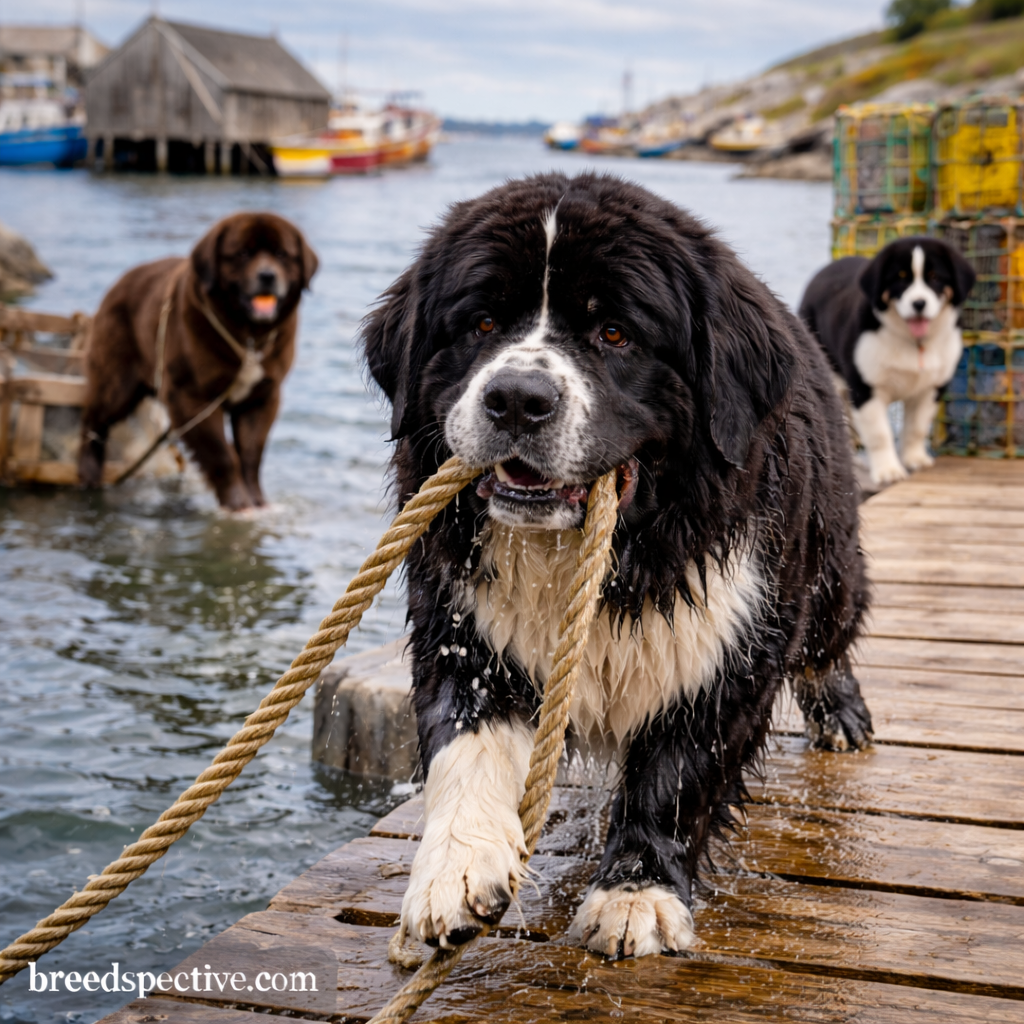
Newfoundlands were true multi-purpose working dogs. Their strength and intelligence allowed them to assist in a wide range of daily tasks essential to coastal life.
Primary roles included:
- Pulling fishing nets from the water
- Hauling carts and heavy supplies
- Retrieving ropes, tools, and equipment
- Guarding boats and shoreline property
Their versatility made them vital members of fishing communities.
The Newfoundland as a Water Rescue Dog
One of the breed’s most defining roles was water rescue. Newfoundlands are naturally inclined to assist struggling swimmers and respond calmly in emergencies.
Traits that supported this role include:
- Webbed feet for powerful propulsion
- Dense, water-resistant double coat
- Broad chest and strong limbs
- Exceptional endurance
- Instinctive rescue behavior
Historical accounts describe Newfoundlands saving people from drowning without any formal training.
Relationship With Fishermen and Families
Newfoundlands lived closely with the people they worked alongside. They were not kennel dogs, but trusted companions integrated into daily family life.
This close bond reinforced:
- Deep loyalty to humans
- Gentle behavior with children
- Emotional awareness
- Calm, steady temperament
These qualities remain central to the breed today.
Introduction to Europe and Breed Recognition
By the late 18th and early 19th centuries, Newfoundlands began appearing in England and other parts of Europe. Their impressive size, strength, and noble demeanor quickly gained attention.
European breeding efforts led to:
- Formal recognition of the breed
- Standardization of size and coat
- Preservation of temperament and working ability
British breeders played a significant role in refining the modern Newfoundland.
Influence on Other Dog Breeds
The Newfoundland contributed to the development of several other breeds known for size, strength, and gentle nature.
Its influence can be seen in:
- The Landseer (a white-and-black variant)
- The Leonberger
- Certain retriever and water-working breeds
These descendants inherited the Newfoundland’s calm confidence and working reliability.
Transition From Working Dog to Companion
As industrialization reduced the need for canine labor, the Newfoundland gradually transitioned from working dog to companion.
Modern roles include:
- Family companionship
- Therapy and emotional support work
- Water rescue demonstrations
- Drafting and cart-pulling sports
Despite this shift, the breed retains its original instincts and abilities.
How History Shapes the Modern Newfoundland
The Newfoundland’s historical purpose explains many modern traits:
- Calm demeanor from steady working roles
- Strong swimming ability from water-based labor
- Protective instincts without aggression
- Deep attachment to family members
Understanding this background helps owners better meet the breed’s needs.
Final Thoughts on Newfoundland History and Original Purpose
The Newfoundland is a breed built on service, strength, and compassion. Bred to work in some of the harshest conditions imaginable, it developed into a dog known for gentleness, loyalty, and courage.
Today, the Newfoundland may live as a family companion rather than a working dog, but its instincts, temperament, and devotion remain deeply rooted in its extraordinary history.