Newfoundland Temperament Overview
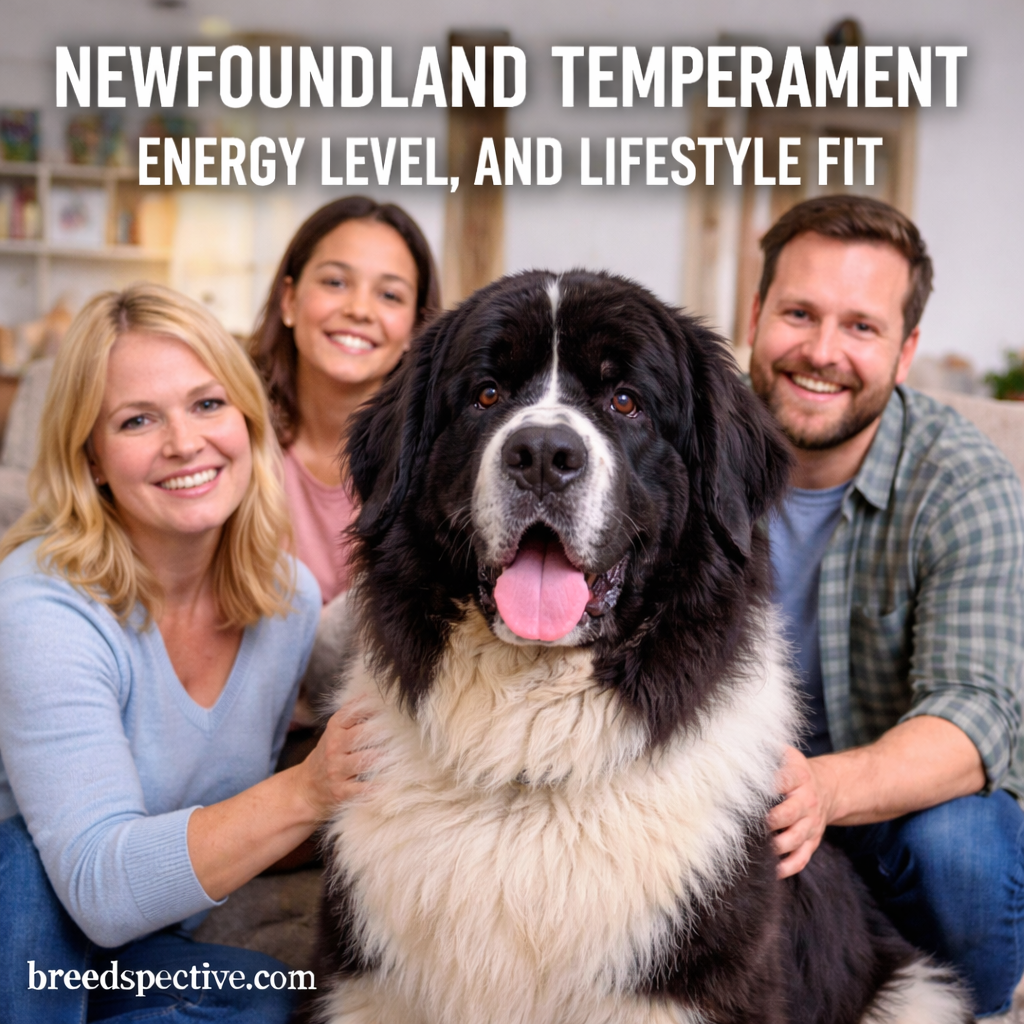
The Newfoundland is widely recognized for its calm demeanor, affectionate nature, and exceptional gentleness. Often referred to as a true “gentle giant,” this breed is known for its patience, loyalty, and strong emotional connection with its family.
Newfoundlands are naturally nurturing and tend to form deep bonds with their owners. They are not typically excitable or reactive, making them a great choice for households seeking a relaxed and dependable companion.
Key temperament traits include:
- Extremely gentle and patient
- Loyal and devoted to family members
- Calm and steady in most environments
- Emotionally intuitive and sensitive
- Friendly toward familiar people
Their soft nature makes them especially well-suited to families, seniors, and individuals looking for a calm presence in the home.
Personality Traits in Everyday Life
In daily life, Newfoundlands are affectionate without being overly demanding. They enjoy being near their people and often position themselves close by, quietly observing household activity.
Common personality characteristics include:
- Strong desire to stay close to family
- Calm confidence rather than assertiveness
- Tendency to lean or sit near loved ones
- Patient behavior with minimal reactivity
- Protective instincts without aggression
They are rarely aloof and prefer companionship over independence.
Energy Level and Activity Needs
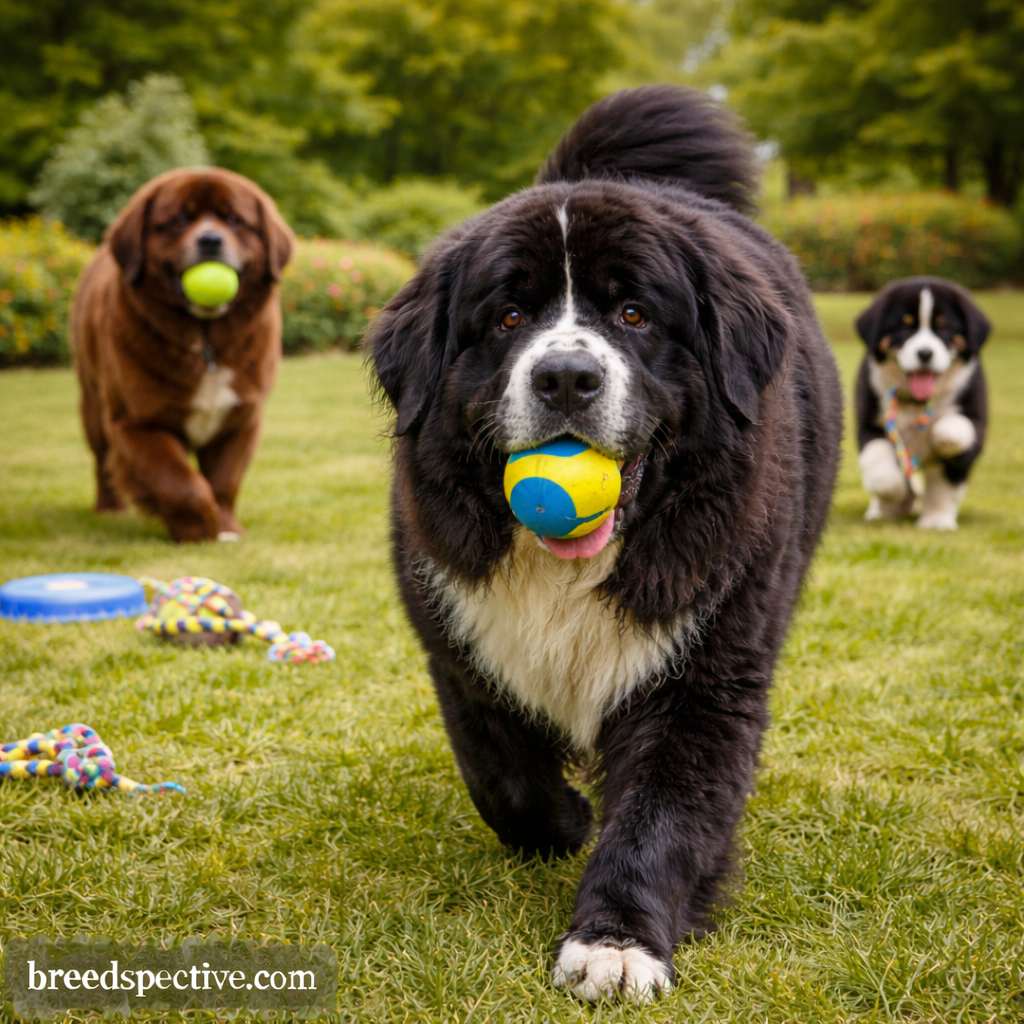
Despite their large size, Newfoundlands have a low to moderate energy level. They are not built for intense exercise but still require regular movement to maintain good health.
Typical energy patterns include:
- Short periods of playful activity
- Long stretches of relaxation indoors
- Enjoyment of swimming and gentle walks
Recommended daily activity:
- 30–60 minutes of low-impact exercise
- Leisurely walks rather than fast-paced runs
- Swimming when available
- Mental stimulation through calm training sessions
Overexertion should be avoided, especially in young dogs, due to joint stress.
Newfoundland and Family Compatibility
Newfoundlands are exceptionally well-suited to family life. Their gentle disposition and patience with children have earned them a reputation as one of the most family-friendly large breeds.
Why they excel in family environments:
- Extremely tolerant with children
- Naturally protective without being aggressive
- Calm during household noise and activity
- Strong sense of responsibility toward family
Supervision is still important due to their size, but their intentions are almost always gentle.
Behavior With Children
Newfoundlands are famously good with children and are often described as natural caretakers.
Positive traits around kids include:
- High tolerance for handling
- Calm reactions to sudden movements
- Gentle play style
- Watchful and protective behavior
Their nurturing instincts make them especially popular in homes with young children.
Compatibility With Other Pets
Newfoundlands are generally peaceful and accepting of other animals.
Pet compatibility includes:
- Friendly with other dogs
- Low prey drive
- Calm behavior around cats
- Rarely territorial
Early socialization helps reinforce their naturally easygoing temperament.
Trainability and Intelligence
Newfoundlands are intelligent and eager to please, though their laid-back nature can sometimes be mistaken for stubbornness.
Training traits include:
- Respond well to positive reinforcement
- Sensitive to harsh tones
- Benefit from short, calm sessions
- Learn best through consistency and praise
Patience and gentle guidance produce the best results.
Emotional Sensitivity and Needs
Newfoundlands are emotionally sensitive and form strong attachments to their families.
Signs of emotional sensitivity include:
- Becoming anxious when ignored
- Reacting to household stress
- Seeking reassurance from owners
They do best in stable, calm households where they are treated as part of the family.
Ideal Living Environment
Due to their size and temperament, Newfoundlands require space but not constant activity.
Ideal living conditions include:
- Homes with ample indoor space
- Access to a yard or nearby outdoor areas
- Cooler climates or climate-controlled homes
- Owners who enjoy a slower-paced lifestyle
Apartment living can be challenging but possible with commitment and space management.
Climate Considerations
Newfoundlands are built for cold climates and struggle in hot weather.
Important climate considerations:
- Thick coat retains heat
- High risk of overheating
- Exercise should be limited in warm temperatures
- Air conditioning is essential in hot regions
Owners in warm climates must be especially cautious.
Common Behavioral Challenges
While generally well-mannered, Newfoundlands can develop issues if their needs are not met.
Potential challenges include:
- Separation anxiety
- Drooling and messiness
- Stubbornness during adolescence
- Weight gain due to low activity
Most challenges are manageable with routine and structure.
Who Is a Newfoundland Best For?
Newfoundlands are best suited for owners who value calm companionship over intensity.
They are a great fit for:
- Families with children
- Calm households
- Owners who enjoy relaxed routines
- People who want a loyal, nurturing dog
They may not be ideal for:
- Very active households
- Small living spaces without accommodations
- Owners unable to manage grooming needs
Final Thoughts on Newfoundland Lifestyle Fit
The Newfoundland is a deeply gentle, loyal, and emotionally connected breed. Their calm presence, nurturing instincts, and family-oriented temperament make them an exceptional companion for the right home.
With proper care, space, and companionship, a Newfoundland can become a devoted family member whose gentle nature leaves a lasting impression.