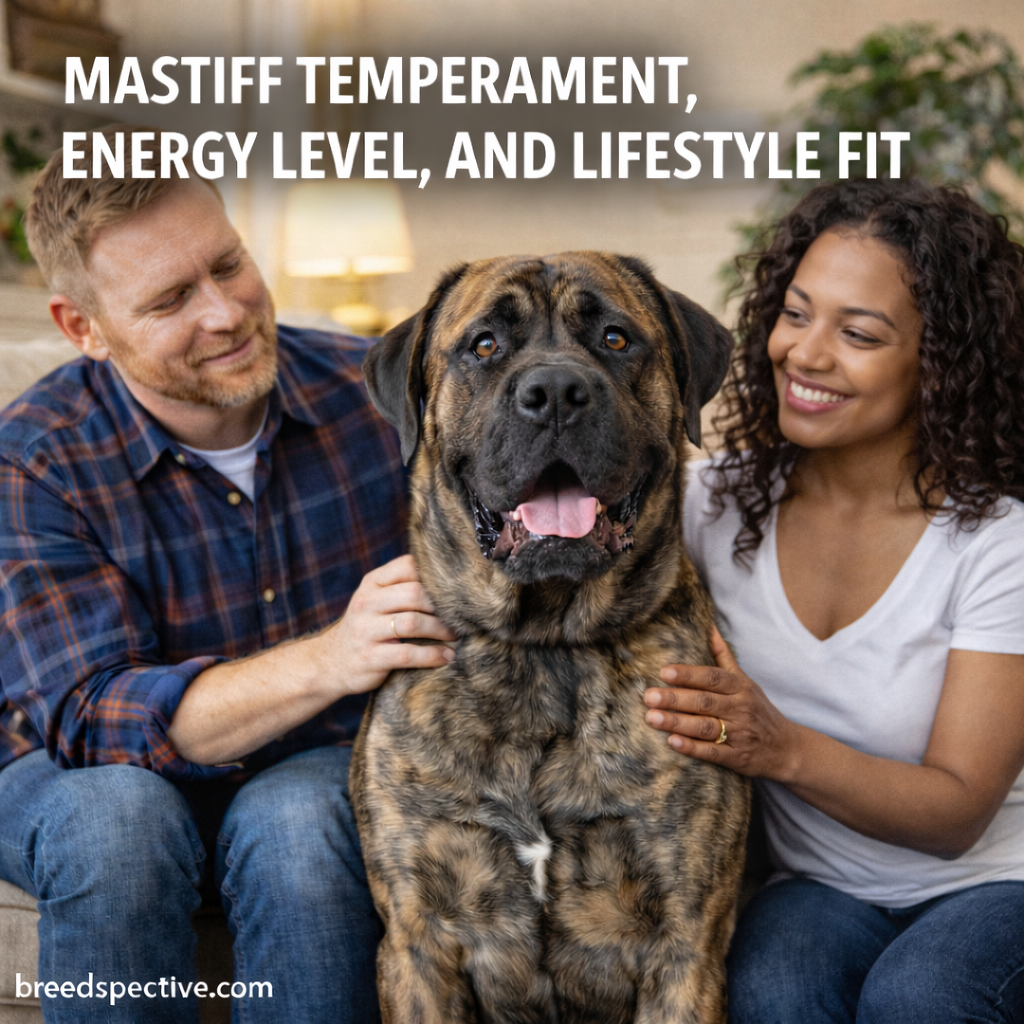
The Mastiff is a gentle giant—massive in size yet calm, affectionate, and deeply loyal. Known for their protective instincts and steady demeanor, Mastiffs are often misunderstood as intimidating when, in reality, they are among the most relaxed and people-oriented large dog breeds. Their temperament, low-to-moderate energy level, and strong attachment to family make them excellent companions in the right environment.
This guide explores the Mastiff’s personality, exercise needs, and ideal lifestyle fit so you can determine whether this powerful yet gentle breed is right for your home.
Mastiff Temperament Overview
Mastiffs are known for being calm, dignified, and emotionally grounded. They form strong bonds with their families and tend to be quietly observant rather than reactive.
Common temperament traits include:
- Gentle and affectionate with family
- Loyal and protective without being aggressive
- Calm and patient
- Confident but not overly excitable
- Reserved with strangers
Mastiffs are natural guardians by presence alone, not by constant barking or aggression.
Personality Strengths of the Mastiff
Gentle and Loving With Family
Despite their size, Mastiffs are typically soft-natured with the people they trust.
They often:
- Enjoy close proximity to family members
- Lean against owners for comfort
- Show affection in calm, understated ways
They are known for forming especially strong bonds with their primary caregivers.
Naturally Protective Without Excessive Aggression
Mastiffs are instinctively protective, but not reactive.
Key traits include:
- Watching quietly rather than barking excessively
- Stepping between perceived threats and family
- Remaining composed in unfamiliar situations
This makes them excellent watchdogs without the instability of high-alert breeds.
Emotionally Steady and Predictable
Mastiffs are not prone to nervousness or hyperactivity.
They tend to:
- Handle routine changes well
- Remain calm in busy households
- React thoughtfully rather than impulsively
Their emotional stability is one of their most appealing traits.
Potential Temperament Challenges
Stubbornness and Independence
Mastiffs are intelligent but can be independent thinkers.
Common challenges include:
- Slow response to commands
- Resistance to repetitive training
- Testing boundaries during adolescence
They respond best to calm, consistent leadership rather than force.
Wariness of Strangers
While not aggressive, Mastiffs are often reserved with unfamiliar people.
This can include:
- Aloof behavior
- Standing watch rather than greeting
- Delayed warming-up period
Early and ongoing socialization helps maintain balance.
Sensitivity to Harsh Training
Mastiffs are emotionally sensitive despite their size.
Harsh correction may lead to:
- Withdrawal
- Loss of trust
- Increased stubbornness
Positive reinforcement and respectful handling are essential.
Energy Level and Daily Activity Needs
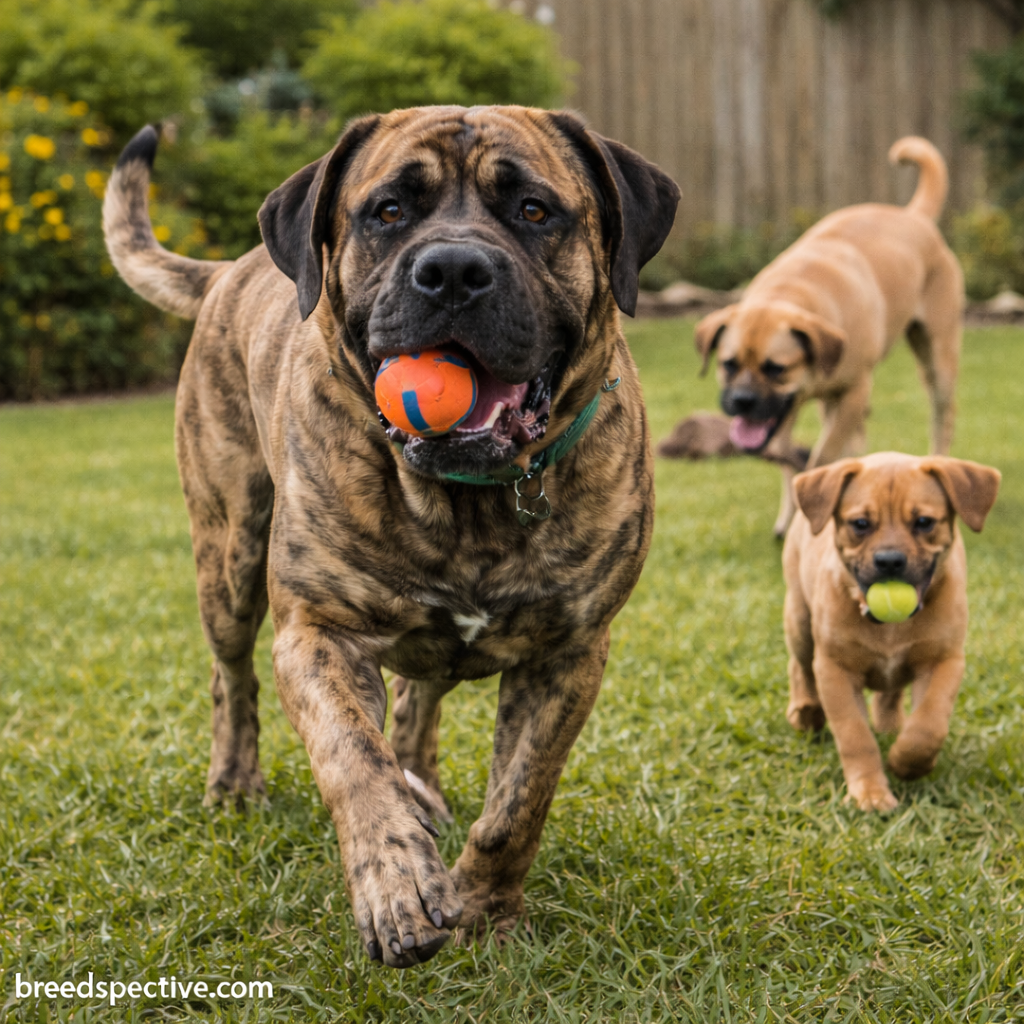
Mastiffs have a low-to-moderate energy level, especially as adults.
Typical Energy Profile
- Short bursts of activity
- Long rest periods
- Preference for relaxed routines
They are not endurance dogs and do not need intense daily exercise.
Daily Exercise Requirements
Most Mastiffs thrive with:
- 30–45 minutes of daily activity
- Short walks at a comfortable pace
- Light playtime
Overexertion should be avoided, especially during puppyhood and in hot weather.
Mental Stimulation Needs
While physically calm, Mastiffs benefit from mental engagement.
Helpful options include:
- Basic obedience training
- Puzzle toys
- Structured routines
Mental stimulation helps prevent boredom-related stubbornness.
Ideal Living Environment
Space Requirements
Mastiffs do best in homes that allow room to move comfortably.
They are suited for:
- Houses with open layouts
- Homes with fenced yards
- Quiet environments
While not impossible in apartments, their size makes small spaces challenging.
Indoor Lifestyle
Despite their size, Mastiffs are indoor dogs.
They prefer:
- Being near family members
- Comfortable resting areas
- Climate-controlled environments
They should not be kept outdoors full-time.
Mastiffs and Family Life
With Children
Mastiffs are often gentle and patient with children.
Best practices include:
- Teaching children respectful interaction
- Supervising play due to size differences
- Avoiding roughhousing
Their calm demeanor makes them excellent family companions.
With Other Pets
Mastiffs can coexist well with other pets when socialized early.
- Generally tolerant of other dogs
- Low prey drive compared to many large breeds
- Early introductions are important
Consistency helps maintain harmony.
Health and Lifestyle Considerations
Mastiffs have specific needs that affect lifestyle compatibility.
Important considerations include:
- Shorter lifespan than smaller breeds
- Sensitivity to heat
- Need for joint care
- Slower maturation rate
Owners must be prepared for the responsibilities that come with giant breeds.
Ideal Owner Profile
Mastiffs are best suited for owners who value calm companionship.
They are a strong match for:
- Experienced dog owners
- Families with space
- Calm households
- Owners who prefer low-energy dogs
They are not ideal for highly active lifestyles or first-time owners unprepared for size and strength.
Training and Socialization Tips
Training Approach
Mastiffs respond best to:
- Calm, confident leadership
- Positive reinforcement
- Short, consistent sessions
Early training is critical due to their eventual size.
Socialization Importance
Early exposure to:
- People of all ages
- Other animals
- Different environments
helps ensure a confident, well-mannered adult dog.
Is a Mastiff Right for You?
The Mastiff is an ideal breed for those seeking a loyal, protective, and calm companion.
Choose a Mastiff if you want:
- A gentle, people-focused dog
- Moderate exercise needs
- Natural protection without aggression
- A relaxed home companion
If you want a high-energy or highly trainable performance dog, another breed may be a better fit.
Final Thoughts
The Mastiff’s temperament is defined by quiet strength, loyalty, and emotional steadiness. Their low-to-moderate energy level and affectionate nature make them excellent companions for the right household—one that understands their size, sensitivity, and need for respectful leadership.
With proper training, socialization, and care, a Mastiff can be a devoted and deeply rewarding family member.