
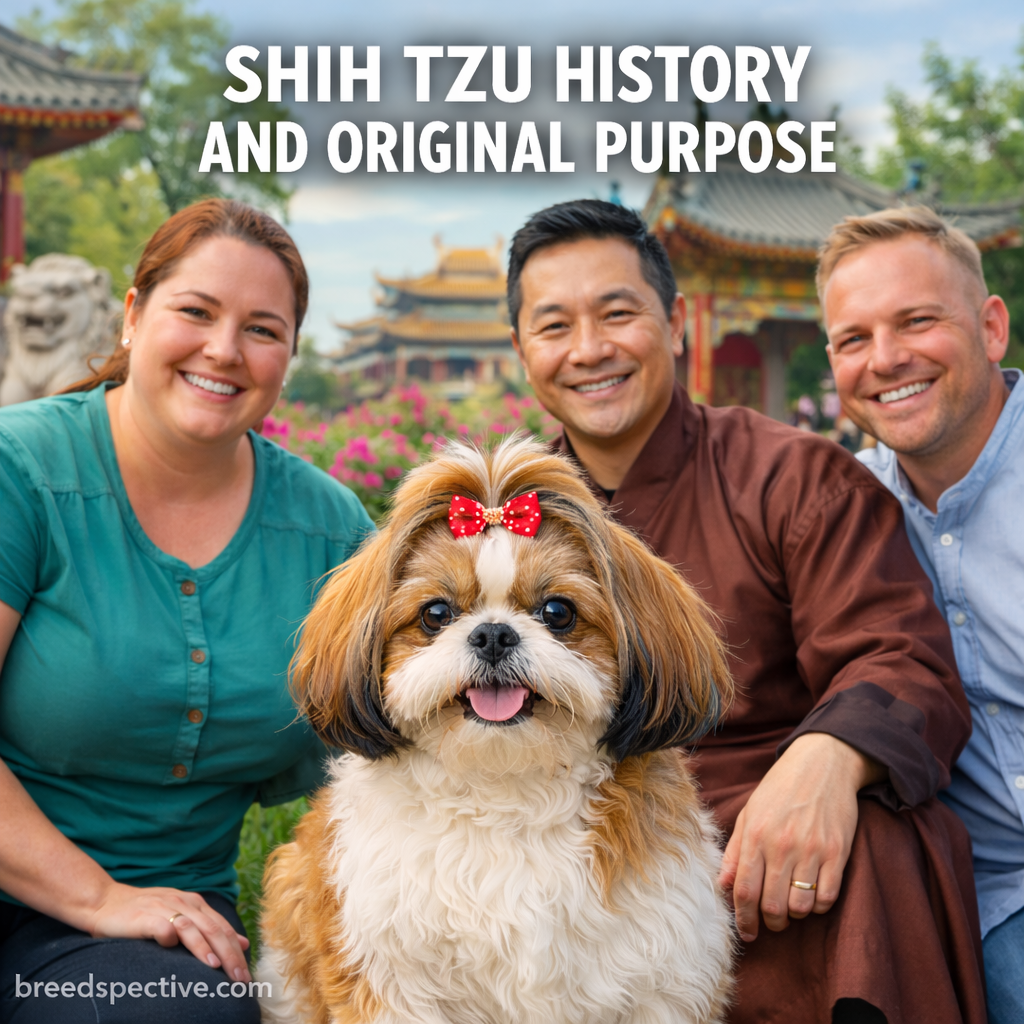
The Shih Tzu is a breed with deep roots in ancient royalty, spiritual symbolism, and intentional companionship. Unlike many dog breeds developed for hunting, guarding, or labor, the Shih Tzu was bred almost exclusively to live alongside humans. Its history is closely tied to Chinese emperors, Buddhist traditions, and palace life, shaping the affectionate and people-focused dog we know today.
This article explores the origins of the Shih Tzu, its original purpose, and how its past continues to influence the breed’s modern personality.
Ancient Origins of the Shih Tzu
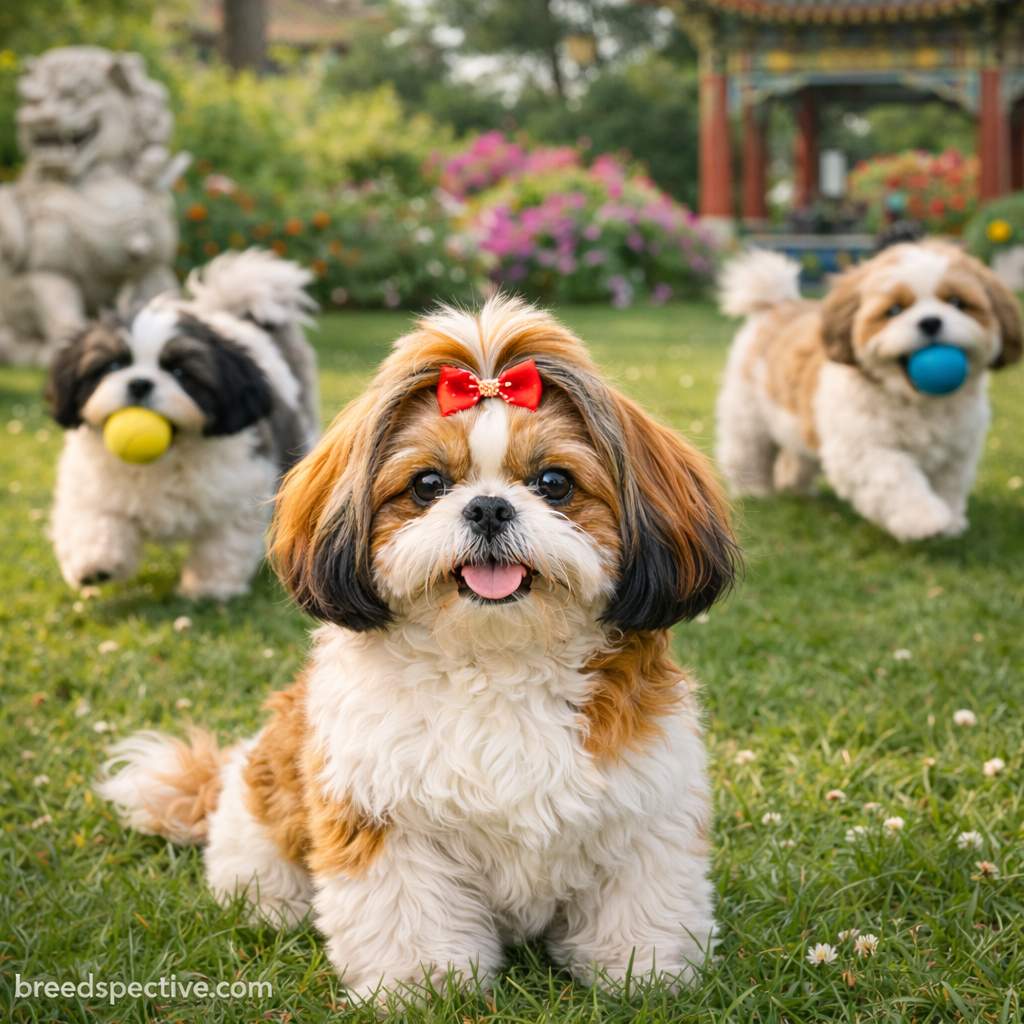
The Shih Tzu’s history dates back more than a thousand years, with origins connected to both Tibet and imperial China.
Key historical foundations include:
- Small companion dogs bred by Tibetan monks
- Dogs gifted to Chinese royalty as symbols of respect
- Selective breeding within Chinese imperial courts
Many historians believe the Shih Tzu descends from crosses between Tibetan companion dogs and small Chinese breeds, refined over generations to meet royal preferences.
The Meaning Behind the Name “Shih Tzu”
The name “Shih Tzu” translates to “Lion Dog” in Chinese. This name carries deep cultural and spiritual meaning.
In Chinese and Buddhist tradition:
- Lions symbolized power, protection, and divinity
- Real lions did not exist in ancient China
- Small dogs were bred to resemble stylized lion statues
Shih Tzus were intentionally bred to resemble these symbolic lions, with their flowing coats, proud posture, and confident expressions.
Role in Chinese Imperial Courts
Shih Tzus were prized possessions within the Chinese imperial palace, particularly during the Ming and Qing dynasties.
Their primary roles included:
- Providing companionship to emperors and nobles
- Serving as lap dogs for royalty
- Acting as living symbols of wealth and status
These dogs lived lives of luxury, often attended by servants and guarded closely within palace walls. They were rarely seen outside the imperial court.
Strict Control and Selective Breeding
For centuries, Shih Tzus were bred under strict control by palace breeders.
Notable breeding practices included:
- Careful selection for temperament and appearance
- Emphasis on calm, affectionate behavior
- Preservation of small size and facial features
Because the breed was so closely guarded, Shih Tzus remained virtually unknown outside China for generations.
Temperament Shaped by Purpose
The Shih Tzu’s original role as a companion directly influenced its personality traits.
Historical purpose shaped modern traits such as:
- Strong attachment to humans
- Preference for indoor living
- Low prey drive
- Minimal guarding instincts
They were not bred to work independently, make decisions in the field, or perform physical tasks—only to bond with and comfort people.
Decline of the Imperial System and Near Extinction
The fall of the Chinese imperial system in the early 20th century nearly led to the extinction of the Shih Tzu.
Key historical challenges included:
- Political upheaval and revolution
- Loss of palace breeding programs
- Decline in aristocratic ownership
By the early 1900s, only a small number of Shih Tzus remained.
Introduction to the Western World
The survival of the breed is credited to a limited number of dogs exported from China to Europe in the early 20th century.
Important milestones include:
- Arrival in England during the 1930s
- Establishment of early breeding programs
- Gradual spread to other Western countries
From this small foundation, the modern global Shih Tzu population was developed.
Recognition as a Companion Breed
As the Shih Tzu gained popularity outside Asia, it was recognized primarily as a companion breed rather than a working dog.
This recognition reinforced:
- Breeding for temperament over function
- Focus on adaptability to home environments
- Suitability for families, seniors, and apartment living
The breed’s historical role remained intact despite cultural changes.
How History Influences the Modern Shih Tzu
The Shih Tzu’s ancient purpose continues to define the breed today.
Modern Shih Tzus are known for:
- Affectionate and people-focused behavior
- Comfort with indoor lifestyles
- Calm demeanor and emotional sensitivity
- Desire for close human companionship
These traits are not accidental—they are the result of centuries of intentional breeding.
Original Purpose vs. Modern Life
While Shih Tzus no longer live in palaces, their purpose has changed very little.
Then and now, the Shih Tzu’s role is to:
- Provide companionship
- Offer emotional comfort
- Strengthen human bonds
- Thrive as a household presence
Few breeds have remained so true to their original purpose.
Final Thoughts
The Shih Tzu’s history is one of intention, symbolism, and devotion to human companionship. Bred for centuries to live alongside royalty, this small dog carries a legacy of affection and loyalty into modern homes.
Understanding the Shih Tzu’s historical purpose helps explain why the breed thrives as a loving, low-energy companion—and why it continues to be cherished around the world.