
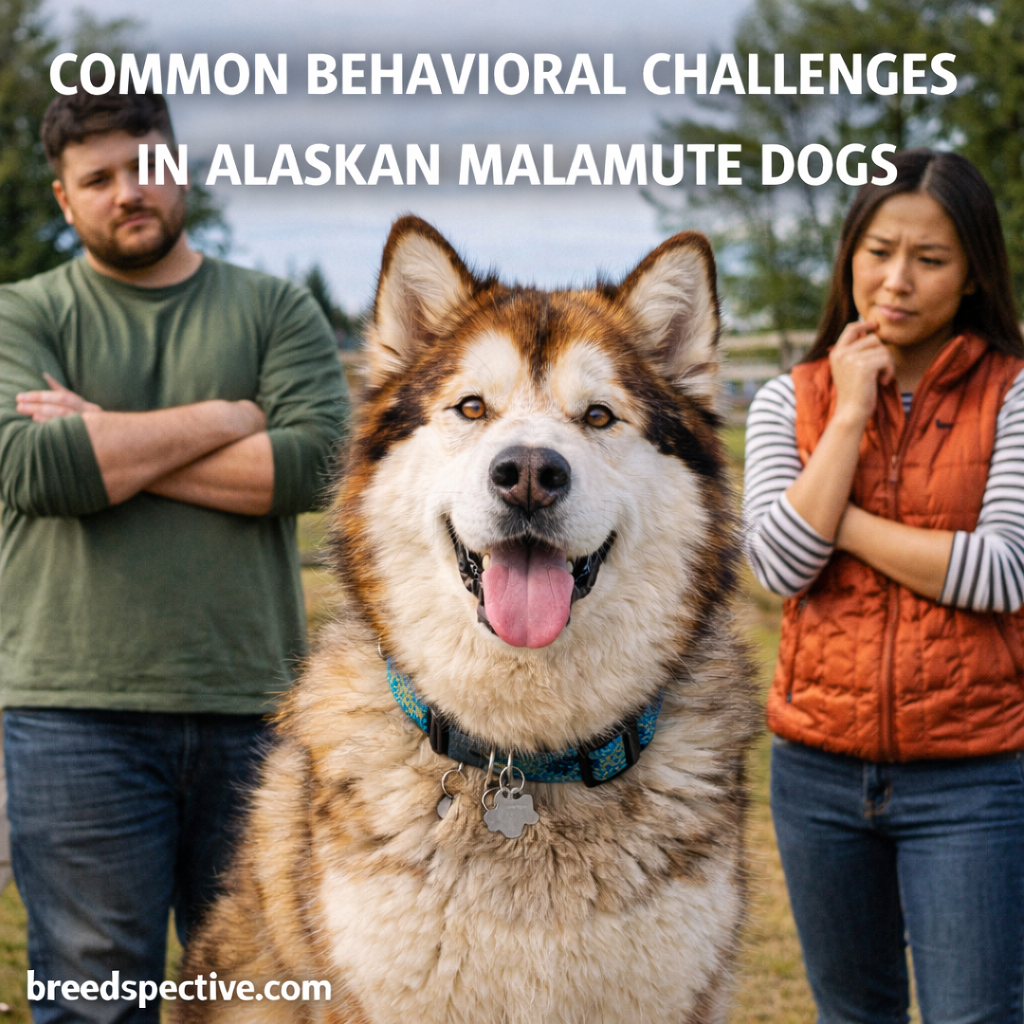
Alaskan Malamutes are intelligent, social, and powerful working dogs—but they are not an easy breed. Many of the behavioral challenges associated with Malamutes are rooted in their history as cooperative sled dogs bred for endurance, independence, and close human interaction.
Understanding these challenges helps owners manage behavior proactively rather than reacting once problems develop.
Independence and Selective Obedience
One of the most common frustrations for Malamute owners is selective obedience.
Typical behaviors include:
- Ignoring commands they already know
- Responding slowly or inconsistently
- Testing boundaries repeatedly
This is not a lack of intelligence. Malamutes were bred to think independently in harsh environments, not to obey instantly without purpose.
Why it becomes a problem:
- Inconsistent leadership
- Repetitive or boring training
- Expecting blind obedience
Clear structure, consistency, and motivation-based training are essential.
Separation Anxiety and Isolation Stress
Alaskan Malamutes are extremely social dogs and often struggle when left alone for long periods.
Signs of separation-related stress include:
- Howling or vocalizing
- Destructive chewing
- Escaping yards or crates
- Pacing or restlessness
This breed thrives on companionship and shared activity. Long hours alone can lead to escalating behavioral issues.
Excessive Digging
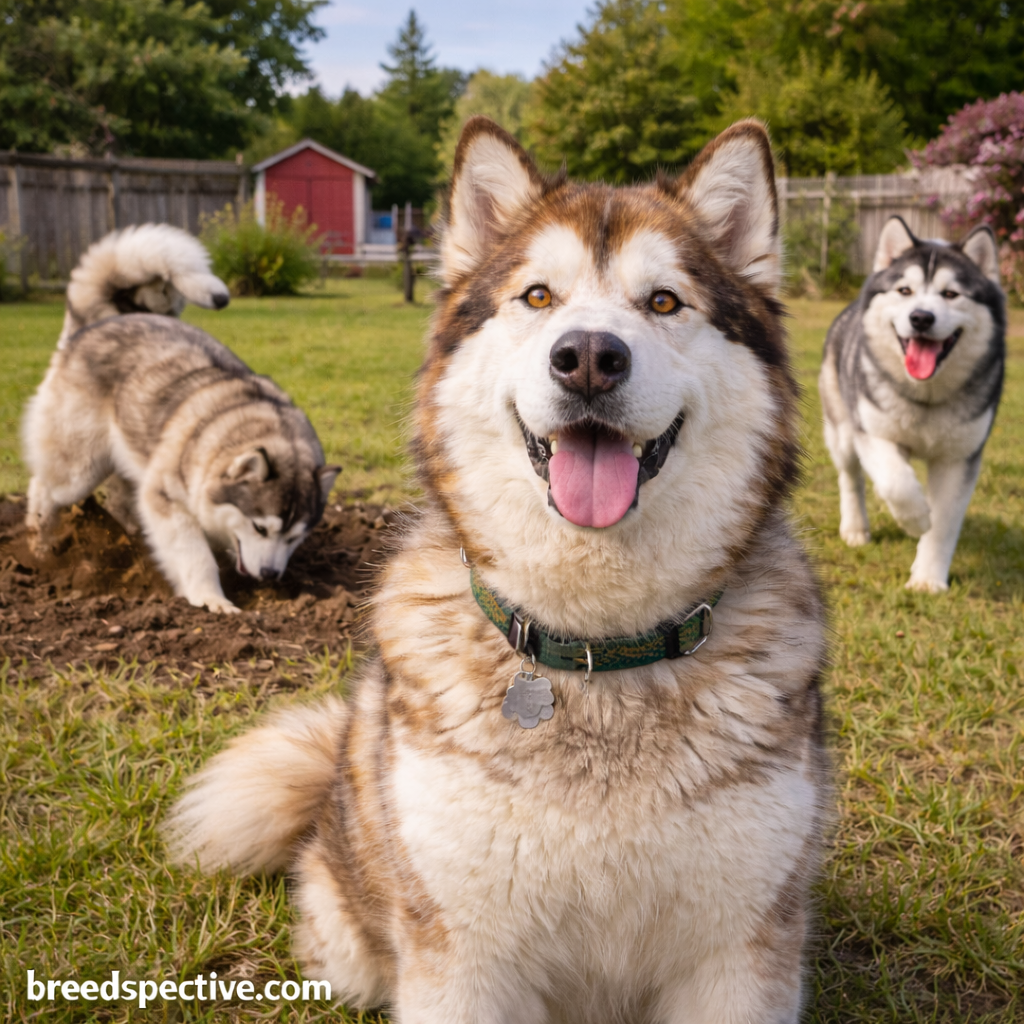
Digging is one of the most common Malamute behaviors—and one of the hardest to eliminate.
Why Malamutes dig:
- Instinct to create cool resting spots
- Boredom or excess energy
- Natural survival behavior
Digging is rarely a dominance issue. It usually indicates unmet physical or mental needs.
Escaping and Roaming Tendencies
Alaskan Malamutes are notorious escape artists.
Common escape behaviors include:
- Climbing fences
- Digging under barriers
- Pushing through weak gates
Their intelligence, strength, and curiosity make confinement challenging. Standard fencing is often insufficient without reinforcement.
Same-Sex Dominance and Dog Aggression
While Malamutes are pack-oriented, they can show dominance toward other strong-willed dogs.
Patterns often include:
- Same-sex conflicts
- Resource guarding around food or toys
- Tension with unfamiliar dogs
Early socialization helps, but some dominance tendencies remain instinctive rather than learned.
High Prey Drive
Alaskan Malamutes have a strong prey drive, especially toward smaller animals.
Common issues include:
- Chasing cats or small dogs
- Fixating on wildlife
- Difficulty with off-leash control
This trait is deeply ingrained and requires management rather than correction.
Destructive Behavior From Boredom
A bored Malamute is a destructive Malamute.
Boredom-related behaviors include:
- Chewing furniture
- Tearing up bedding
- Destroying doors or crates
These behaviors usually indicate insufficient exercise, stimulation, or purpose—not bad temperament.
Vocalization and Howling
Malamutes are vocal dogs, but not typically excessive barkers.
Common vocal behaviors include:
- Howling when lonely
- “Talking” or grumbling sounds
- Vocal responses to people or noises
While normal for the breed, this can be problematic in noise-sensitive neighborhoods.
Stubbornness Misinterpreted as Aggression
Malamutes are often labeled aggressive when they are simply asserting boundaries.
Misread behaviors include:
- Standing their ground
- Ignoring commands
- Calm growling or vocal warnings
Punishing these signals can escalate problems instead of resolving them.
Overconfidence in Inexperienced Owners
Many Malamute behavior problems stem from owners underestimating the breed.
Common mistakes include:
- Inconsistent rules
- Too much freedom too early
- Lack of structured exercise
- Treating the dog as low-maintenance
This breed requires confident, patient leadership.
Why Most Malamute Behavior Issues Are Preventable
Most challenges arise from unmet needs rather than poor temperament.
Malamutes thrive when they have:
- Daily physical outlets
- Mental stimulation
- Social interaction
- Clear, consistent structure
When these needs are met, behavioral issues often diminish significantly.
When Professional Help Is Needed
Professional support is recommended if:
- Aggression escalates
- Escaping becomes dangerous
- Owners feel overwhelmed
- Safety concerns arise
Choose trainers experienced with working and northern breeds rather than generic obedience programs.
Final Thoughts
Alaskan Malamutes are not difficult dogs—they are demanding dogs. Their behavioral challenges are reflections of their intelligence, independence, and working-dog heritage.
For owners willing to provide structure, exercise, and engagement, Malamutes become confident, affectionate, and deeply bonded companions. Understanding and respecting their instincts is the key to long-term behavioral success.