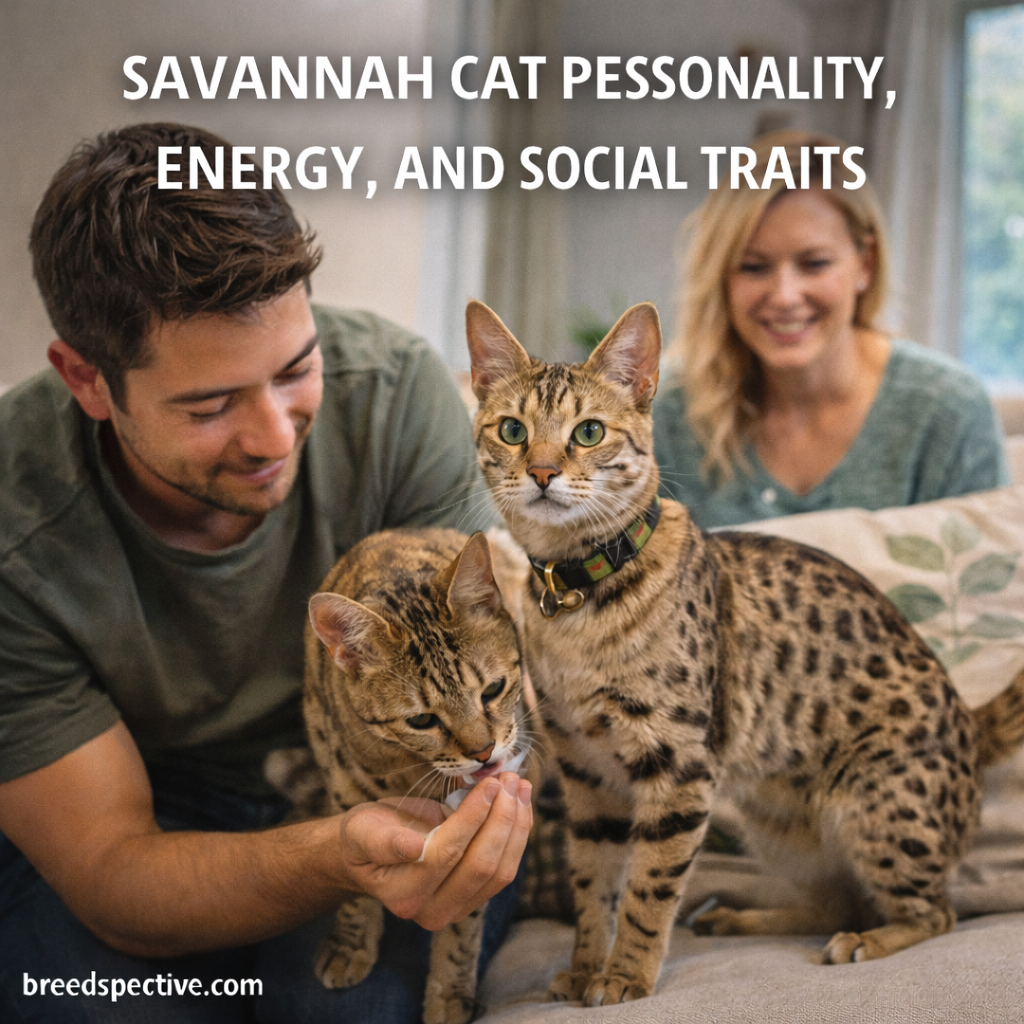
Savannah cats are known for their striking appearance, high intelligence, and unusually active personalities. Often described as part cat and part athlete, this breed stands out for its energy level, curiosity, and strong social tendencies. Savannah cats are not passive companions—they thrive on interaction, stimulation, and involvement in daily life.
Understanding the Savannah cat’s personality, energy needs, and social traits is essential for anyone considering this breed, as their behavior differs significantly from that of more traditional domestic cats.
Savannah Cat Personality Overview
Savannah cats are confident, curious, and highly alert. Their personality reflects a blend of independence and deep engagement with their environment.
Common personality traits include:
- Extremely curious and observant
- Confident and bold rather than timid
- Intelligent and quick to learn routines
- Strong-willed with a need for boundaries
- Highly aware of their surroundings
Savannah cats tend to investigate everything. Cabinets, doors, shelves, and even running water quickly become points of fascination.
Intelligence and Problem-Solving Ability
Savannah cats are among the most intelligent domestic cat breeds. They often learn through observation and experimentation rather than repetition.
Signs of high intelligence include:
- Opening doors or cabinets
- Learning household routines quickly
- Solving puzzle toys with ease
- Adapting behavior based on outcomes
Because of this intelligence, boredom can lead to mischief. Mental stimulation is not optional for this breed—it is essential.
Energy Level and Physical Activity Needs
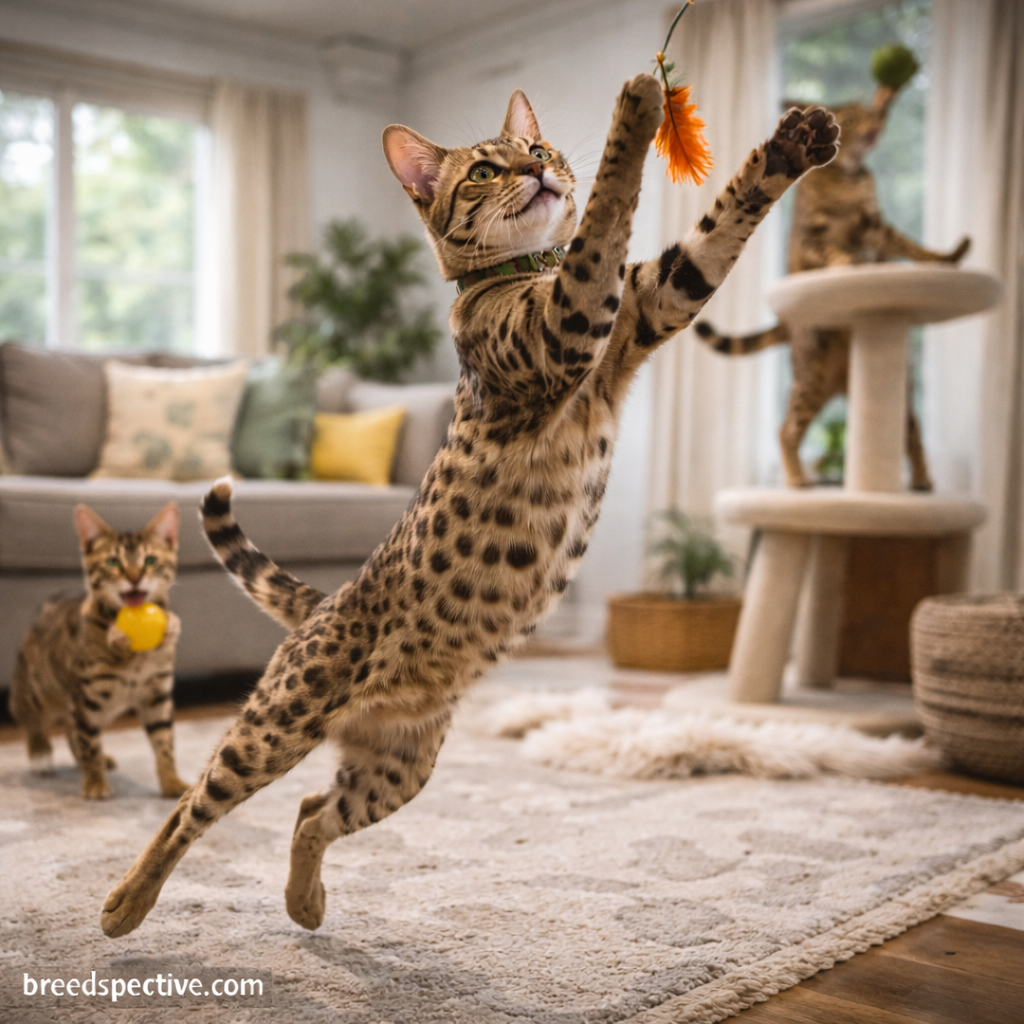
Savannah cats have exceptionally high energy levels compared to most other cats.
Typical energy traits include:
- Frequent bursts of running and jumping
- Powerful vertical leaps
- Extended play sessions
- Continued activity well into adulthood
They benefit greatly from vertical space such as tall cat trees, shelves, and climbing structures. Without physical outlets, excess energy can turn into destructive behavior.
Play Style and Athleticism
Savannah cats are highly athletic and enjoy interactive, challenging play rather than passive toys.
Preferred play activities include:
- Wand toys that encourage jumping
- Fetch-style games
- Chasing moving objects
- Climbing and leaping challenges
Many Savannah cats enjoy water play and may paw at faucets, splash in bowls, or follow owners into bathrooms.
Social Traits With Humans
Savannah cats are highly people-oriented, though they often bond most strongly with one or two individuals.
Social behaviors include:
- Following owners from room to room
- Seeking involvement in daily activities
- Sitting nearby rather than staying hidden
- Responding to voice and body language
They are affectionate, but often on their own terms. Some prefer side-by-side contact rather than constant lap sitting.
Communication and Vocal Behavior
Savannah cats are expressive communicators, though their vocalizations can vary widely.
Common communication traits include:
- Chirps and trills rather than constant meowing
- Body language used to signal mood
- Vocal responses when engaged socially
They often “talk” during play or interaction, creating a more conversational dynamic with their owners.
Interaction With Other Pets
Savannah cats can coexist well with other animals, but compatibility depends heavily on proper introductions and energy matching.
General tendencies include:
- Doing well with active, confident cats
- Enjoying interaction with cat-friendly dogs
- Becoming bored or dominant with passive pets
Their strong prey drive means caution is needed around small animals such as birds or rodents.
Behavior Around Children and Guests
Savannah cats are typically confident rather than fearful around new people.
Behavioral tendencies include:
- Curiosity toward visitors
- Comfort in moderately busy households
- Preference for respectful handling
They do best with older children who understand boundaries, as rough or unpredictable behavior may cause overstimulation.
Independence vs. Attachment
Savannah cats balance independence with strong attachment.
This balance often looks like:
- Wanting access to people without constant holding
- Choosing interaction rather than demanding it
- Becoming distressed if ignored for long periods
They are not ideal for owners who want a low-engagement or highly independent cat.
Sensitivity and Environmental Awareness
Savannah cats are highly sensitive to changes in their environment.
They may react to:
- Changes in routine
- New furniture or layouts
- Household stress or tension
Consistency, enrichment, and predictable schedules help them feel secure and balanced.
Potential Behavioral Challenges
Most behavioral challenges in Savannah cats stem from unmet needs.
Possible issues include:
- Destructive behavior from boredom
- Excessive vocalization when understimulated
- Door-dashing or escape attempts
- Overactivity during nighttime hours
These behaviors are typically manageable with sufficient exercise, mental stimulation, and structured interaction.
Ideal Home Environment for a Savannah Cat
Savannah cats thrive in homes that embrace activity and engagement.
Ideal environments include:
- Homes with vertical space and enrichment
- Owners who enjoy interactive play
- Households with consistent routines
- Environments where exploration is encouraged safely
They are less suited for quiet, low-interaction homes.
How Savannah Personality Evolves With Age
While Savannah kittens are especially energetic, adults remain active and curious.
As they mature, many Savannah cats:
- Develop better impulse control
- Maintain high intelligence and engagement
- Retain strong bonds with owners
They rarely become sedentary, even later in life.
Final Thoughts on Savannah Cat Personality
Savannah cats are bold, intelligent, and highly engaging companions. Their energy, curiosity, and social nature make them deeply rewarding—but also demanding. This breed requires time, attention, and an environment designed for exploration and activity.
For owners willing to meet those needs, the Savannah cat offers a personality that is dynamic, interactive, and unlike that of any other domestic cat.