
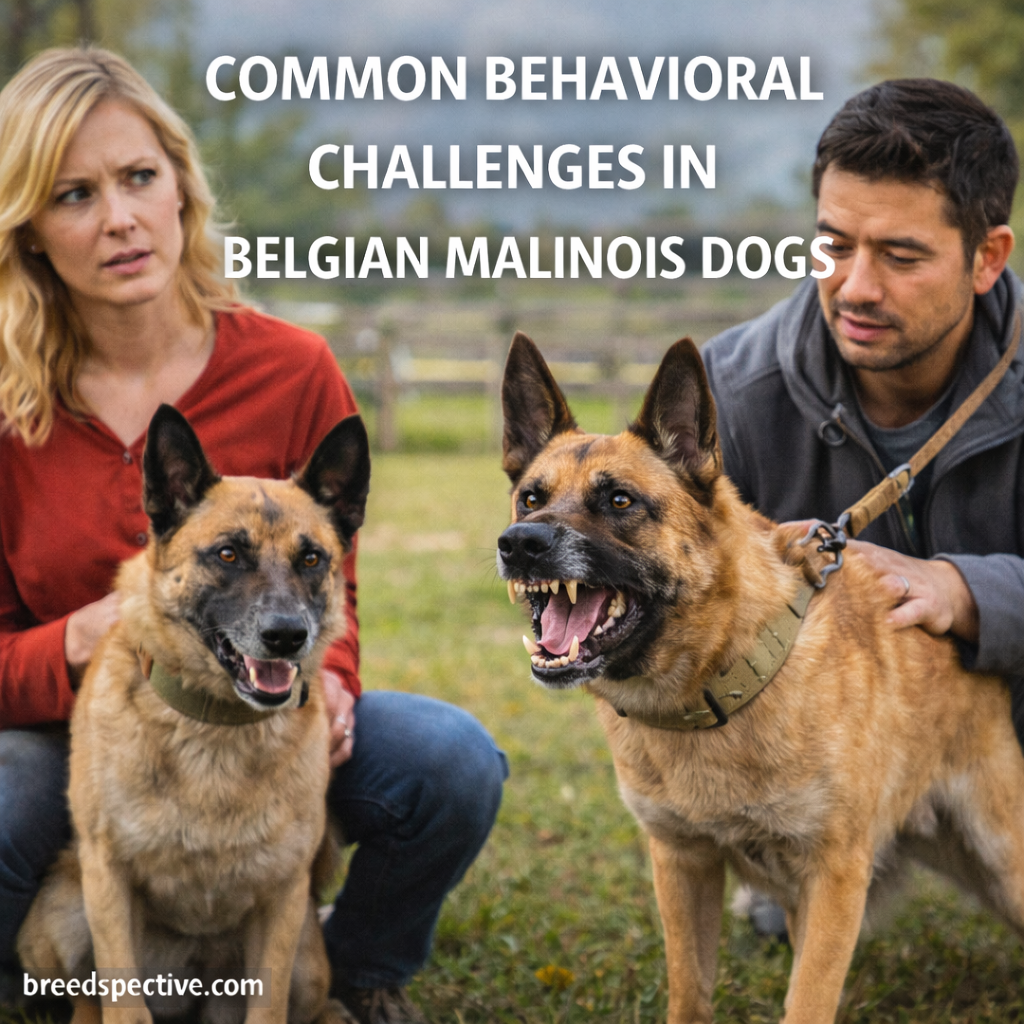
Belgian Malinois are elite working dogs known for intelligence, intensity, and exceptional drive. These traits make them outstanding in professional roles—but they can also lead to serious behavioral challenges when the breed’s needs are misunderstood or unmet.
Most behavioral issues in Belgian Malinois are not signs of a “bad dog.” They are usually the result of under-stimulation, inconsistent structure, or placement in lifestyles that don’t match the breed’s original purpose. This guide breaks down the most common behavioral challenges seen in Belgian Malinois and why they occur.
Extreme Hyperactivity and Inability to Settle
One of the most common challenges with Belgian Malinois is their difficulty relaxing.
This may appear as:
- Constant pacing or restlessness
- Inability to lie down calmly indoors
- Seeking stimulation nonstop
- Appearing “wired” even after exercise
Malinois were bred to remain alert and responsive for long periods. Without intentional training to build calm behavior, their default state is readiness, not relaxation.
Destructive Behavior From Understimulation

When mental and physical needs are unmet, Malinois often release excess drive through destruction.
Common signs include:
- Chewing furniture, walls, or doors
- Destroying crates or fencing
- Digging excessively
- Tearing apart toys rapidly
This behavior is rarely about disobedience. It’s a symptom of a dog trying to create an outlet when no meaningful work is provided.
Reactivity to Movement and Noise
Belgian Malinois are highly sensitive to environmental stimuli.
Triggers may include:
- Fast-moving dogs, cyclists, or vehicles
- Sudden noises
- Unfamiliar environments
- Visual motion such as running people
Their heightened awareness, while valuable in working roles, can turn into reactivity without proper exposure and impulse control training.
Overprotectiveness and Guarding Behavior
Protective instincts are deeply ingrained in the breed and can become problematic if not properly managed.
This may look like:
- Intense focus on strangers
- Blocking access to family members
- Territorial behavior around home or vehicle
- Escalation from alertness to reactivity
Without clear leadership and social boundaries, guarding behavior can shift from appropriate vigilance to liability.
Obsessive or Compulsive Behaviors
Malinois are prone to fixation when their drive lacks direction.
Common compulsive behaviors include:
- Obsessive ball or toy fixation
- Chasing shadows or reflections
- Repetitive pacing or circling
- Inability to disengage from tasks
What starts as motivation can become unhealthy obsession if balance is not taught.
Mouthiness and Nipping
Because Belgian Malinois are bred for bite-based work in professional settings, mouth-oriented behaviors are common.
This can include:
- Nipping during play
- Grabbing clothing or hands
- Excessive mouthing during excitement
Without clear rules and redirection, these behaviors can become unsafe, especially in family environments.
Difficulty With Impulse Control
Malinois often struggle with self-regulation, particularly when young.
Signs include:
- Explosive reactions to stimulation
- Difficulty waiting or holding position
- Breaking commands under excitement
- Overreacting to minor triggers
Impulse control must be actively trained—it does not come naturally to this high-drive breed.
Separation-Related Stress
While not typically clingy, Malinois often struggle when left without purpose.
This may show as:
- Destructive behavior when alone
- Vocalization
- Pacing or escape attempts
They do best with structured routines and expectations, not long periods of idle isolation.
Why These Challenges Are Commonly Misunderstood
Many Belgian Malinois behavior issues stem from mismatched expectations.
Common misunderstandings include:
- Assuming intelligence equals easy ownership
- Believing exercise alone solves behavior problems
- Treating the breed like a typical companion dog
- Underestimating daily training requirements
Malinois are not self-regulating pets—they are working dogs that require intentional structure.
Managing Behavioral Challenges Effectively
Successful Malinois ownership focuses on channeling drive, not suppressing it.
Effective strategies include:
- Daily mental work, not just physical exercise
- Clear rules and consistent leadership
- Structured training routines
- Teaching calmness as a skill
- Professional guidance from experienced trainers
Simply increasing walks or playtime is rarely enough.
Who Should Not Own a Belgian Malinois
This breed is not appropriate for every home.
Poor matches include:
- First-time dog owners
- Low-activity lifestyles
- Homes without time for daily training
- Owners seeking a relaxed companion
Placing a Malinois in the wrong environment often leads to frustration for both dog and owner.
Final Thoughts on Belgian Malinois Behavioral Challenges
Belgian Malinois are not difficult dogs—but they are demanding, intense, and purpose-driven. Their behavioral challenges are almost always reflections of unmet needs rather than flawed temperament.
When provided with structure, meaningful work, and consistent engagement, Malinois can be stable, focused, and deeply loyal partners. Understanding their challenges is essential to respecting what this remarkable breed was designed to be.