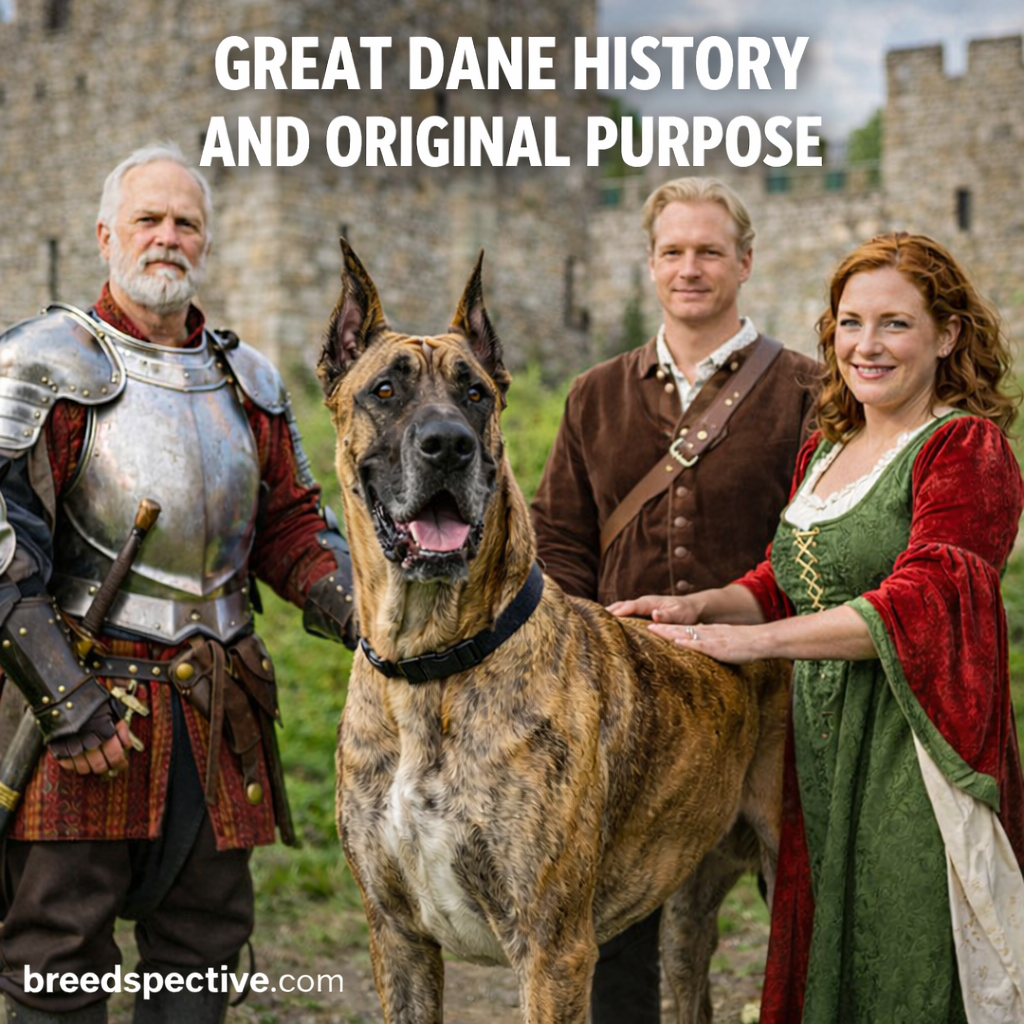
The Great Dane is one of the most recognizable dog breeds in the world, known for its towering height and gentle demeanor. But behind the modern image of a calm companion lies a long and fascinating history rooted in power, protection, and prestige.
This article explores the origins of the Great Dane, how its original purpose shaped the breed, and how centuries of selective breeding transformed it into the affectionate family dog we know today.
Ancient Roots of the Great Dane
Although the name suggests a Danish origin, the Great Dane’s history reaches much further back and spans multiple civilizations.
Archaeological and artistic evidence suggests that dogs resembling modern Great Danes existed as early as:
- Ancient Assyrian reliefs (around 3,000 BC)
- Wall carvings in Egypt
- Roman-era artwork depicting large mastiff-type hunting dogs
These early dogs were valued for their size, strength, and courage, often used for guarding and hunting dangerous game.
Development in Germany
Despite the misleading name, the Great Dane was standardized and refined primarily in Germany. There, the breed was known as the Deutsche Dogge, or German Mastiff.
German nobility selectively bred these dogs for:
- Hunting wild boar
- Guarding estates and castles
- Serving as symbols of power and status
Boar hunting was extremely dangerous, requiring a dog large enough to confront aggressive prey while remaining agile and fearless. This purpose strongly influenced the breed’s muscular build and confident temperament.
Original Purpose: Boar Hunter and Guardian
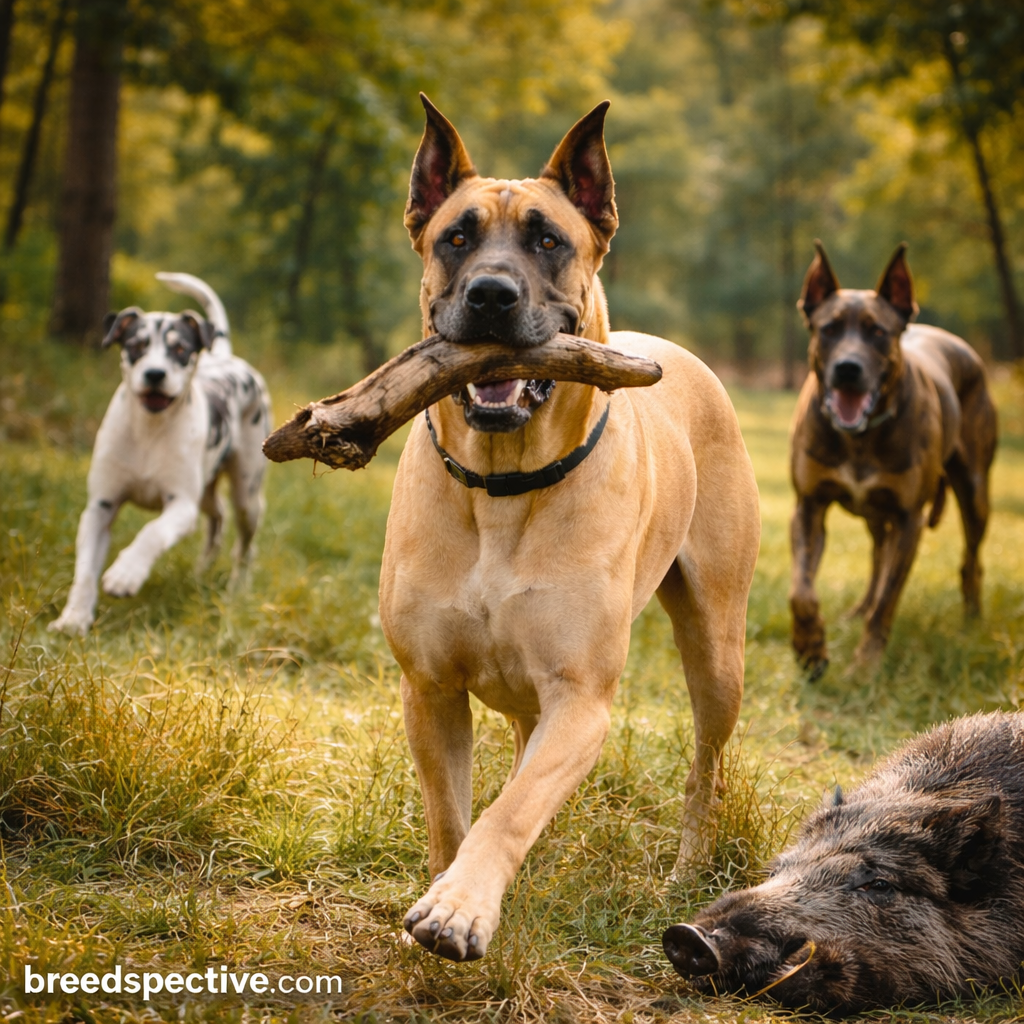
The Great Dane’s original role was far removed from modern couch lounging. Early Great Danes were expected to be formidable working dogs.
Their primary functions included:
- Hunting wild boar and deer
- Protecting hunters during expeditions
- Guarding noble estates
- Deterring intruders through size alone
To perform these tasks, Great Danes were bred to be:
- Powerful but controlled
- Alert and courageous
- Loyal to their handlers
- Physically imposing
Their size alone often served as an effective deterrent, reducing the need for aggression.
From Working Dog to Companion
As boar hunting declined in Europe during the 18th and 19th centuries, the Great Dane’s role began to shift.
Breeders started prioritizing:
- Stable, gentle temperaments
- Reduced aggression
- Strong bonds with humans
- Indoor adaptability
By the late 1800s, the Great Dane had transitioned from a working hunter to a companion and show dog, admired for elegance as much as size.
The Origin of the Name “Great Dane”
The name “Great Dane” is somewhat of a historical accident. French naturalist Georges-Louis Leclerc, Comte de Buffon, referred to similar large dogs as Grand Danois, believing they originated in Denmark.
Despite Germany being the breed’s true homeland, the name stuck internationally, even though German breeders continued using Deutsche Dogge.
Great Danes in Modern Times
Today’s Great Danes are far removed from their fierce hunting ancestors, yet traces of their history remain.
Modern characteristics shaped by history include:
- Calm confidence rather than aggression
- Strong protective instincts without excessive guarding
- Deep loyalty to family members
- A dignified, watchful presence
They are now primarily companion animals, therapy dogs, and show dogs, valued for temperament as much as appearance.
How History Shaped the Breed’s Personality
Understanding the Great Dane’s history helps explain many modern traits:
- Their calm nature reflects selective breeding away from aggression
- Their attachment to humans comes from centuries of close handler bonds
- Their imposing size still provides natural guarding without hostility
Rather than being bred for chaos or constant activity, Great Danes were refined to be controlled, thoughtful, and dependable.
Final Thoughts
The Great Dane’s journey from ancient hunter to modern companion is a testament to careful breeding and human influence. Originally designed to face dangerous prey and protect nobility, the breed evolved into a gentle giant perfectly suited for family life.
By understanding the Great Dane’s history and original purpose, owners gain deeper appreciation for both the breed’s strength and its remarkable softness.