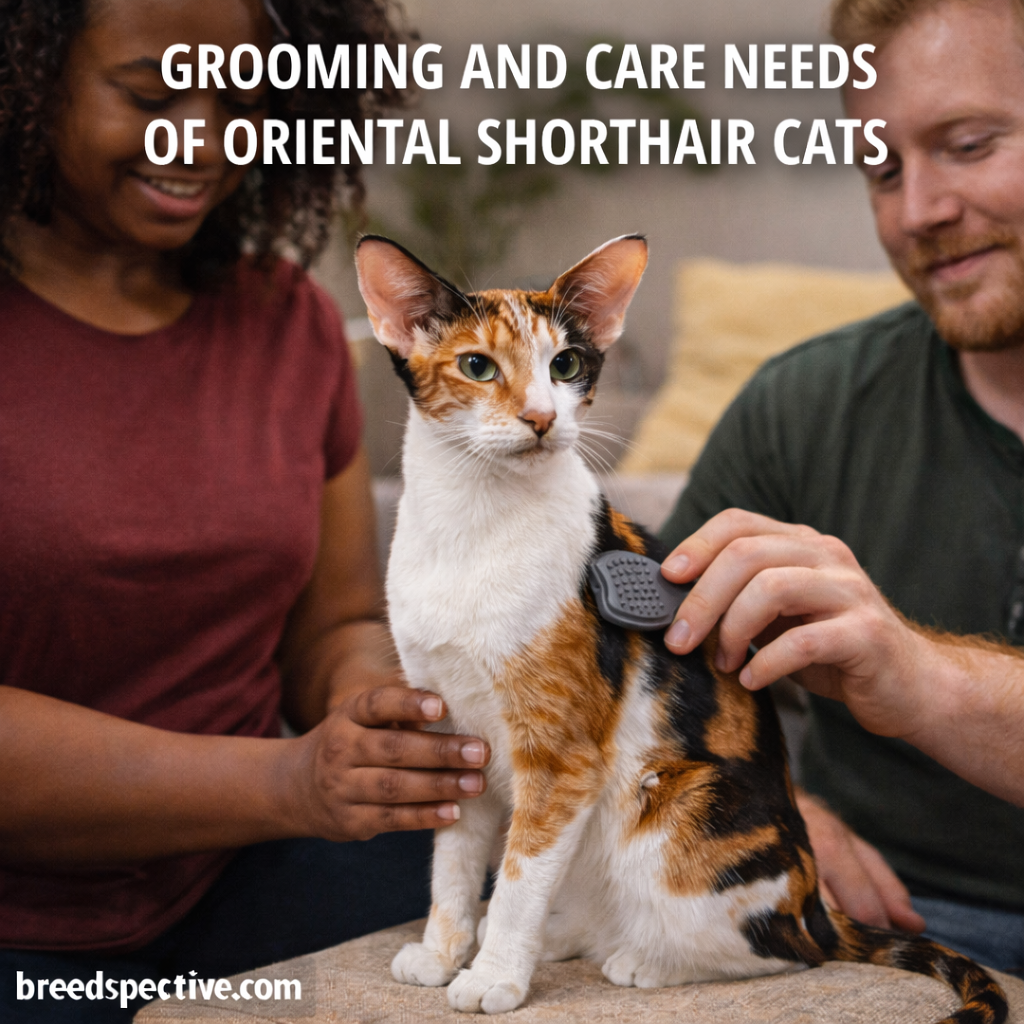
Oriental Shorthair cats are sleek, elegant, and highly interactive companions. While their short coats make them relatively low-maintenance in terms of grooming, their sensitive skin, high energy levels, and strong social needs mean proper care goes beyond basic brushing. Understanding their grooming and daily care requirements helps keep them healthy, comfortable, and emotionally fulfilled.
This guide covers everything you need to know about grooming and caring for Oriental Shorthair cats.
Understanding the Oriental Shorthair Coat
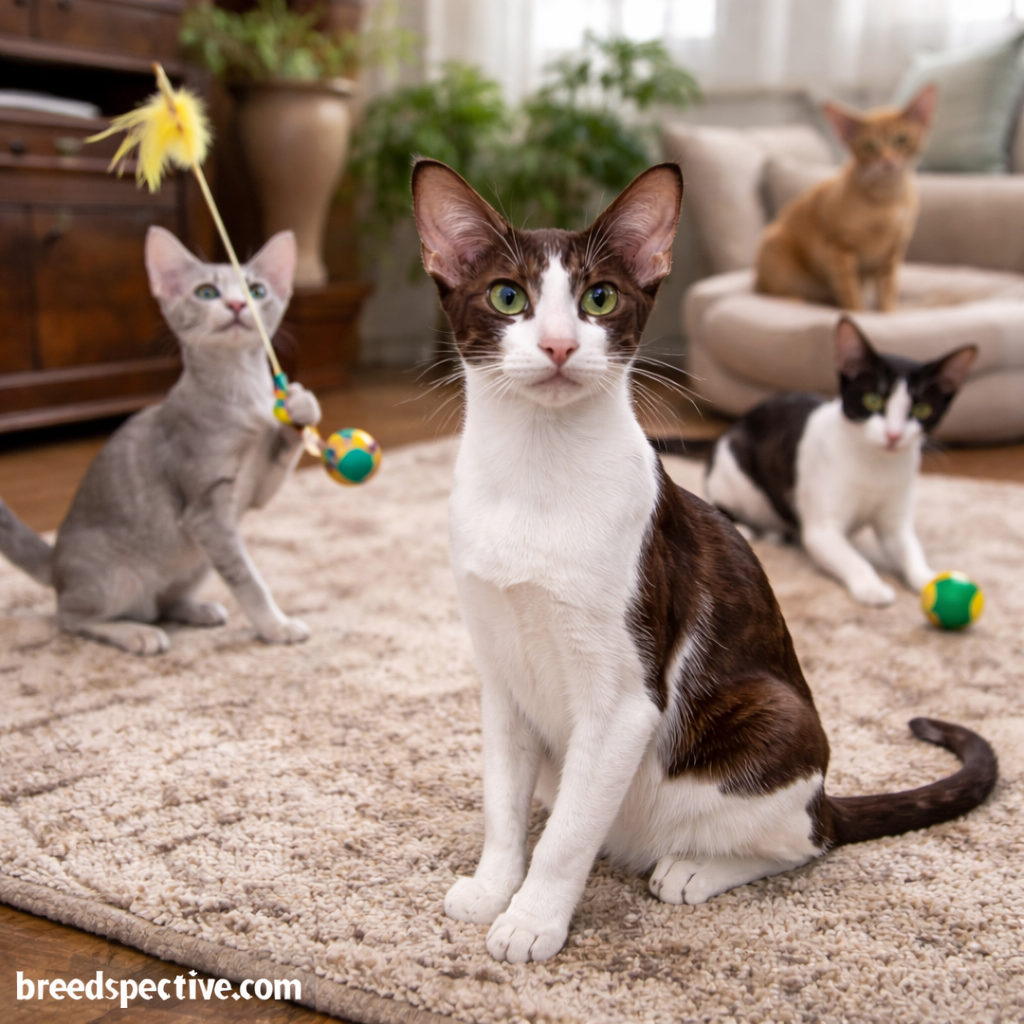
Oriental Shorthairs have a fine, short coat that lies close to the body.
Key coat characteristics:
- Very short, smooth fur with minimal undercoat
- Low tendency to mat
- Sheds lightly year-round
- Shows skin and coat condition easily
Because their coats are thin, skin health and gentle handling are especially important.
How Often to Groom an Oriental Shorthair
Despite their sleek appearance, Oriental Shorthairs still benefit from regular grooming.
Recommended grooming frequency:
- Once per week for routine coat care
- Twice per week during seasonal shedding periods
- Short, gentle grooming sessions
Regular grooming helps remove loose hair, stimulates circulation, and allows early detection of skin issues.
Best Grooming Tools for Oriental Shorthairs
Due to their delicate coats, tool choice matters.
Recommended grooming tools:
- Soft bristle brush
- Rubber grooming mitt
- Microfiber cloth for finishing
- Fine-tooth comb for occasional use
Avoid harsh brushes or metal tools that may irritate the skin.
Managing Shedding and Skin Health
Oriental Shorthairs shed less than many breeds, but their skin can be sensitive.
Tips for healthy skin and coat:
- Brush gently to avoid irritation
- Maintain a balanced diet rich in fatty acids
- Keep indoor humidity at comfortable levels
- Monitor for redness, flakes, or dryness
Any sudden coat changes may indicate dietary or health issues.
Bathing Needs and Best Practices
Oriental Shorthairs rarely need baths unless they get dirty or oily.
Bathing guidelines:
- Bathe only when necessary
- Use a mild, cat-specific shampoo
- Rinse thoroughly to avoid residue
- Dry completely in a warm environment
Because they have little insulation, avoid exposing them to cold after bathing.
Nail Trimming and Paw Care
Routine nail care supports comfort and mobility.
Nail care recommendations:
- Trim nails every two to three weeks
- Use cat-specific nail clippers
- Avoid cutting into the quick
- Provide scratching posts to maintain nail health
Check paw pads regularly for dryness or cracks.
Ear Cleaning and Eye Care
Oriental Shorthairs have large ears that can collect debris more easily.
Ear care:
- Check ears weekly
- Clean gently with vet-approved solutions if buildup is present
- Watch for redness or odor
Eye care:
- Wipe away discharge with a soft, damp cloth
- Persistent tearing should be evaluated by a veterinarian
Dental Care and Oral Health
Dental care is essential for long-term health.
Dental care tips:
- Brush teeth several times per week if tolerated
- Use cat-safe toothpaste only
- Offer dental treats or toys approved for cats
Regular dental care helps prevent gum disease and tooth loss.
Nutrition and Its Impact on Grooming Needs
A healthy coat starts with proper nutrition.
Dietary priorities include:
- High-quality animal protein
- Omega-3 and omega-6 fatty acids
- Balanced vitamins and minerals
- Adequate hydration
Poor nutrition often shows up first in the coat and skin.
Temperature Sensitivity and Comfort Care
Due to their thin coats, Oriental Shorthairs are sensitive to temperature changes.
Comfort considerations:
- Keep indoor temperatures stable
- Provide warm sleeping areas
- Avoid drafts or cold floors
- Offer soft blankets or heated cat beds
They are best suited for indoor living.
Emotional Care and Stress Management
Grooming is also an opportunity to meet emotional needs.
Emotional care tips:
- Groom during calm, bonding moments
- Use gentle, reassuring handling
- Maintain consistent routines
- Avoid long periods of isolation
Stress can affect coat quality and overall health.
Signs Grooming or Care Needs Attention
Watch for signs that grooming or care may need adjustment:
- Dull or dry coat
- Skin irritation or redness
- Excessive scratching
- Overgrown nails
- Changes in grooming tolerance
Early intervention prevents minor issues from becoming serious.
Creating a Stress-Free Grooming Routine
Oriental Shorthairs respond best to calm, predictable grooming.
Helpful routine tips:
- Start grooming early in life
- Keep sessions brief and positive
- Use praise and gentle touch
- Groom when your cat is relaxed
Positive experiences strengthen trust and cooperation.
Final Thoughts
Grooming and caring for an Oriental Shorthair cat is less about coat maintenance and more about gentle handling, skin care, and emotional connection. With regular brushing, proper hygiene, balanced nutrition, and a warm, engaging environment, these intelligent and social cats thrive.
For owners willing to provide attention and consistency, Oriental Shorthairs reward care with deep affection, engagement, and lasting companionship.